A Week in Wales part 1
Wales is an ancient and mountainous country to the west of England. It is part of the UK but has historically and culturally been very different from England. Wales is culturally a Celtic nation, the original inhabitants of Britain before the Romans invaded. The Romans invaded Britain in 43 CE. Several North Wales tribes resisted Roman conquest with the help of their religious leaders, the Druids, on the isle of Anglesey (north west island on the corner of Wales). The Romans did not take kindly to this and slaughtered the Druids in 60 or 61 CE. We don’t know much about Britain in this period and everything we do know comes from the Romans who wrote about them as barbarians, trying to make themselves look good and just for conquering them. Once the Roman Empire began to fall they abandoned their faraway outposts like Britain to help secure the capital. In 410 CE Roman rule ended in Britain the local rulers were in charge. Shortly after, the Germanic Anglo-Saxons began their invasion (or settlement?). The idea of how the Anglo-Saxons came to Britain is still in some debate as there are so few written records. Historians used to think it was a massive invasion and that all the Celtic peoples in England were pushed to Wales, but that is no longer the main theory. It is likely that there were battles and struggles throughout the period, however neither the Celtic people nor the Germanic people were fully united so it was probably not as straightforward as is originally stated. There are probably some areas that the Anglo-Saxons were invited to settle and some areas probably taken by force. It’s also more likely that the majority of the Celtic population remained and adopted the culture of the new Anglo-Saxon elites. Again with so few sources until hundreds years later, it is difficult to tell. During this blur of history we have the emergence of the Legend of King Arthur, who in the most original form of the legends was a Welsh (or really Romano-Celtic) war hero who fought off the invading Anglo-Saxons. The legends of King Arthur have changed throughout different stories and retellings, many adding mystical and other elements, turning this possible war leader in the dark ages into the perfect King. During the middle ages in Wales there were many mythological prophecies (supposably foretold by the wizard Merlin) about the Welsh eventually retaking the island of Britain. 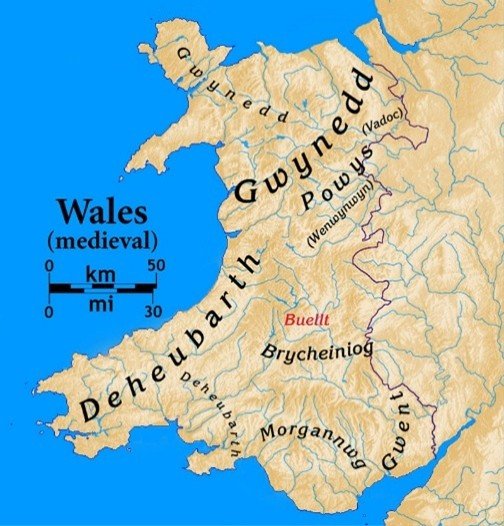
From Medieval kingdoms of Wales in Wikipedia.
After the dark ages (called dark ages more because we have few sources of the period than because of anything else) several Kingdoms formed within Wales (all with obviously Welsh names that are difficult to pronounce). The largest being Gwynedd (pronounced like Gwyneth Paltrow, the two dd’s in Welsh making a th sound). The Kingdom of Gwynedd warred with and conquered its neighboring Welsh Kingdoms throughout the Middle Ages. Like the English, the Welsh built castles to secure areas under their control. Llywelyn ab Iorwerth, also known as Llywelyn the Great (pronounced “luh" sound, then "WEL" (as in "well"), and finish with "in"), through alliances with English Barons (who were not a fan of the King of England at the time), was able to rule a large portion of Wales and even be recognized by the English as the Prince of Wales. However, in 1277 and 1282-3, crisis came to Gwynedd as Llywelyn’s successor (known as Llywelyn the Last, which is not a good sign) fought two wars against England. The new English King, Edward I, was more popular than his predecessors and with England united and the barons behind him, Edward I launched a conquest of Gwynedd and the rest of Wales. This shattered Wales’ independence. Wales was essentially ruled by England for the rest of the middle ages, with the exception of a major 15 year rebellion by the Welsh Prince Owain Glyndŵr. From 1400-1415 almost all of Wales fell back into control of the Welsh as Owain fought England regaining much land. Owain was even crowned Prince of Wales and took any of the large English Castles that were built to keep the Welsh down. Unfortunately, England eventually retook Wales and imposed even stricter laws against the Welsh people. Relations between the English and Welsh improved somewhat in the end of the 15th century when the Tudor dynasty came to power, who had a fair degree of Welsh ancestry. While some laws barring the Welsh from important government jobs were abolished under the Tudors, they also passed the Laws in Wales Act of 1535 and 1542. These laws combined the legal systems of England and Wales and made it so the English language had to be used in all official functions. However some later Tudor monarchs, like Elizabeth I, made some concessions to the Welsh, including allowing a Welsh Bible to be printed in 1588. In the English Civil Wars (1642-1651), which was a conflict between King Charles I and his Parliament, Wales mostly sided with the King. With its mighty castles and strategically important coast, Wales was an important part of the Civil War. After centuries of being dominated by the English, Wales finally received its own self governance through a 1997 referendum. While still part of the UK, many local laws can be decided in the Welsh Parliament which was renamed officially in 2020 as the Senedd Cymru, Cymru being the Welsh word for Wales. The Welsh language is also surviving and thriving as it is taught again in modern schools and signs in Wales are in both Welsh and then English. Wales has always been a mystic place of old myths and legends. The Legend of King Arthur originates in Wales, as well as many other Celtic myths and creatures. No other nation has a cool red dragon on its flag, so they have that going for them as well. See the legends and lore section for more. Below was the itinerary for the Welsh trip my wife and I took. All the custom tours were from the Welsh tour company, Wales Guided Tours. We highly recommend using this company if you're afraid of driving on tiny narrow Welsh roads and want to see some of the best places in Wales. We stayed in Llandudno which was close to Conwy in the North then Cardiff in the South for the last two days. Tour company used: Tours in Wales UK | Trips To Wales UK North | Wales Guided Tours
Itinerary
Day 1
Custom tour and airport transfer
-Castell Dinas Brân
-Llangollen
-Capel Garmon neolithic burial chamber
-Dolbadarn castle
Day 2
Custom tour:
-Caernarfon castle
-Bryn Celli Ddu Burial Chamber
-stop at Beaumaris
-Saint Dwynwen tidal Island
Day 3
Llandudno
-Great Orme Mines Bronze age mines
-Lletty'r Filiast tomb
-Llandudno tram
Day 4
Conwy
-Conwy Castle
-Town Walls
-Plas Mawr Tudor house
-St Mary’s Church Conwy
Day 5
North Wales tours Transfer to Cardiff
-Hay-on-Wye Book town
transfer Brecon Beacons
Day 6
Cardiff
-Cardiff Castle
-National Museum of Cardiff
Day 7
Cardiff explore
-St Fagan's National History Museum
Day 8
Take train to Manchester for flight home
Day 1: Jetlag and Welsh Castles
We took a redeye flight from JFK to Manchester. Our tour guide Chris picked us up at the airport around 6AM. We were originally going to just have him transfer us to the hotel in Llandudno, but he suggested a full tour day, and we could not refuse. Our first stop was to Castell Dinas Bran. This castle was built by a native Welsh ruler of Powys to defend themselves against the English in the pale (a frontier zone between England and Wales) as well as other Welsh rulers. Wales was not united and the separate rulers (known as Princes) fought amongst themselves for land (like everyone else in the Middle Ages). The Castle is now in a very ruinous state; however it has a wonderful view of the surrounding terrain and is not far from the Welsh-English border. I was already grateful that we hired a driver as looking over the edge from the back of our vehicle I couldn’t even see the tiny road we were driving up. 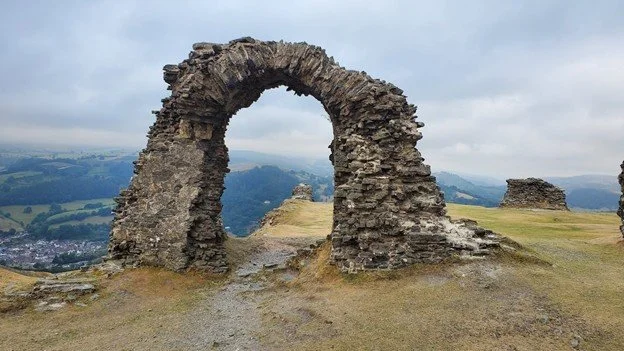
Archway ruins of the castle or castell if you want to be more authentic.
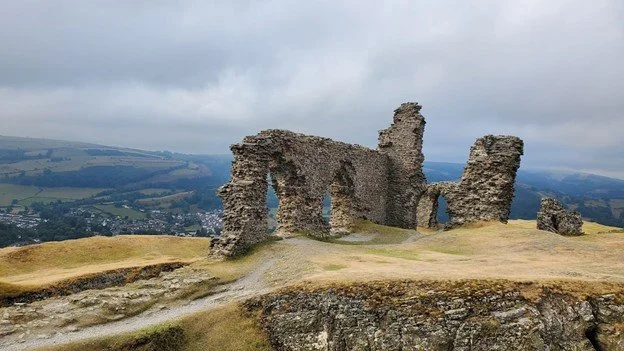
The castle was destroyed in the 1277 invasion of the English, so it is a very old ruin.
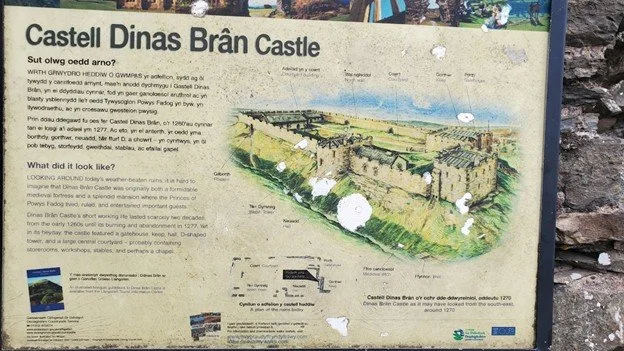
A weather worn panel showing what the castle used to look like.
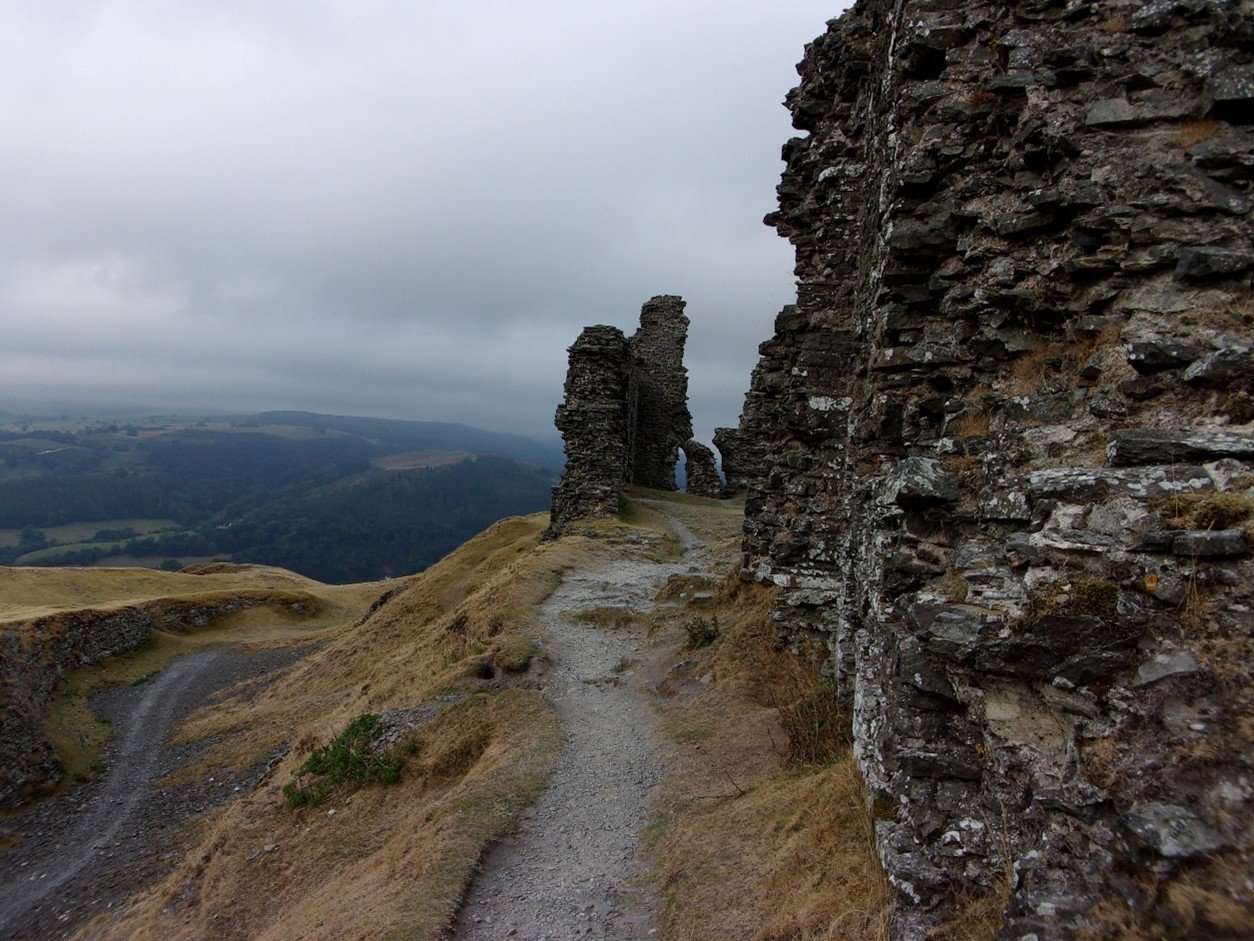
The narrow path along the ruins and the moat to the left.
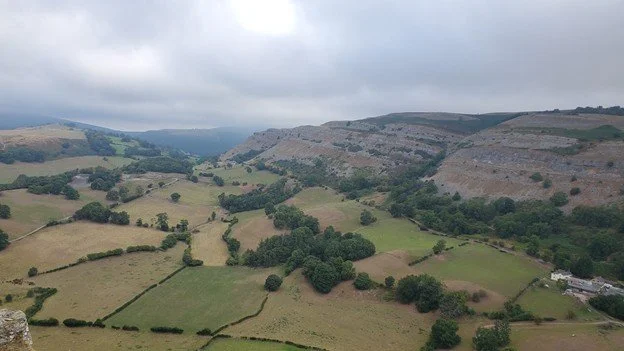
Countryside around Dinas Bran.
Here is a quick 20 second video of the place

It was easy to feel the history of the place as we wandered around the scant ruins of the ancient castle and got a feel for the landscape around us and how strategic a location this was. Chris told us some history of a similar castle on the English side and how the Welsh and English fought for strategic points like this one in the Middle Ages.
We had the option to hike into the town below and meet Chris there with the tour car or have him drive us into town. Since we had done a redeye and were still tired we opted for the latter. Chris told us that the hill that in which castell Dinas Bran sat is one of the legendary sites that is said to house the Holy Grail. It’s not very clear where this legend came from (or how the cup of Christ got all the way to Wales and somehow buried in a hill) but it was interesting folklore. I wouldn’t suggest digging at the hill looking for it, it’s probably illegal to dig around historic sites (and if its not it should be). The town of Llangollen (thl-an-goth-lan) is very pretty with the river Dee running through it. We had breakfast at a little place overlooking the river. 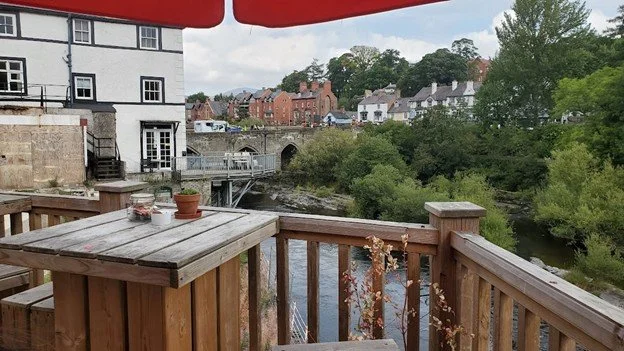
Nice view of the old Bridge from a little cafe. The date of the old stone bridge over the Dee is disputed. Some sources say it is Medieval, from the 1200s, others say it was mostly rebuilt in the 16th century and other say 1650s. Either way it was very pretty and clearly built in the gothic style with pointed arches
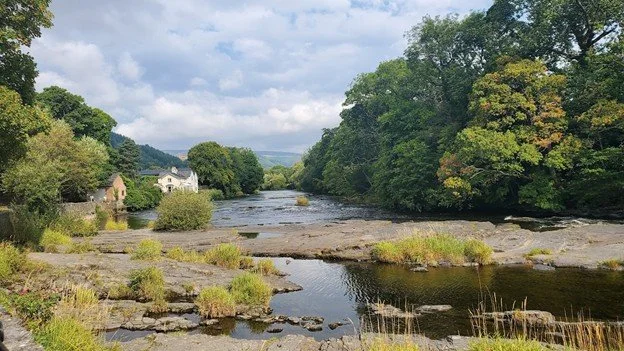
The River Dee.
We had some time to explore the town a bit after breakfast before Chris picked us up and we headed to our next destination.

Next we headed to Capel Garmon to visit an ancient neolithic tomb. Cerissa fell asleep on the trip to this one, while Chris and I talked more about Welsh History and the modern relationship between England and Wales. 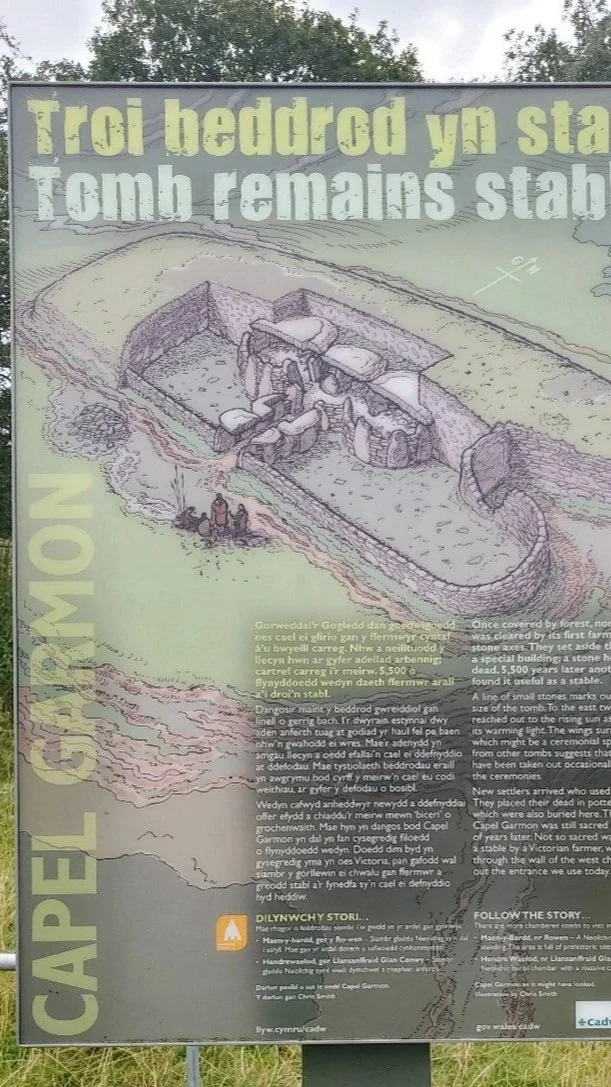
An information panel showing what the burial chamber looked like. You can see it used to have three capstones. Only one capstone remains.
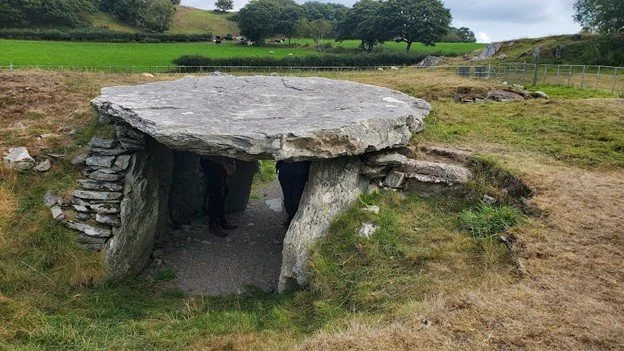
The tomb was used by the ancient Welsh as a burial chamber nearly 5,000 years ago.
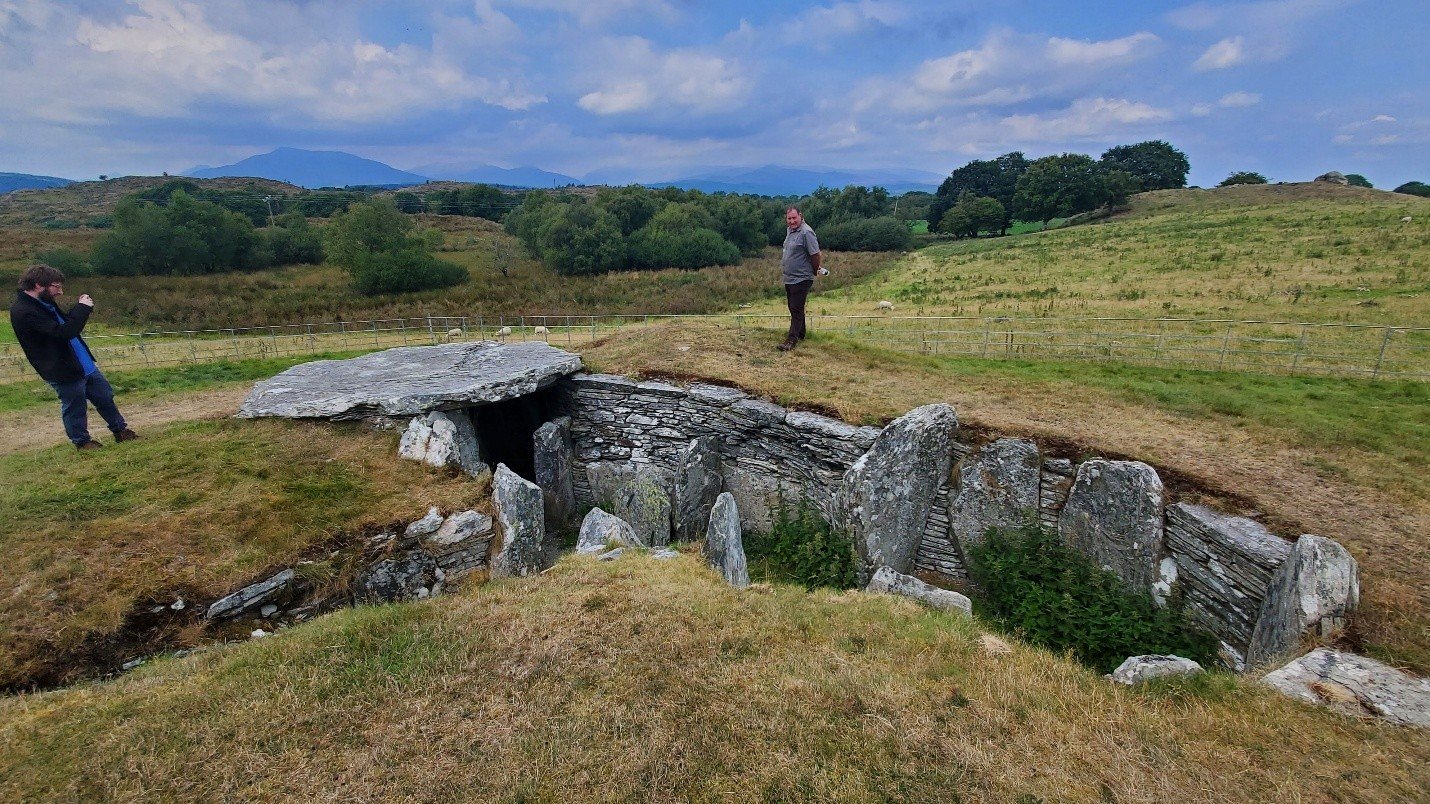
Chris and I inspecting the site. This picture gives you a sense of the three chambers and the one passage leading out.
On our way back to the car we were met by a friendly sheep dog, as the tomb was a bit of a walk through some fields. He was a very good boi and followed us some ways before finally going back under a fence of what we assumed was his house. It was universally agreed that we would die for him and that he was a wonderful guide and of course as stated a good, good boy. Next we stopped at a cafe called Ty Hyll, which means ‘the ugly house’. There is a legend that an outlaw in the 15th century stayed here. 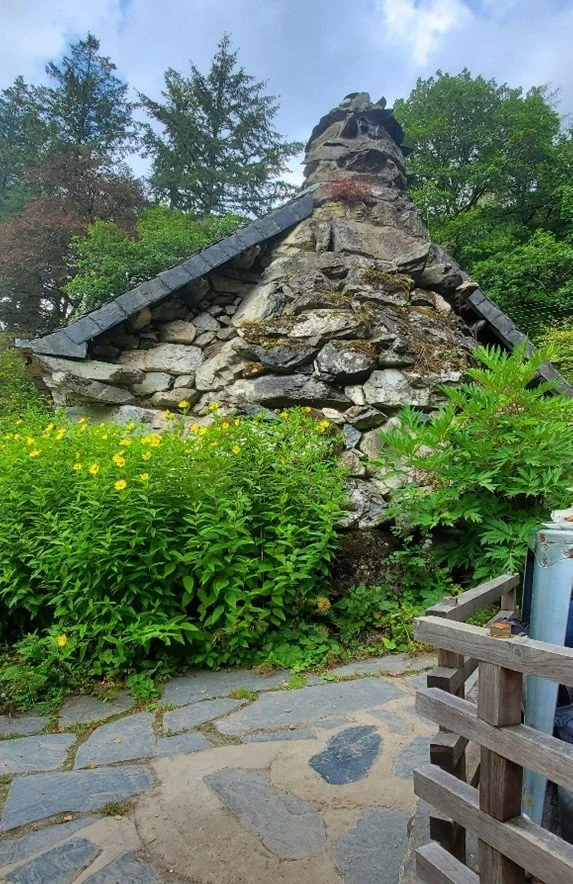
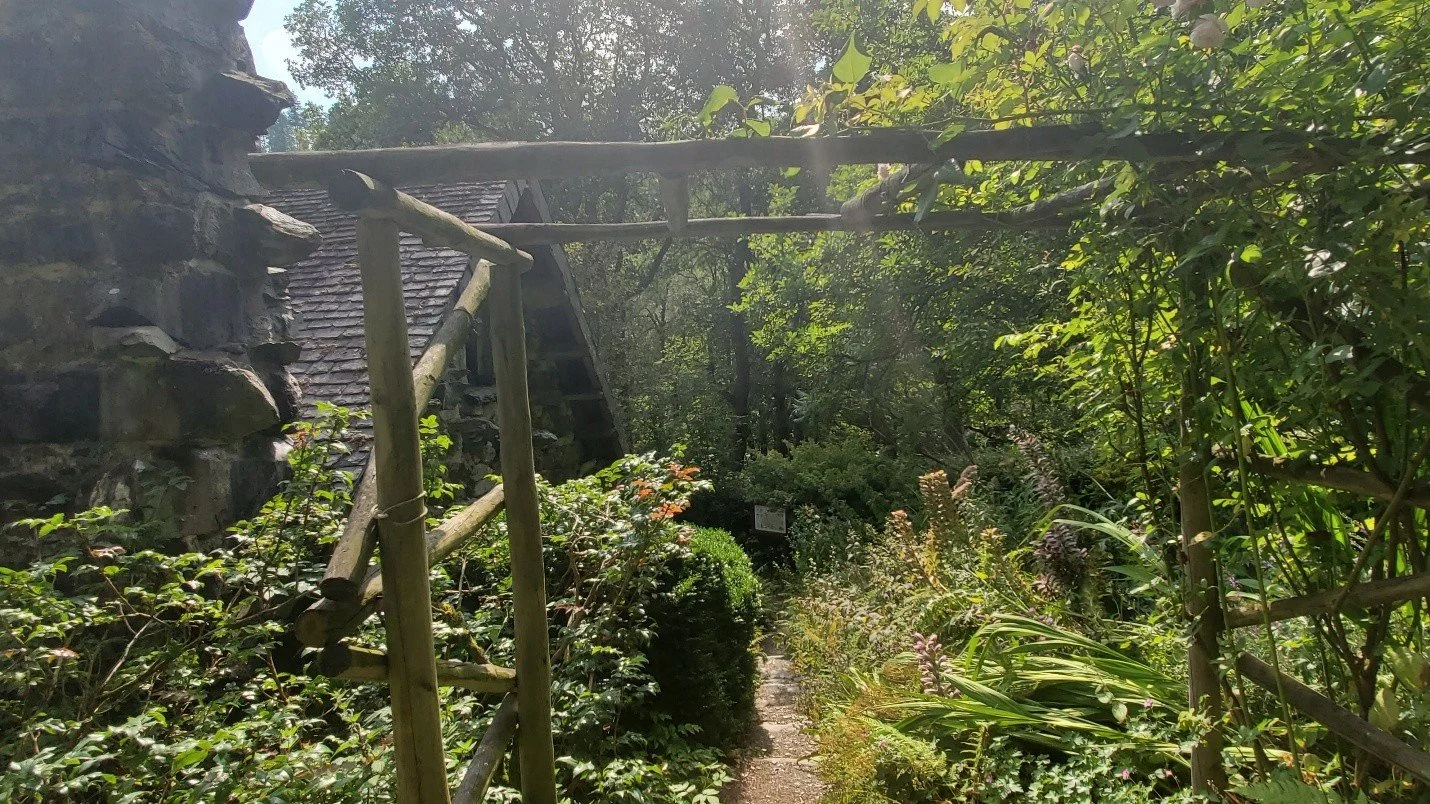
Two photos of the Ugly house. We had some sweets and tried to stay awake. There was a nice little hiking trail near the house. We had some time to do a little bit of walking before Chris came back to bring us to Snowdonia.
Chris originally had in mind that we could hike in Snowdonia national park and see some of the amazing scenery; though it sounded great we were on maybe 3 hours of sleep at most at this point and opted to see another castle. With castle energy keeping us going we sped through the mountains of Snowdonia to the next stop Dolbadarn castle. 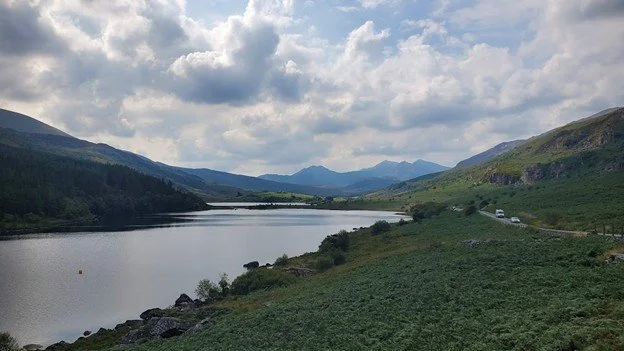
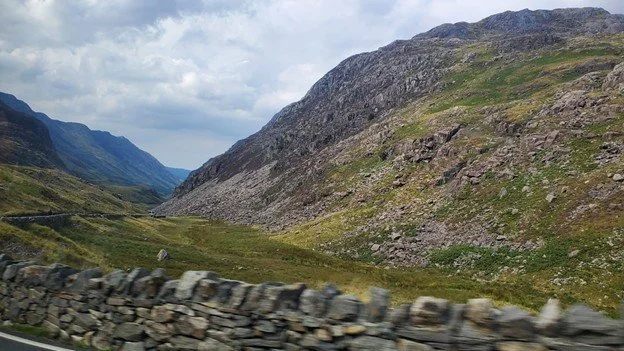
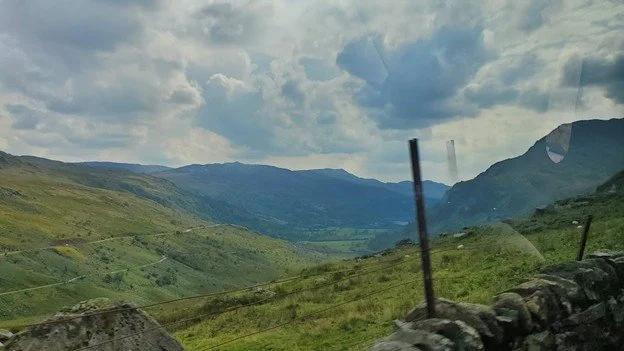
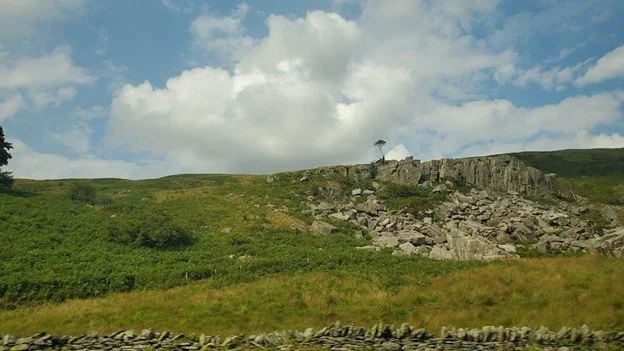
A gallery of the best scenes from our Snowdonia drive.
Dolbadarn castle was built by Llywelyn the Great in the 1220s so this was another castle built by the Welsh. It was used as a prison for Llywelyn’s political rivals. It was also used in 1402 during Owain Glyndŵr for the same purpose. Its thick stone walls and isolated location made it a good place to hold prisoners. It was also taken by Edward I in 1284. So if anyone tells you that the castles in Wales were all built by the English or Normans this is not true! The Welsh native lords also built these stone strongholds. It was built in a very epic valley in Snowdonia, which gave it a good position as a lookout for the Welsh Princes. 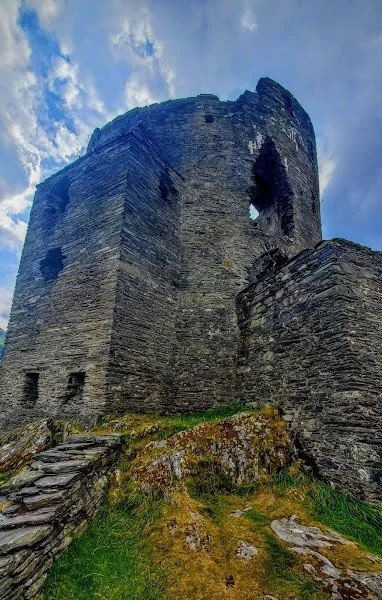
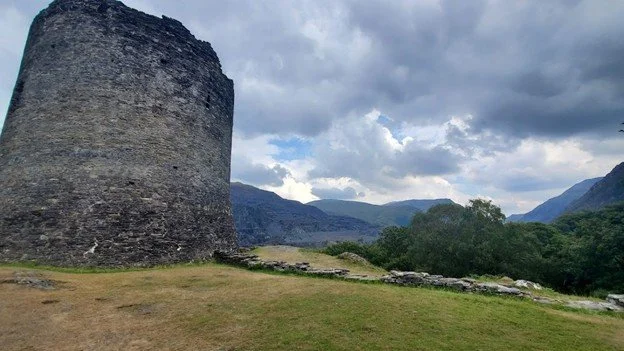
Two images showing the perfectly round tower of Dolbadarn Castle. Most of the castle walls are gone but the main round keep is in very good condition. You can climb all the way to the top. The square part in the picture to the left is the loo, aka toilet.
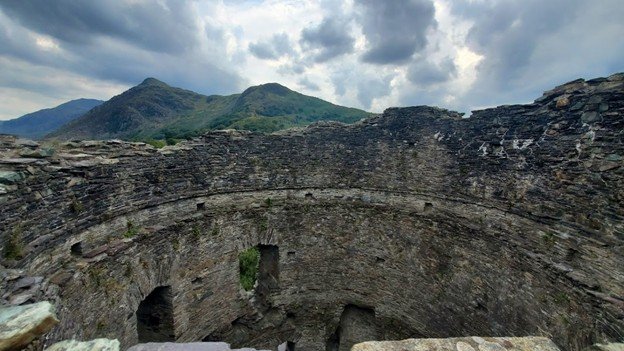
View from the top of the tower.
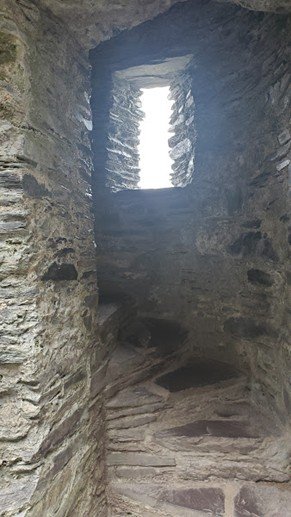
The medieval staircase inside the tower
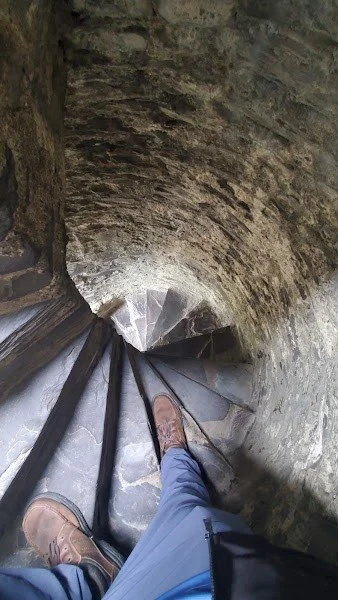
Up the stairs some more.
I asked Chris what the main differences were between the Welsh built and English built castles. He said the main difference is the massive size in the English castles because of the money Edward I put into them. The Welsh castles were much smaller as they were built by smaller lords of Wales. That ended day 1! We went to our hotel in Llandudno. Alternative routes: If you don't want to do a custom day tour there are many other tours that go to most of these places. The Welsh castles we saw on our first day are probably the hardest to see without a car, but on viator and get your guide there are a few that have Dolbadarn. Most of the Edwardian castles, that I will be discussing shortly, are much easier to see with tours because they are so famous. You can of course rent a car and try your luck on the Welsh roads, but as an American used to wide roads, if you have issues with one lane driving it might be difficult. Trains and public transportation are much better in the UK than the US so that along with ride shares are another option. I don't want to share other tours since we only used North Wales Tours so we can only recommend that one, but others seem to have a lot of good ratings as well. Day 2: Soaring towers and Fortune Teller Eels
Our hotel was the Grand at Llandudno which was a bit older but right on the waterfront with great views of the bay and a Victorian pier. 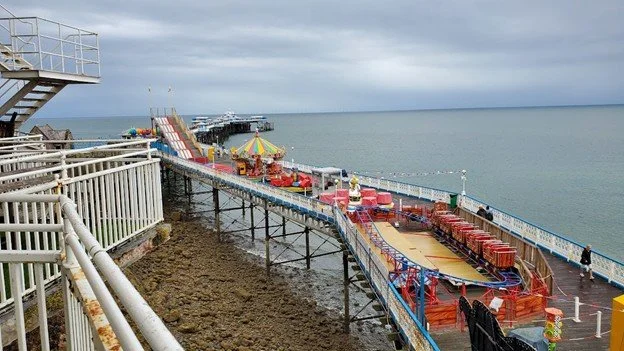
The Llandudno pier from the Hotel. It was a really fun area with an amusement park. This was early in the morning before setting up. We ended up going here way more often than we thought.
Chris picked us up again and this time we headed for Anglesey, the large island on the far northwest of the Welsh coast. The island has been a big deal for Wales as it has very good agriculture lands and was the breadbasket for Northern Wales. This was our second, and unfortunately last, tour with Chris. Our first site was Caernarfon castle (the f is pronounced as a v). This was one of Edward I’s massive castles he built after the conquest in 1283. These large English castles were built to finally put down the Welsh. A town was also built around it and they were all near a river or body of water so that Edward would reinforce the castles with troops via the sea if the Welsh had taken the countryside. One early rising in 1294 happened while Caernarfon was still being built. After the English retook the town and castle from the Welsh, they strengthened it so that it could not be taken again. The castle was besieged several times later in the Middle Ages as well as during the English Civil War. When it comes to more recent history the castle is used for the investiture for the Prince of Wales. The Prince of Wales is the title for the heir apparent to the British throne. What you might be thinking is: "wait so the prince of Wales isn't Welsh?" That is correct. Welsh rulers were traditionally called Princes and when Edward III took over North Wales, he stole the title and gave it to his son. Legend is it that Edward said he would give the title Prince of Wales to someone who spoke not a word of English and then gave it to his newborn son. It's a fun legend but probably isn't true. With his enormous castles in Wales, he didn't really need to worry about keeping the Welsh happy. 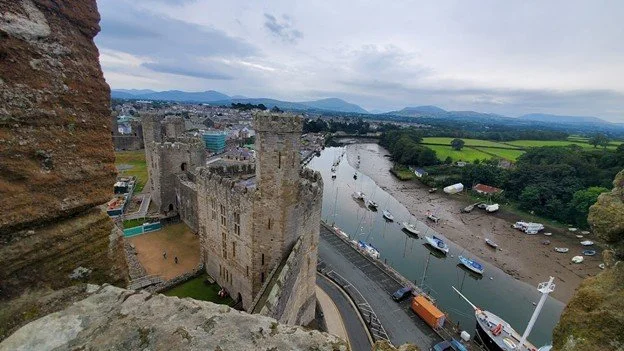
Snowdonia mountains from the walls of the castle.
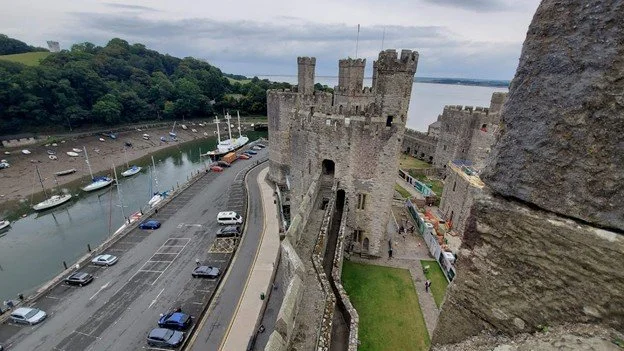
Caernarfon castle’s huge stone towers. Caernarfon is a concentric castle, meaning that it had no central keep but each tower was large enough to be its own keep.
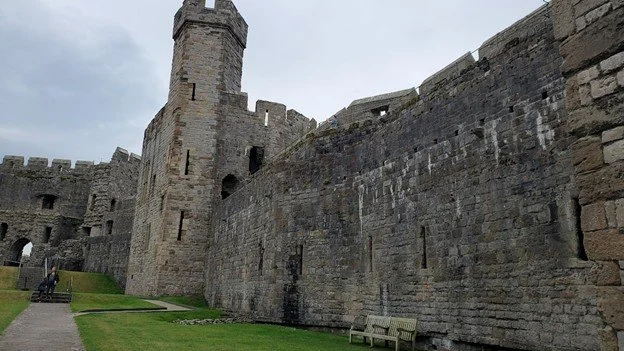
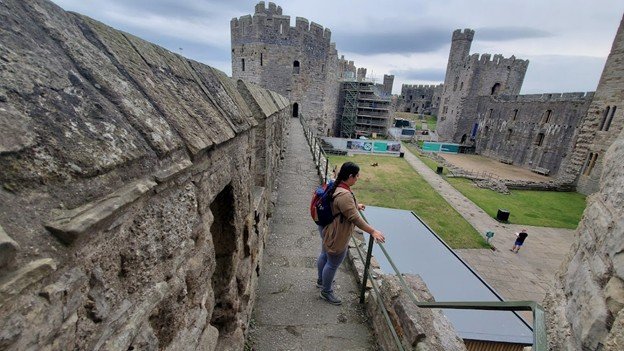
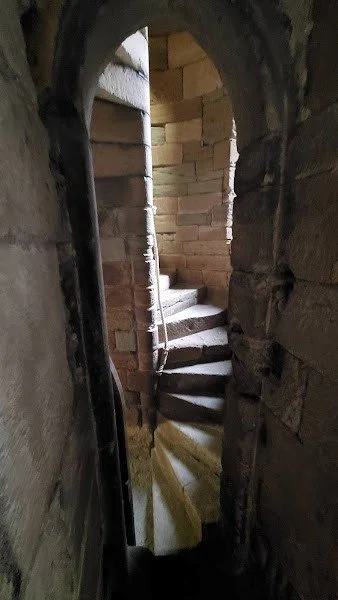
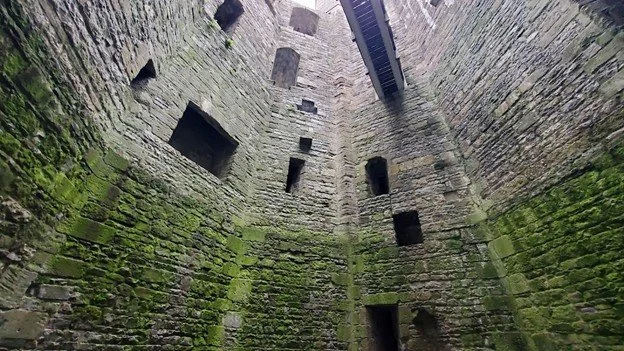
First picture is inside the castle showing the arrow slits that are also pointed inside in case an attacker makes it inside. Second picture is Cerissa on the wall. Third picture is the winding staircase inside one of the castle towers. Fourth is from inside the wellhouse, which was used as, if you can believe it, a well.
The castle was so large it reminded me of that old Encarta game for windows 95 mind maze where you go through a large castle maze answering questions. Caernarfon castle is close to Anglesey but not actually on the island. After exploring for a few hours Chris returned to take us to Anglesey. Anglesey is the ancient land where the Celtic religion of the Druids was most powerful in Britain (at least when Rome invaded). 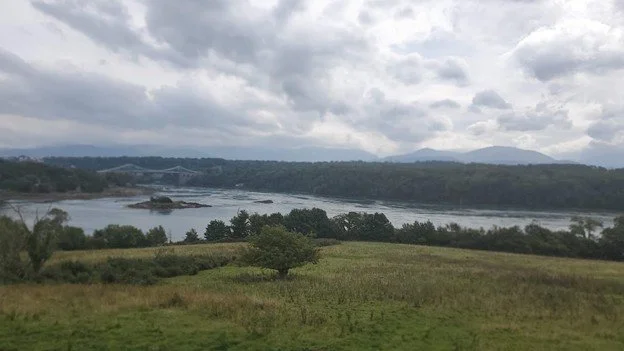
The Anglesey Strait
Anglesey has neolithic tombs dotting the ancient landscape dating back thousands of years. These were most likely sites of rituals and were tombs. One of the most intact ancient tombs is Bryn Celli ddu. Like Stonehenge, it has a special solar alignment. It is angled in such a way that the inner passage lights up on the alignment of the midsummer sunrise. This is a clue to the ancient beliefs of the people who built it and how important the sun and stars were to the ancient people. 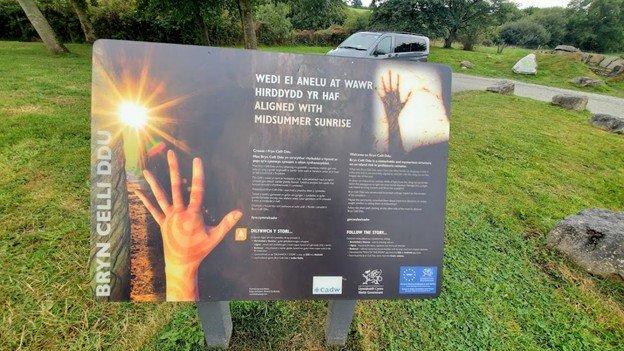
Cool plaque at the parking lot that talks about the importance of the burial chamber. The tomb was completed around 2,000 BC.
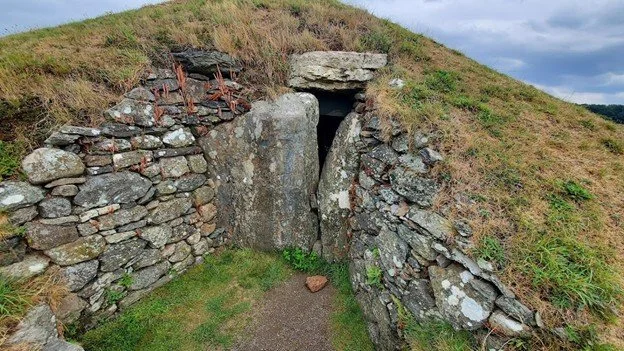
The burial chamber from the back.
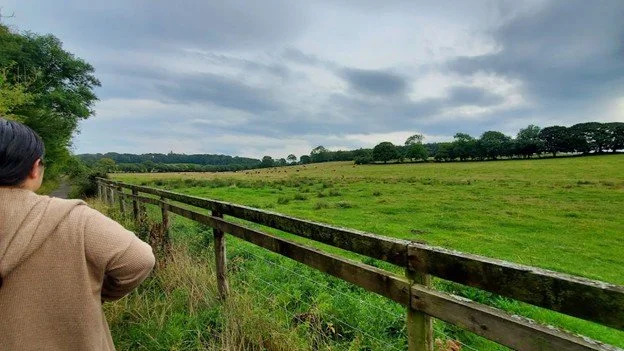
There’s about a 15 minute walk through the countryside of Anglesey to reach the burial chamber.
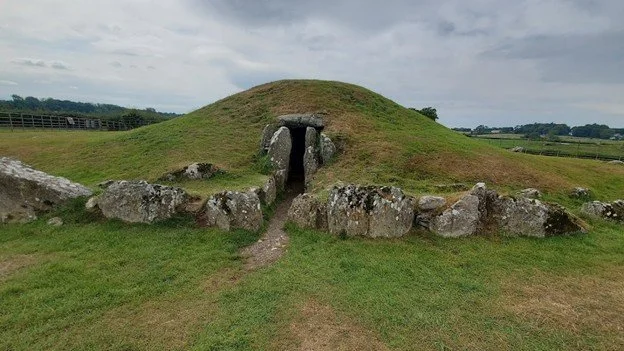
The front of the burial chamber. The earth on the chamber was added after excavation.
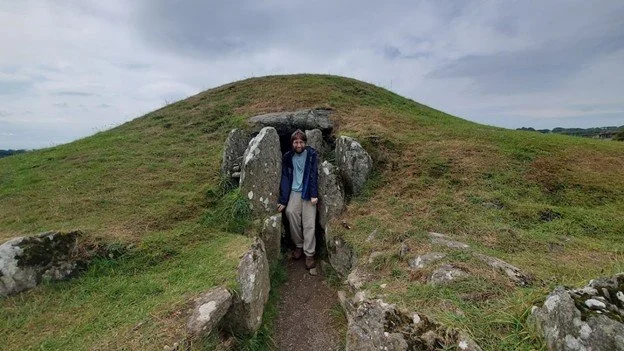
Me getting inside the chamber.
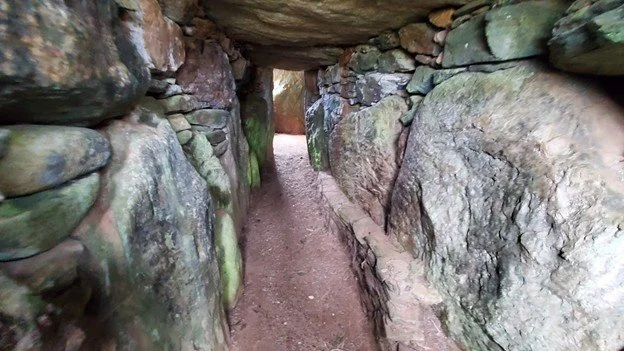
The inner chamber passage that lights up mid summer sunrise.
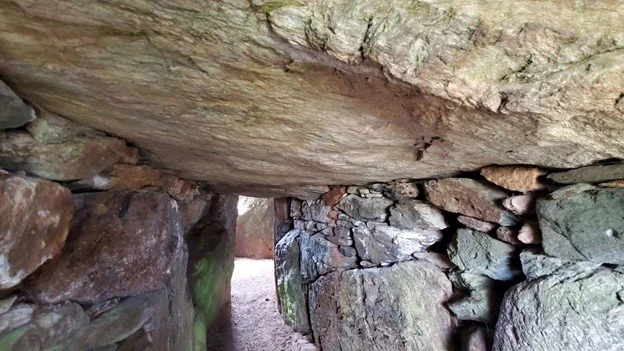
Megalith roof of the chamber.
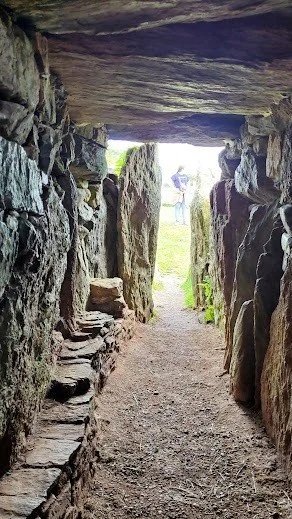
From inside the chamber looking out.
A one minute video of me going into the burial chamber.

I really liked Bryn Celli duu. It was so much more hands on than sites like Stonehenge. We had the place all to ourselves and could go inside and all around it. The walk to the chamber seeing the green farmland of Anglesey really sets the scene, it's not right on the roadway like Stonehenge is. I don't want to hate on Stonehenge too much, but this was a much better experience., there are so many small details we got to see. It is also one of the main reasons why I decided to do a private custom tour (along with the next site) because there aren't that many tours that take you to Anglesey.

After pondering the ancients and the meaning of their ruined ritual sites we moved on to Beaumaris farther north.
Beaumaris is a cute little town that also has another Edwardian English castle, however the castle was never finished. We decided to get some fish and chips and walk around the town a bit since we didn’t have a ton of time to see the castle. Some of the views of the Welsh mountains and see beyond Beaumaris were stunning. 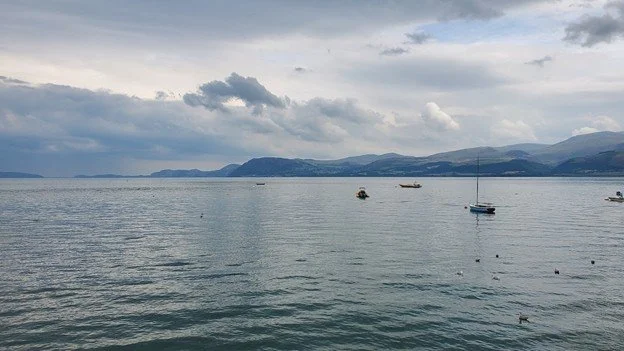
View from Beaumaris docks.
The last site we saw with Chris was the legendary Tidal Island of Ynys Llanddwyn. This tidal island was small, but it had everything. A great view of the mountains, sandy beaches, a medieval church which was home of the patron Welsh Saint of love, Dwynwen, Wild horses, old lighthouses, all the good stuff. We drove past a small forest which was known for red squirrels (Cerissa and I looked but couldn’t find any) to a parking lot on the beach. It was a small walk to the tidal island along the beach. There was a small amount of water starting to cut off the island from the mainland (hence the term tidal island) so we had to take off our shoes and wade through the water. We were determined to see the island. 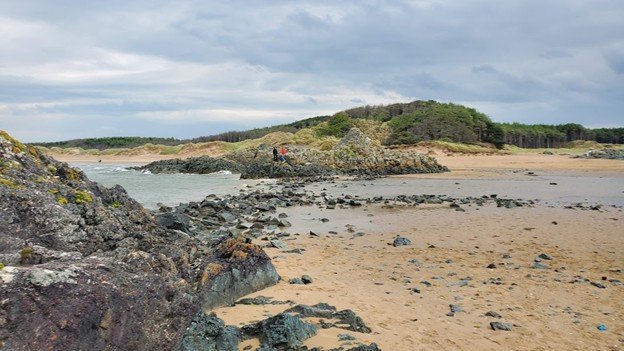
The neck of the tidal island where it connects to the mainland. You can see the water starting to come in around making the tidal island a real-life island.
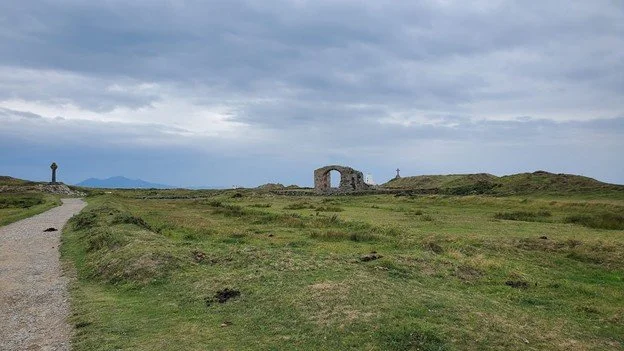
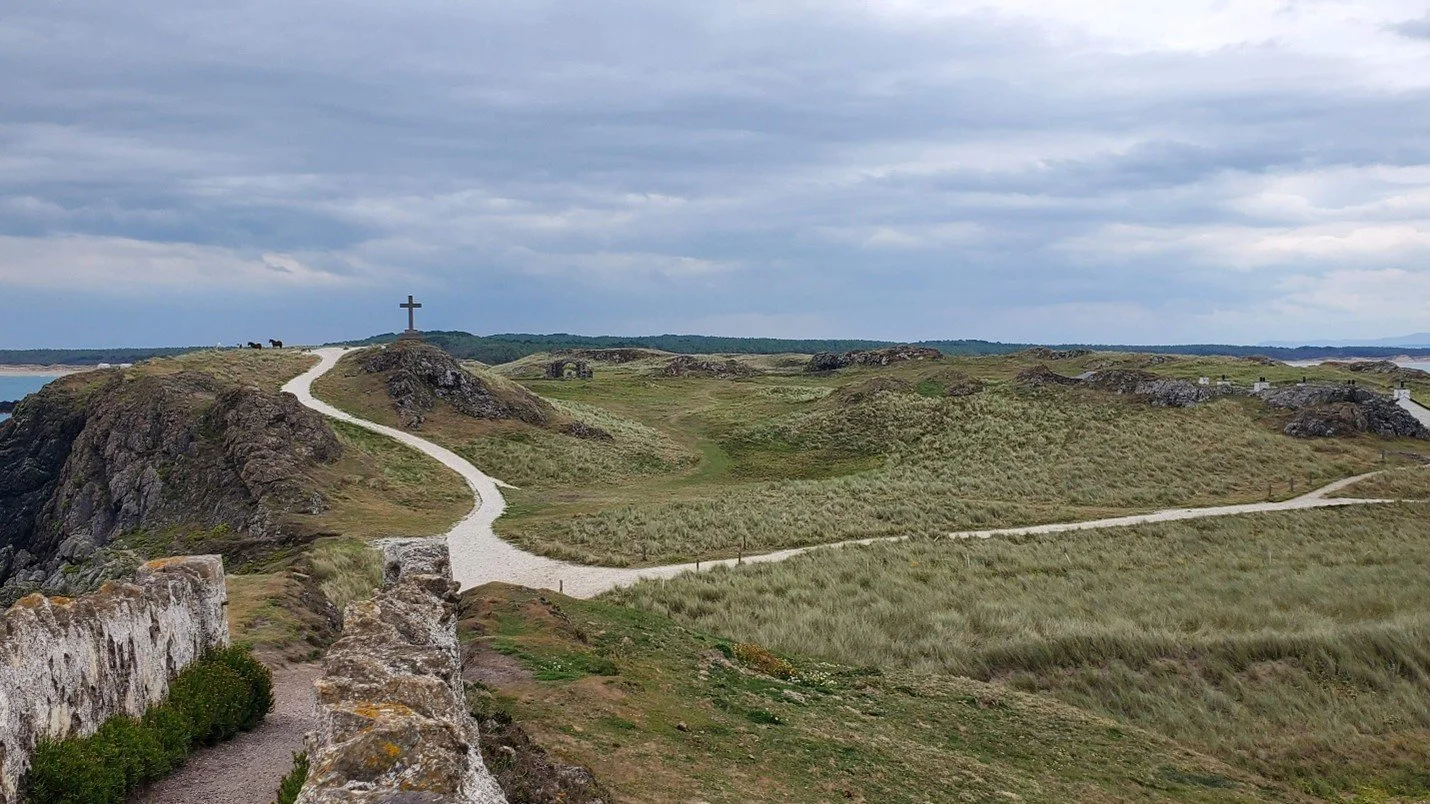
The first look at the old saint church and a celtic cross.
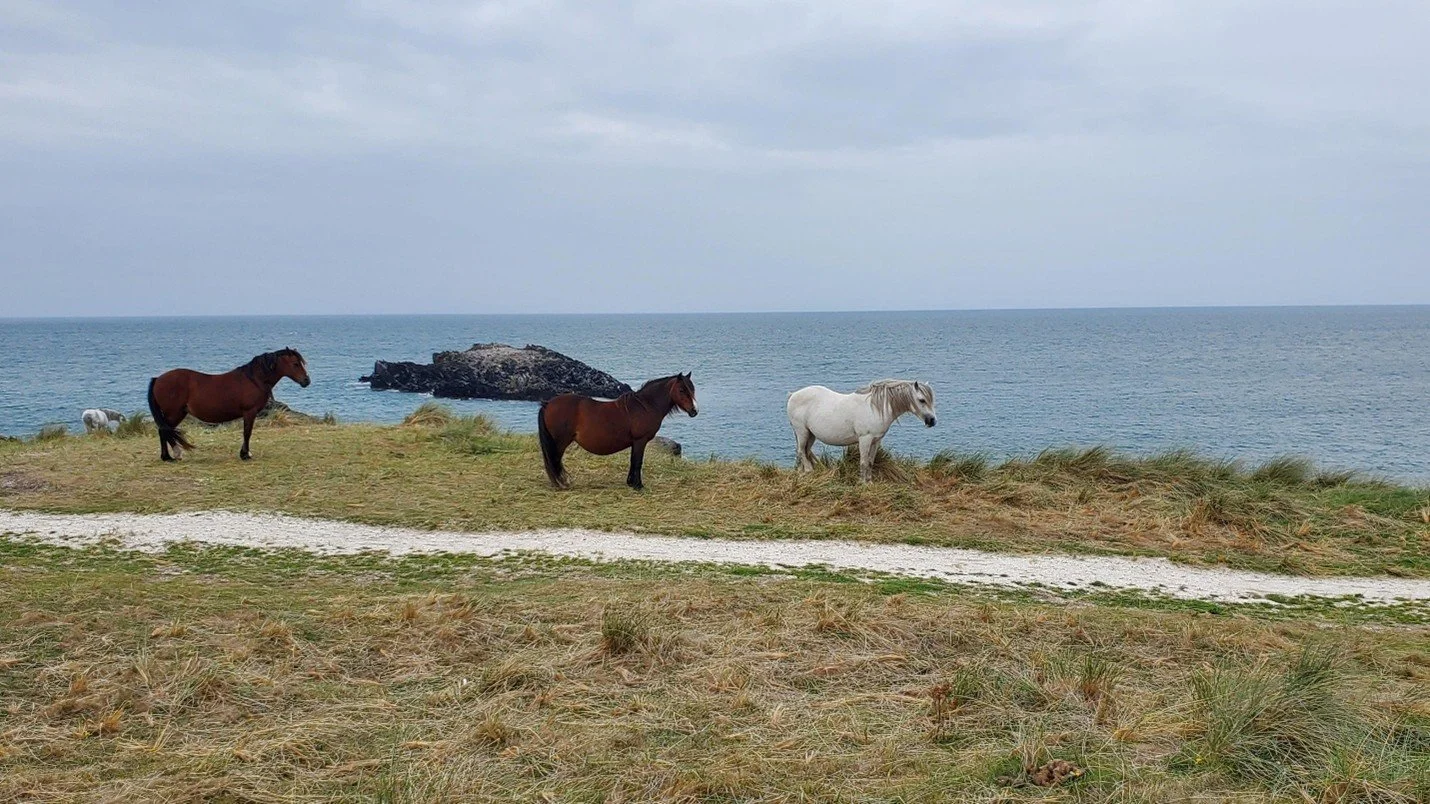
Wild horses…
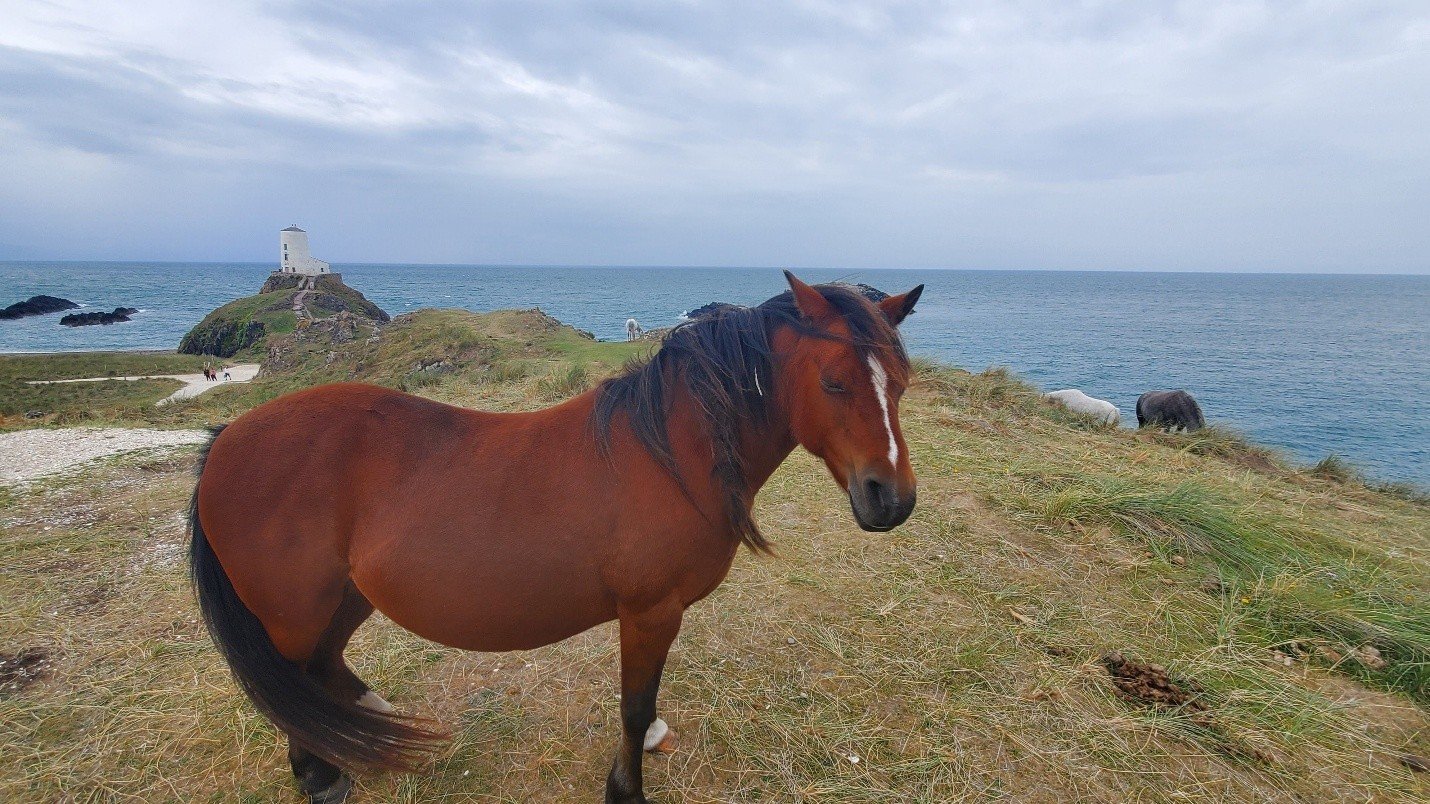
Couldn’t drag me away
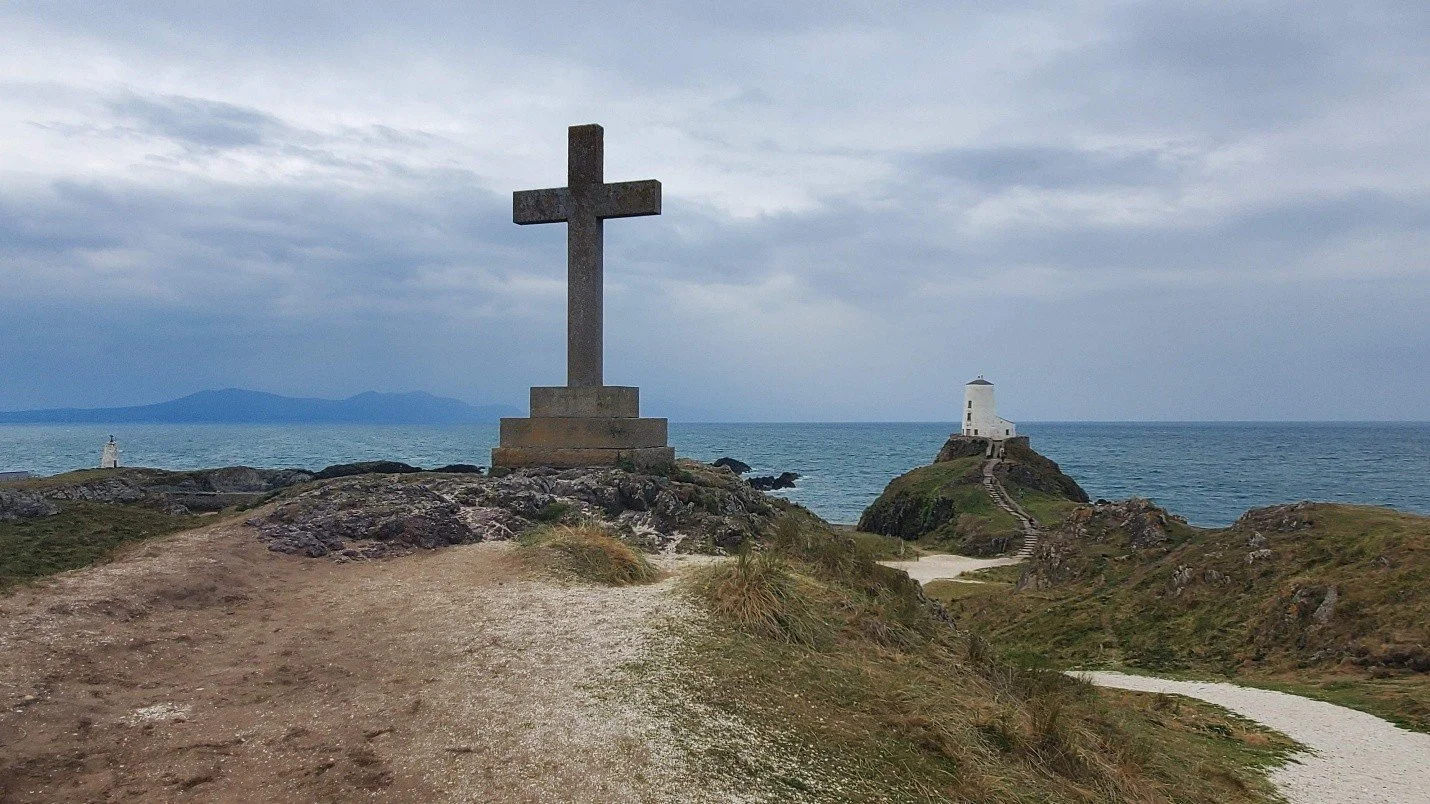
A more modern cross with an old light house behind it, and an even older lighthouse to the left.
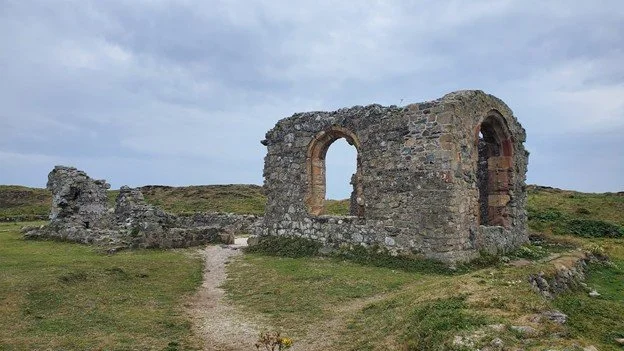
close up of the Church ruins.
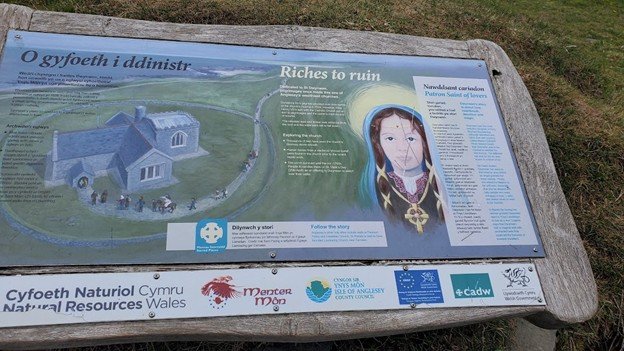
A panel showing the church before it was in ruins and when it was a pilgrimage site.
Pilgrimages used to come to this site from all over Britain. This was all stopped by Henry VIII and the English Reformation. The saint here apparently had a magical well with enchanted eels who could tell lovers their fortunes. We did not see a well nearby or the said eels, but it is an interesting story. See more about magic wells and water in Wales in the Legends and Lore section. 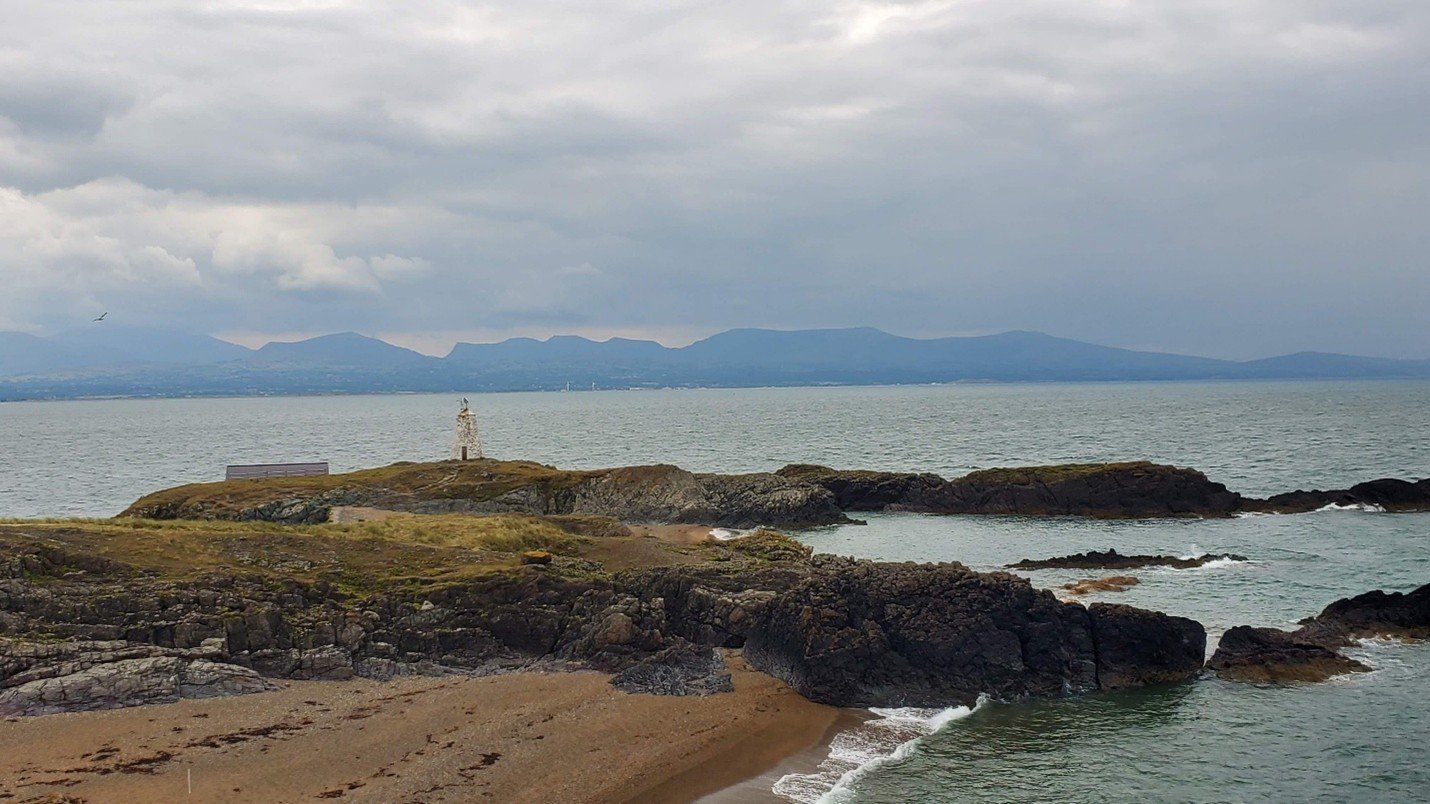
As I climbed up to the one old lighthouse to get a view of the mountains and the even older lighthouse, I really felt like I was on the far side of the world. There was no one else around, just the crashing of the waves, the clouds and ancient buildings and possibly eels whispering my fortune. I still have so many questions about the magic eels. How did they get in the well? How did they tell her the fortunes? The eels must be able to speak but I guess a speaking eel is less impressive than a fortune telling eel. How did the speak to the Saint? Did they just yell up the well? Were they telepathic? These are the things that keep me up at night.
Another lookback from the light house.
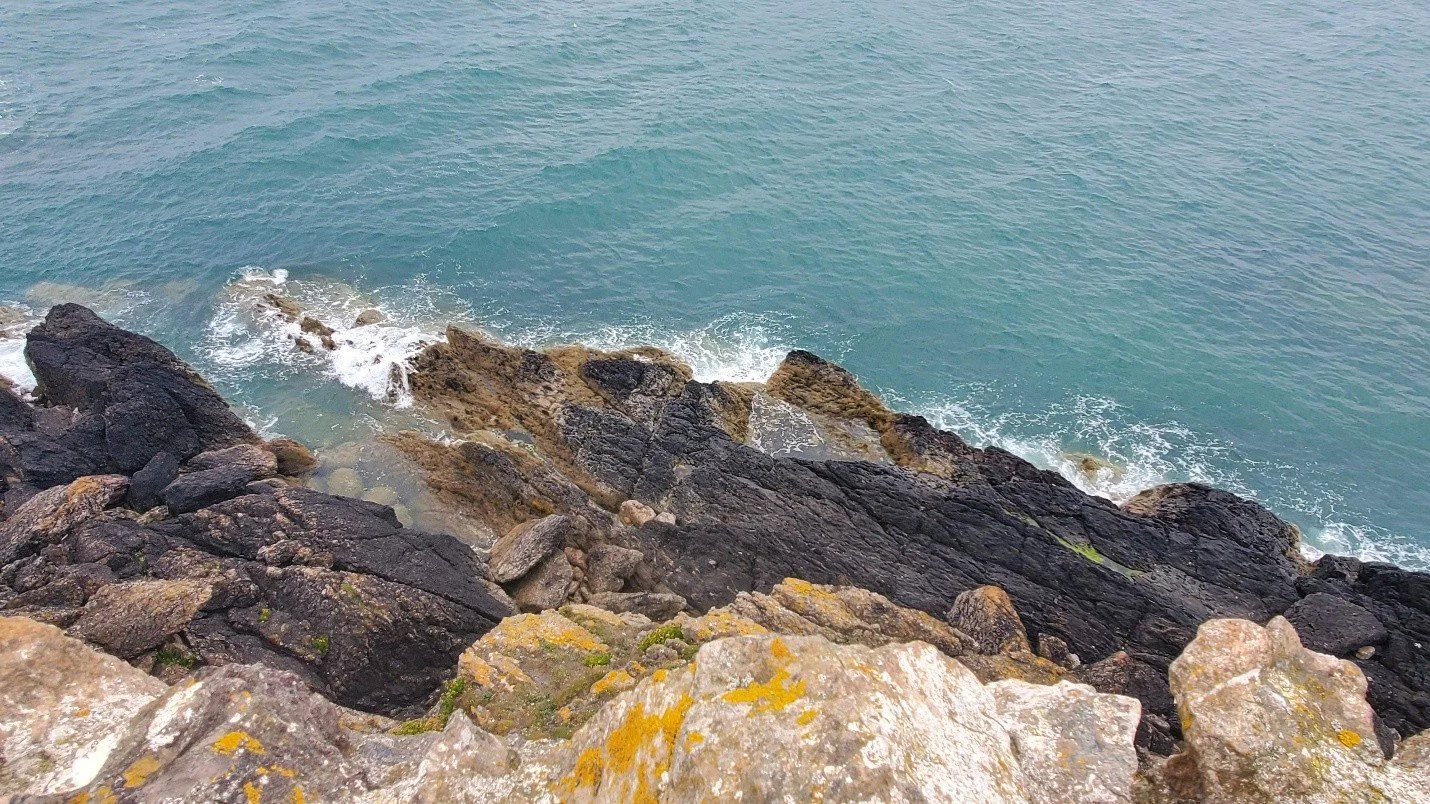
Epic rugged coastline. Every time I see rocky coasts like this it reminds me of an idea for a story about a Wizard living on a secluded island.
After this we went to look at the rest of the island we spotted to look at the older lighthouse I saw from a distance. 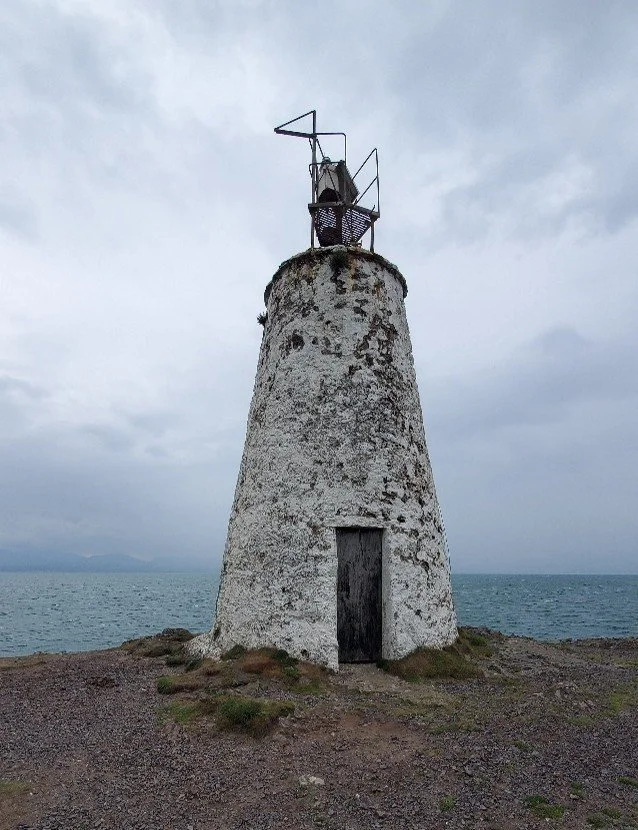
It was significantly smaller and looked like something out of Myst or another point click adventure game.
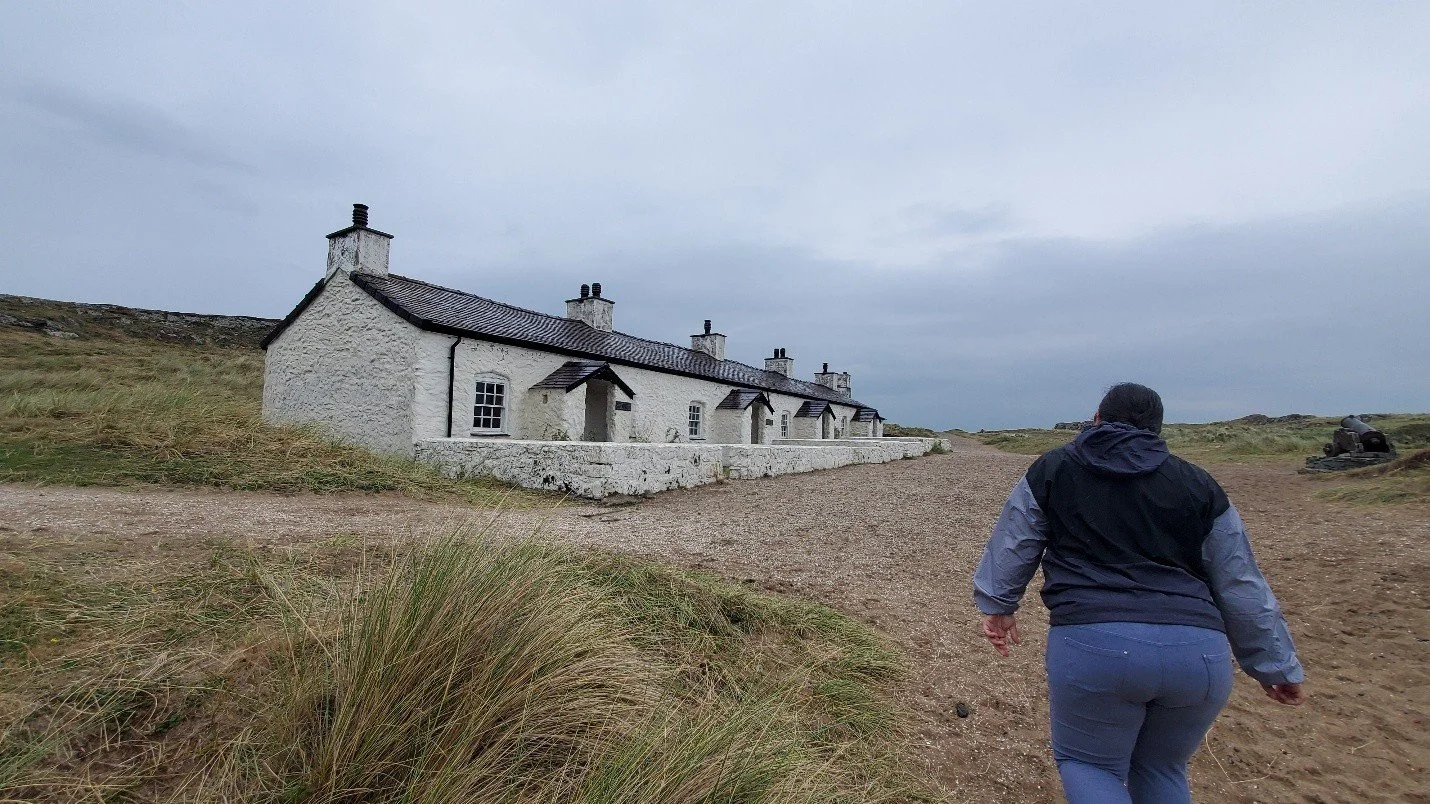
Old Stone fisherman cottages.
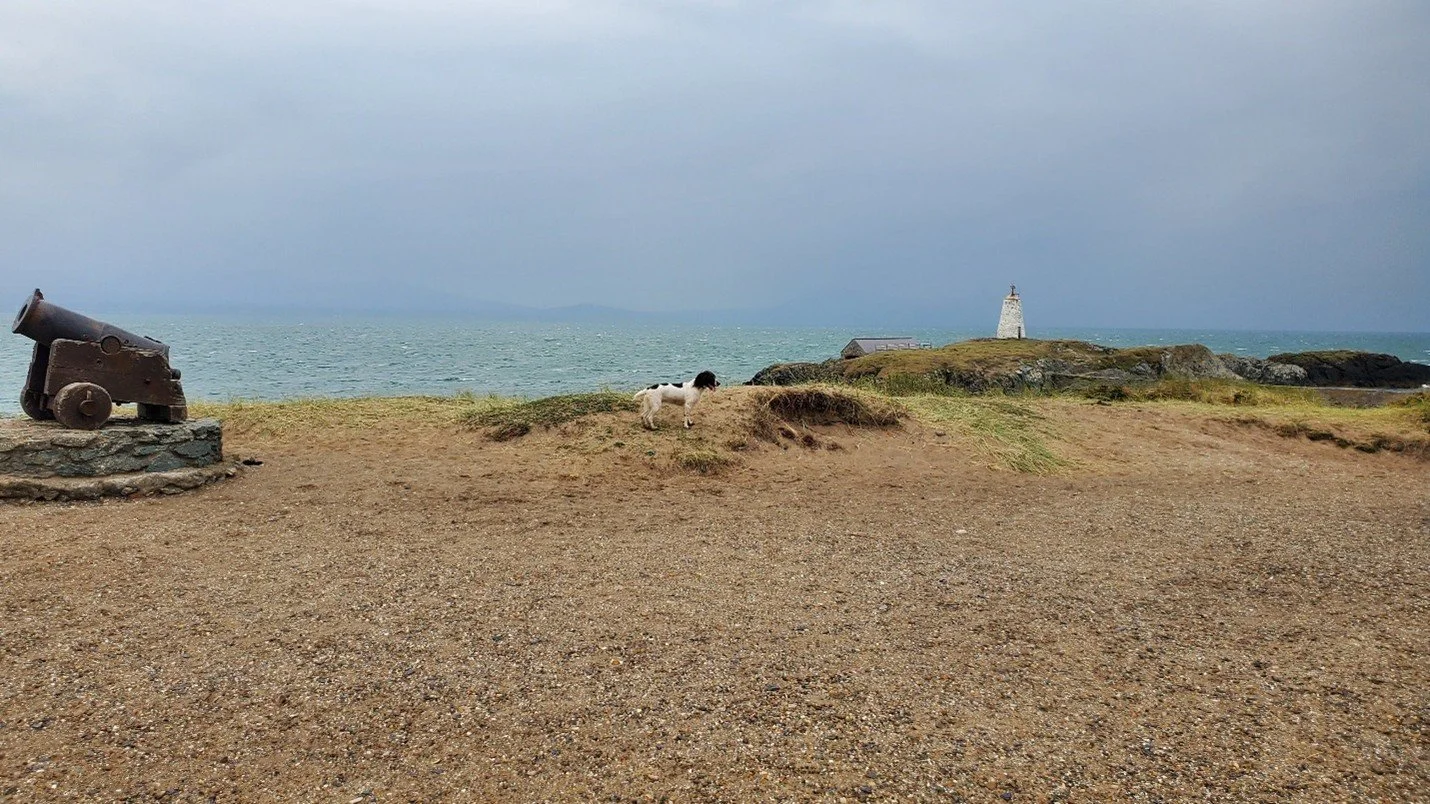
A lil dog, from a hiker we came across. People in Wales love their dogs, rightly so. He was having such a good time.
It began to rain as we made our way out of the tidal island. We saw a helicopter doing some kind of training in the water, maybe a drill to save people who were drowning. The water had lowered, and we could leave the island and the eels behind us without taking off our shoes.

Walking back, we talked with Chris about his business, he said that most of their customers were Americans who, like us, were afraid of the small roads and driving on the left. He had a lot of positive things to say about his other customers, and you could tell the man loved his job.

Unfortunately for us, this was our last day with Chris (although we did use a transfer service from his company to get to Cardiff later). The custom day tours we took were about $430 per day per group, so the more people you have you can split the cost. Looking at other custom tours in Europe this is a very good rate. I've seen some day tours as high as 1,100. 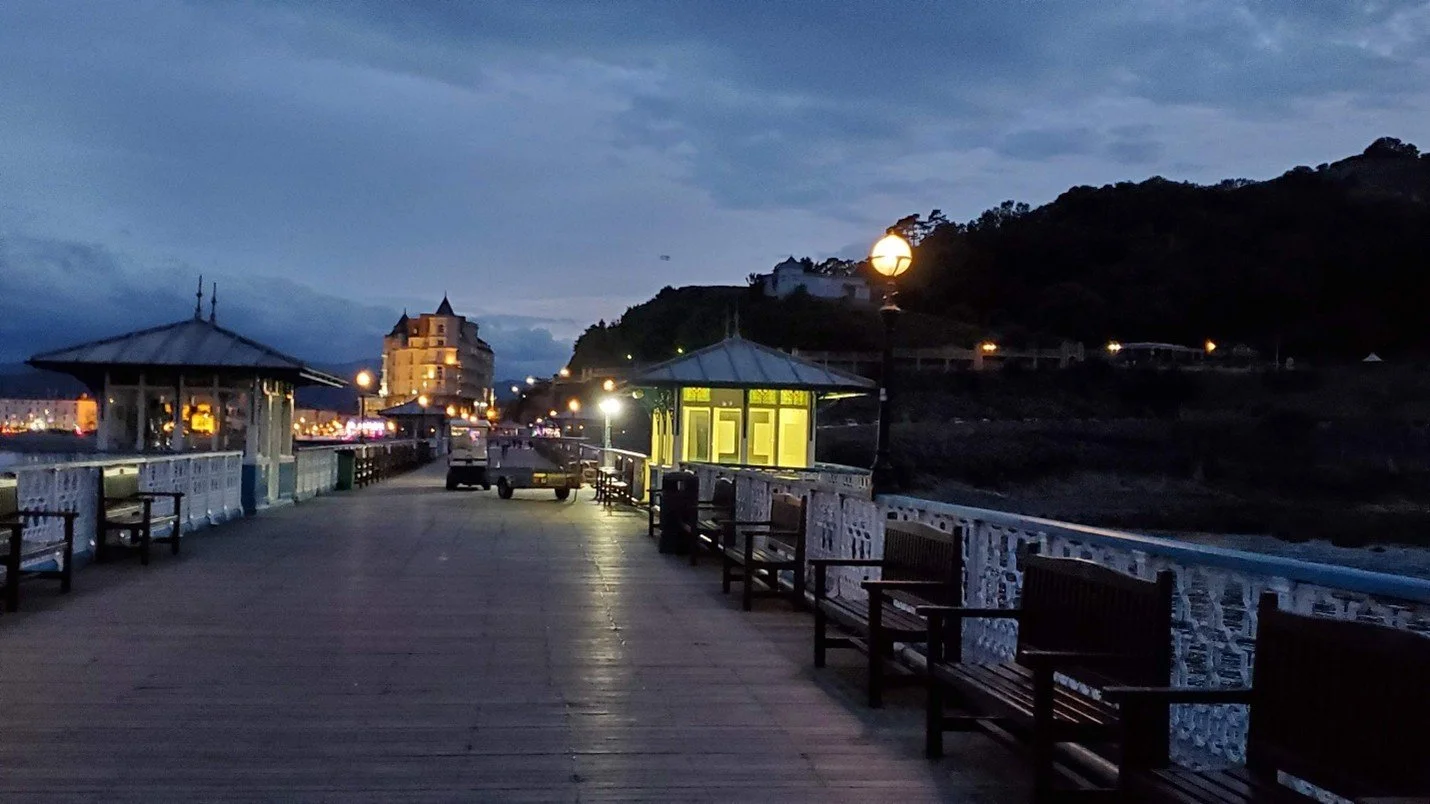
Night shot of the Llandudno pier.
Day 3: The Orme
After two days jam packed with some of the best sights of North Wales we took it slow on day 3 exploring the area around Llandudno. We slept in a bit then had breakfast in the hotel, which was okay; nothing really to write home about. We took the Great Orme Cable car up the mountain called the Orme (which means serpent or dragon, more on that later) that extended into the ocean. Chris had told us about a Bronze Age Mine that you can visit on the Orme and this Victorian cable car that takes you up there. 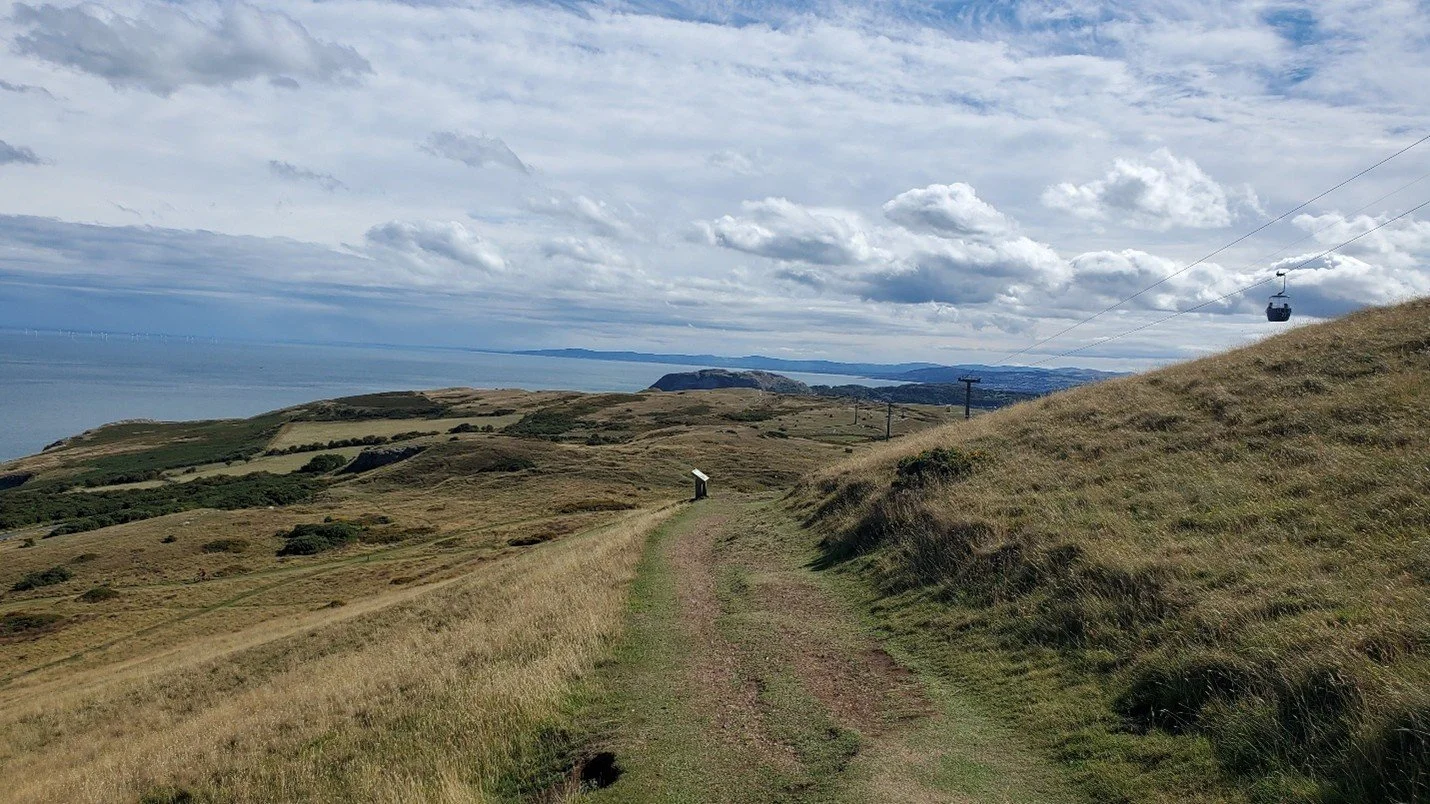
On top of the Orme.
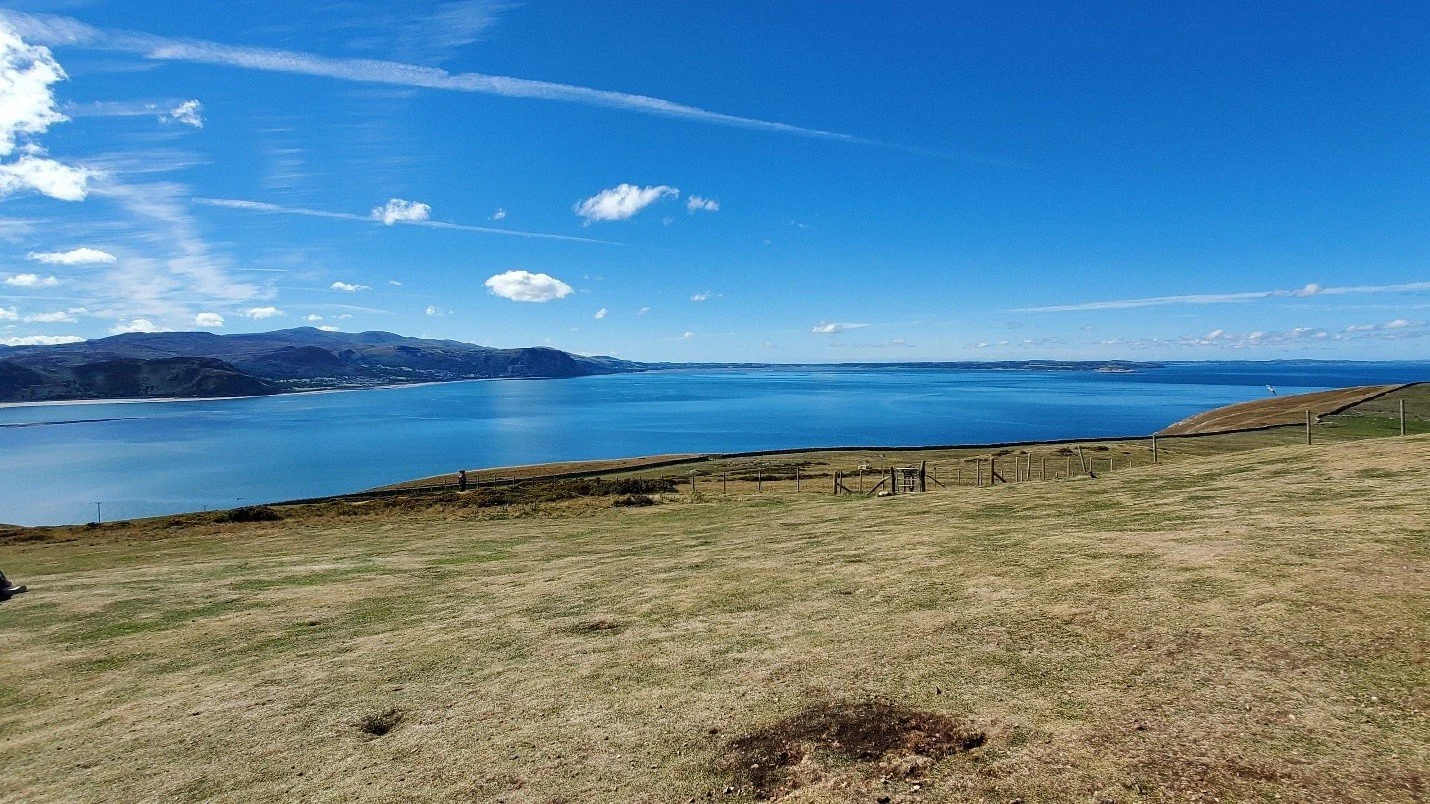
Above, another shot of the Orme, the water was so blue and the sky was so clear. I actually got a little sunburn since I wasn’t expecting sun.
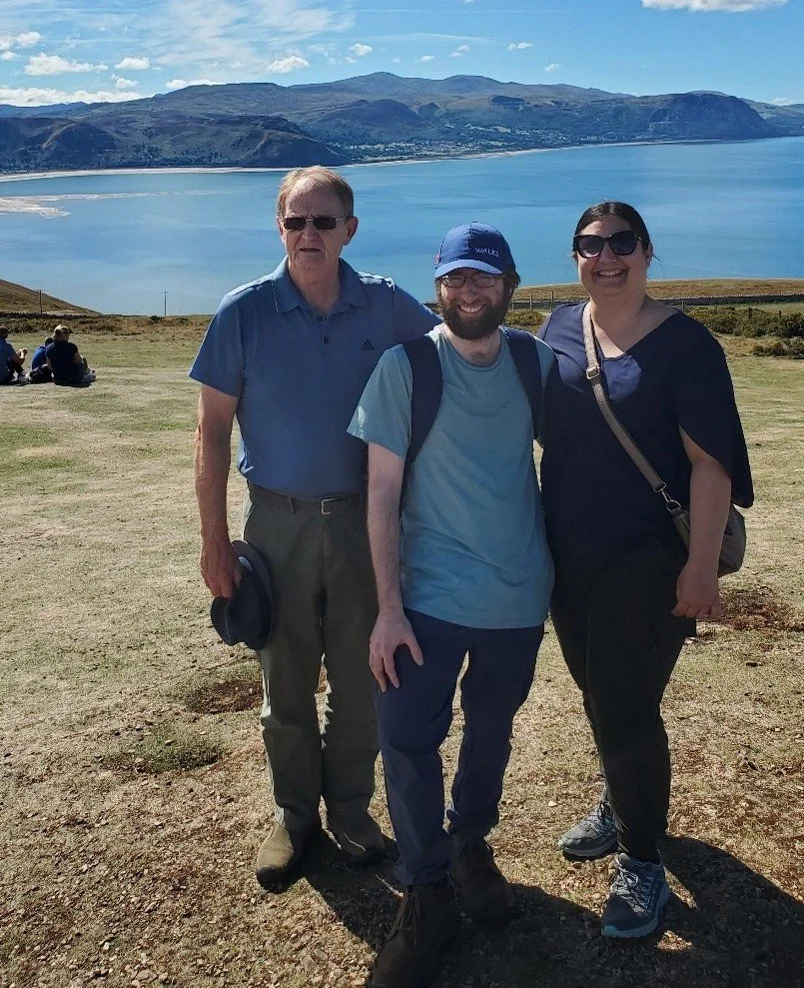
A British man who decided he wanted to join us in our picture that his wife was taking for us. We loved it.
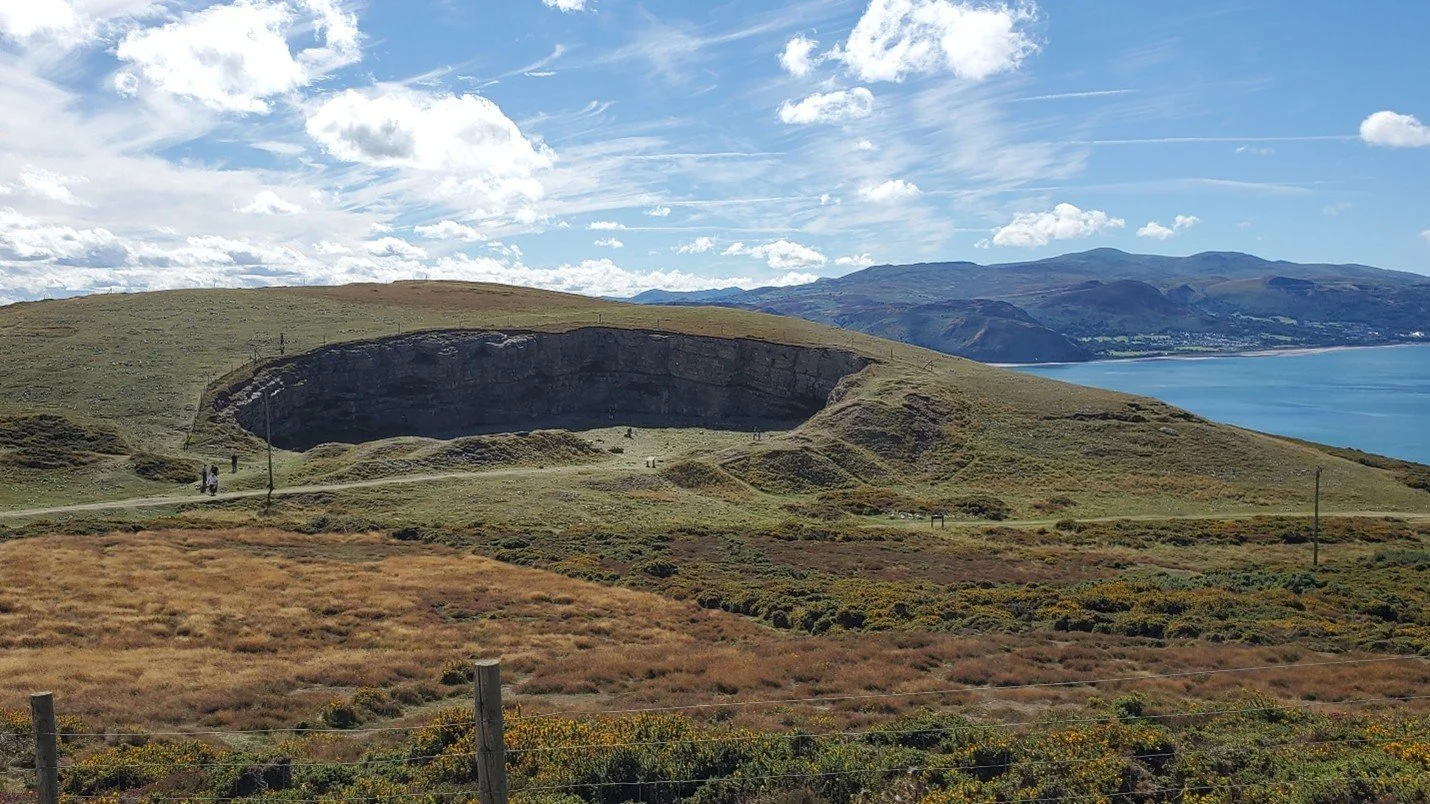
part of the hill that was mined out
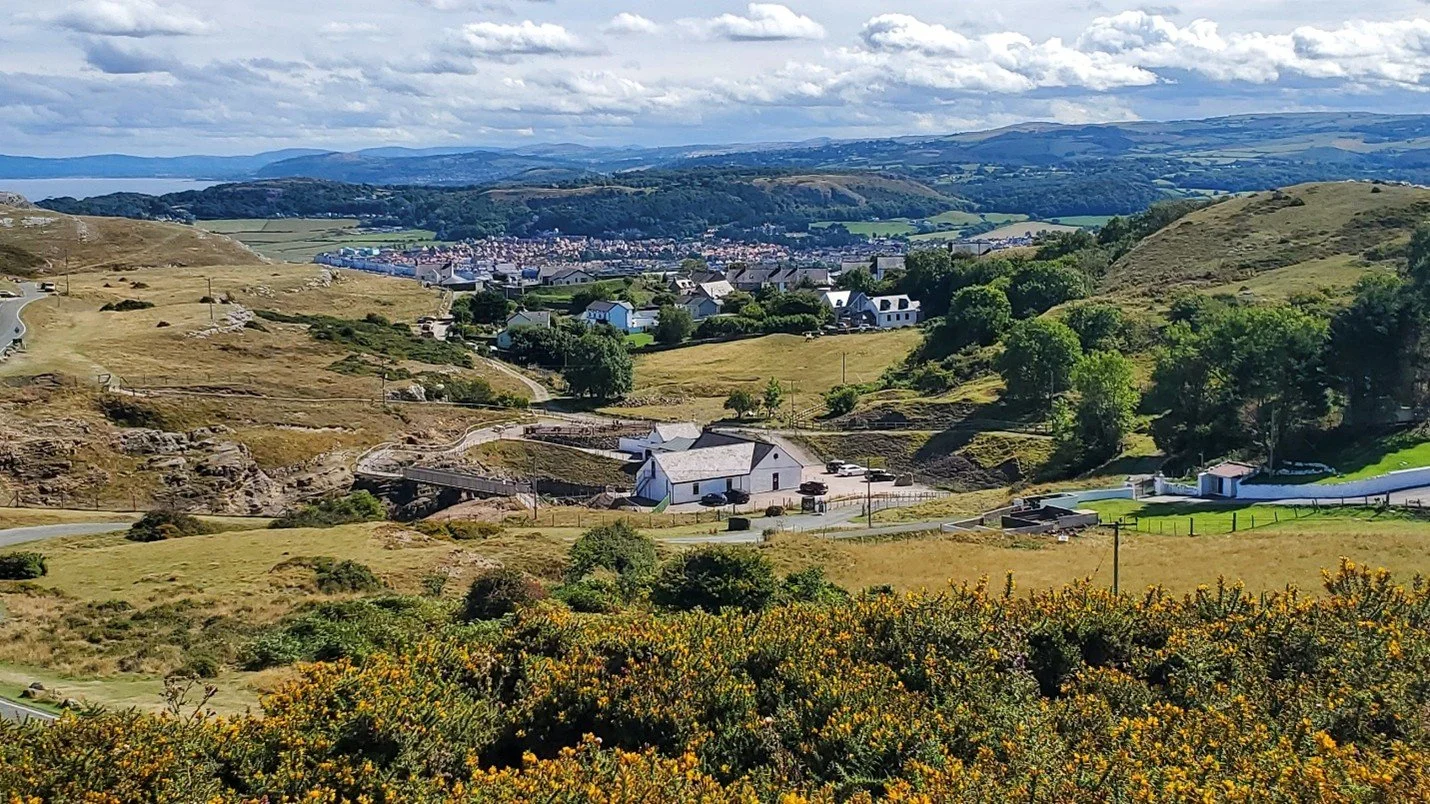
Speaking of mines, the Bronze Age Copper Mine that Chris told us about was our main destination after we had a bite to eat in the cafe at the summit.
The Bronze Age Copper mine was a mine that was discovered in 1987 of a mine that was dug out around the year 1,600 BCE (or BC) so nearly a thousand years before the Roman's invaded Britain. There is a great exhibit, and you get to explore the mines on your own. 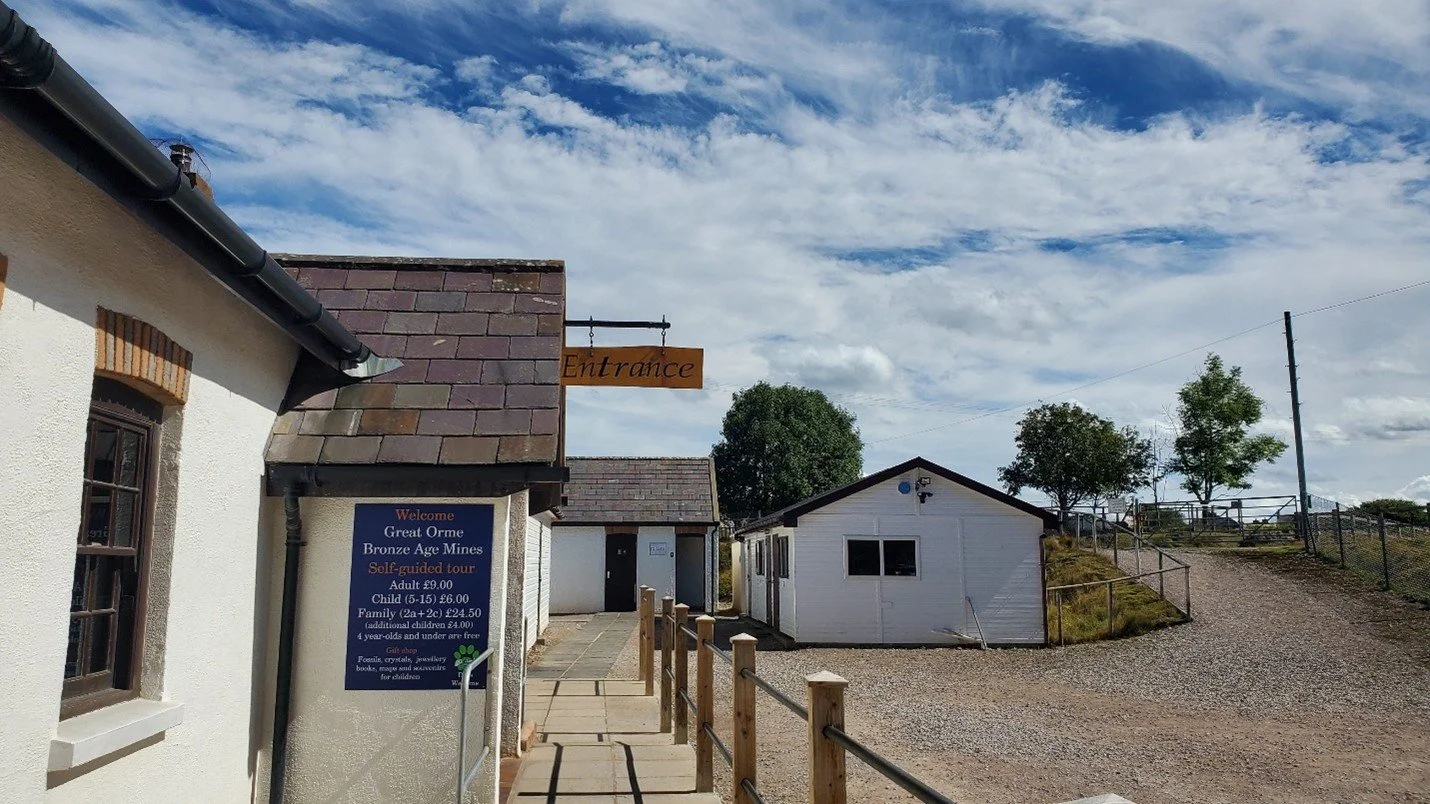
Enterence to the Mine
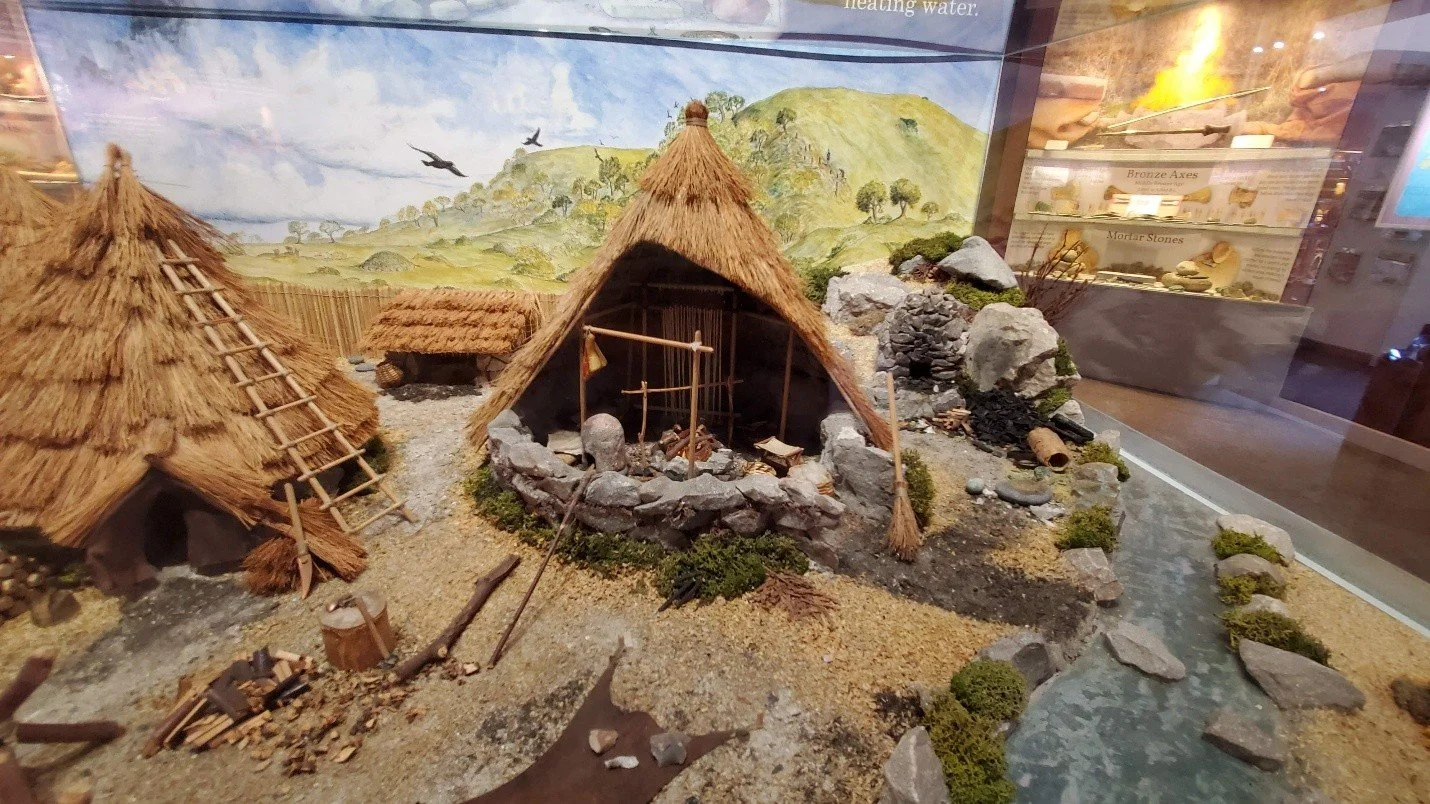
The exhibit showing British huts from the Bronze Age.
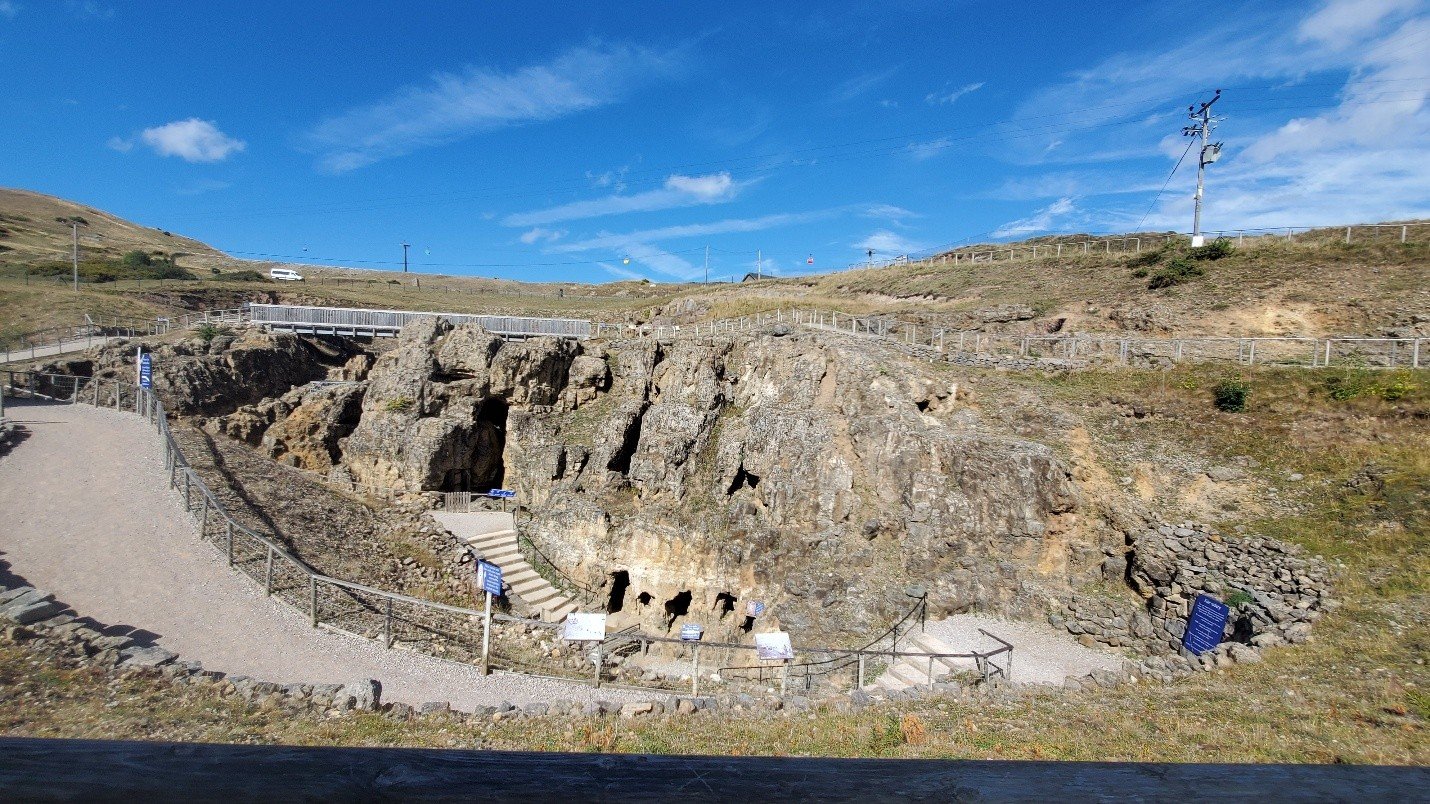
Outside of the mine. The holes leading to the mine are visible from here.
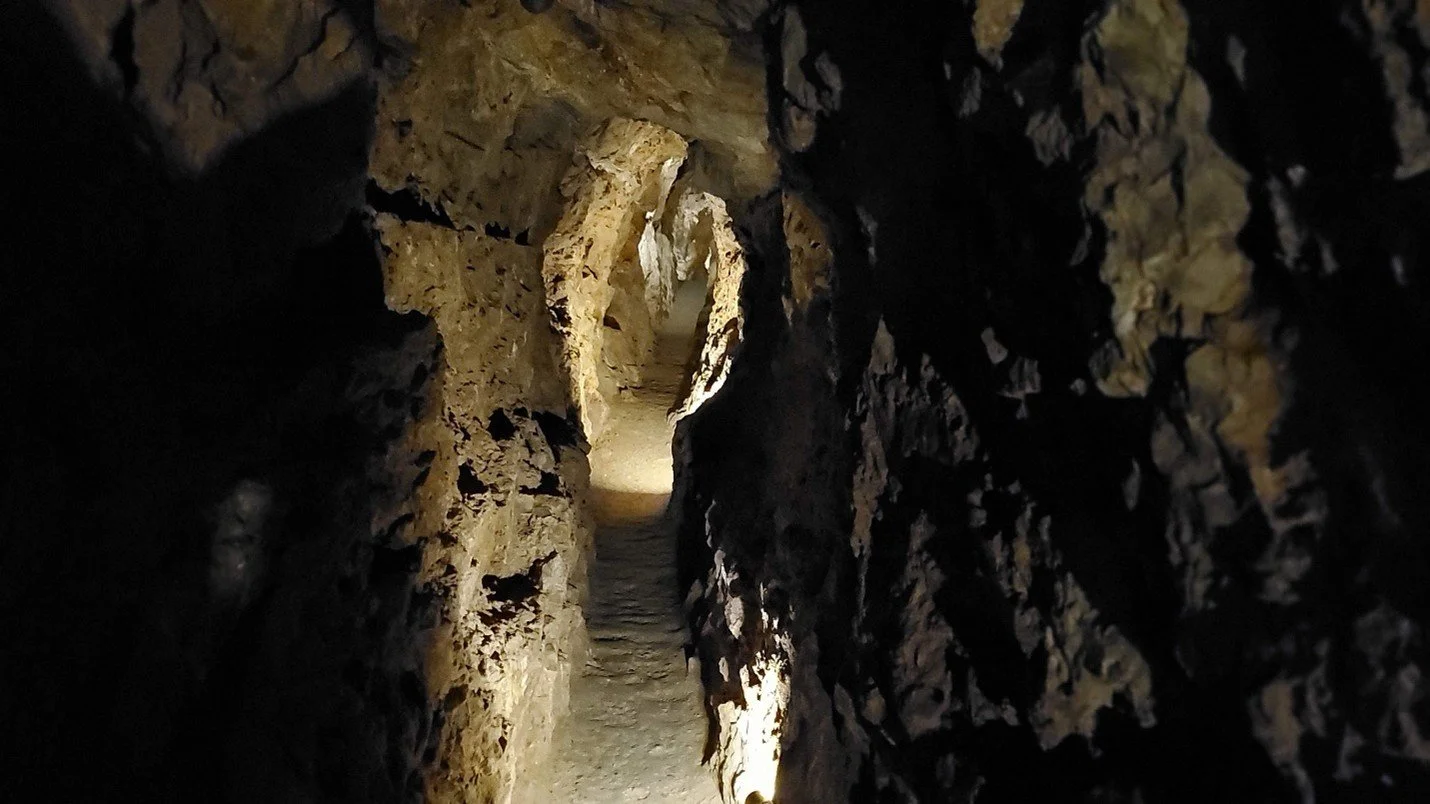
Cave passage. The cave was refreshingly cool. There are miles and miles of tunnels but only a small section can be visited. Even that small section though felt very long. We had the tunnels all to ourselves. It was definitely a must do if you’re in the area. It was crazy to think that all these tunnels were at one point filled with copper and mined out by hand with stones.
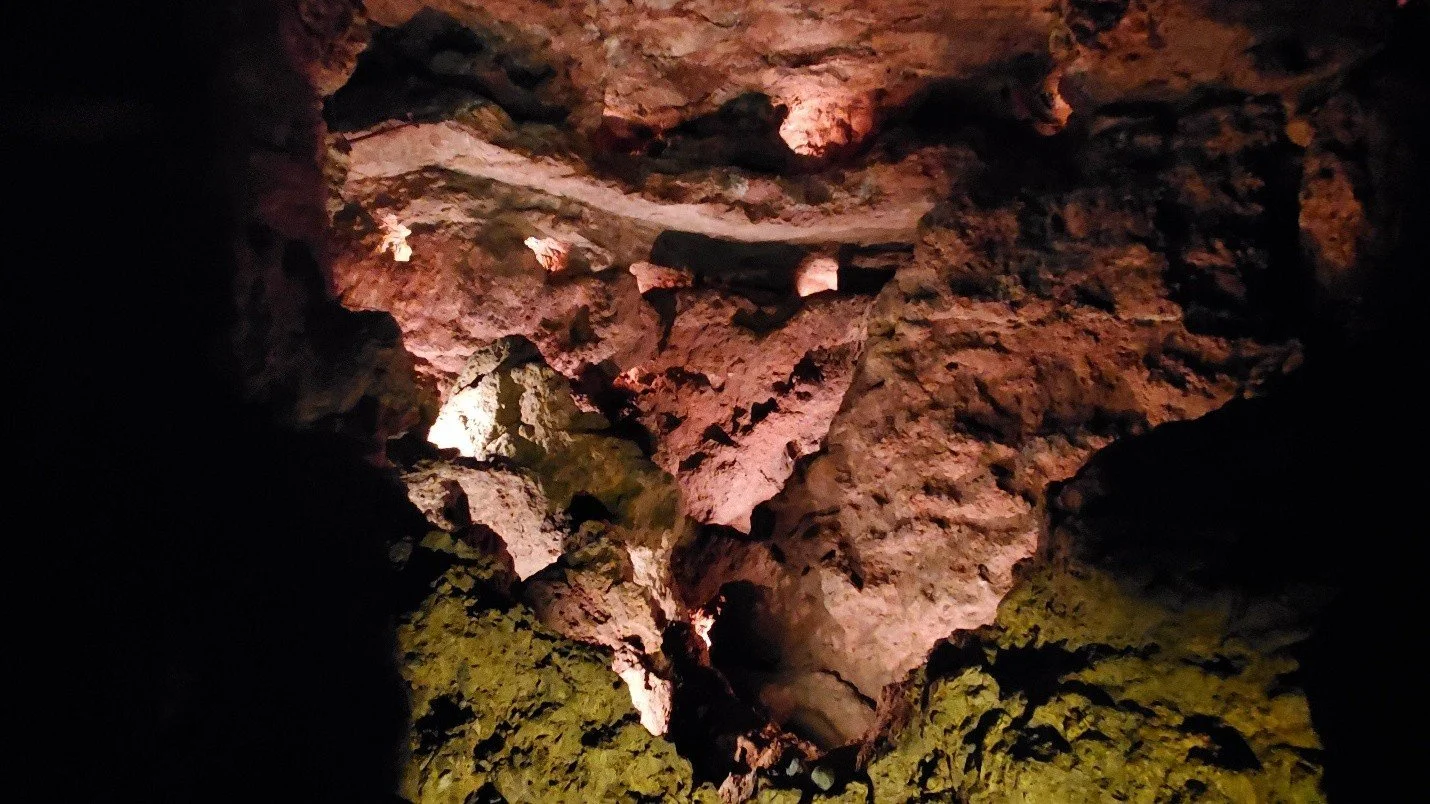
There was a little window in the cave leading to a massive chamber. The picture doesn’t show how large the chamber really is.
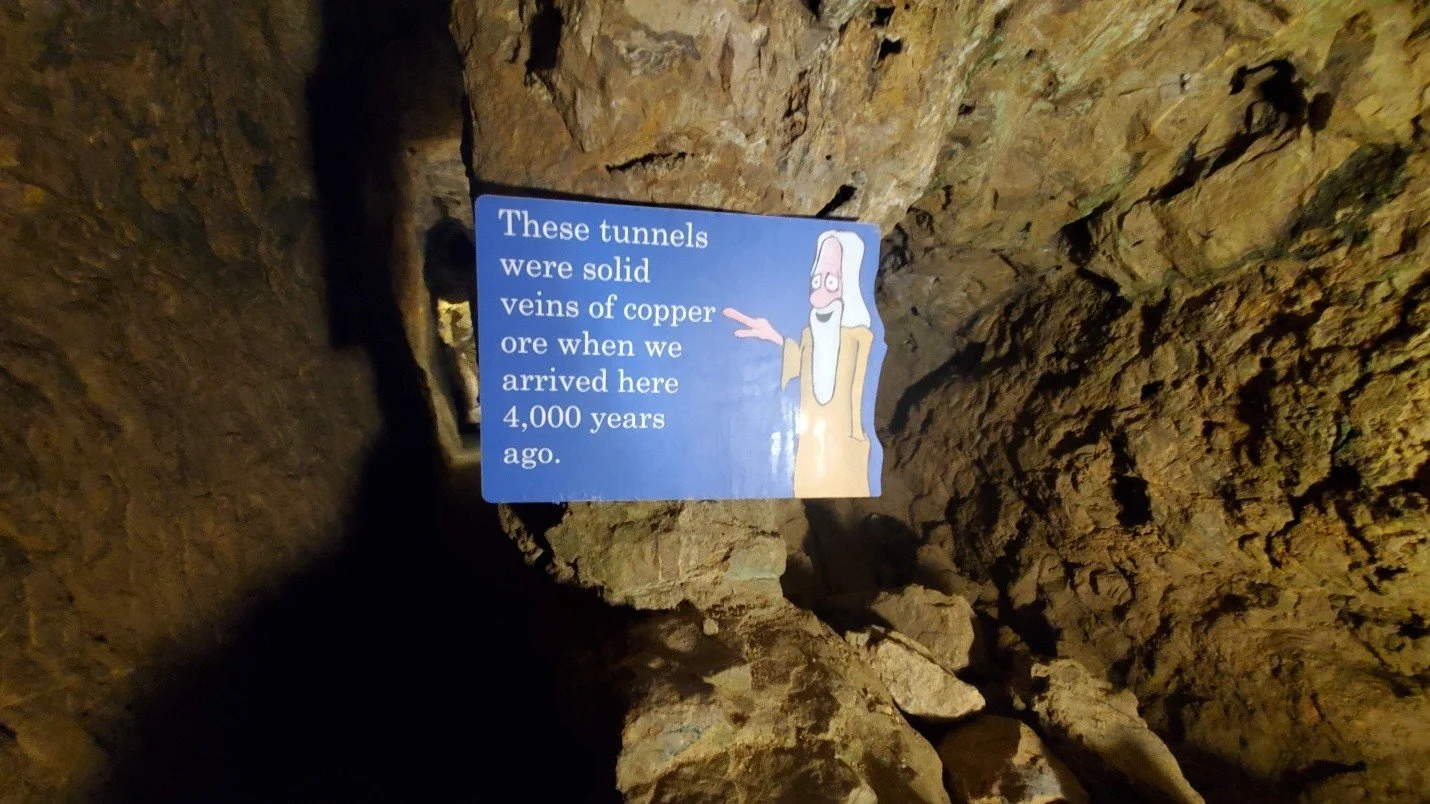
Our bearded man led us through the tunnel.
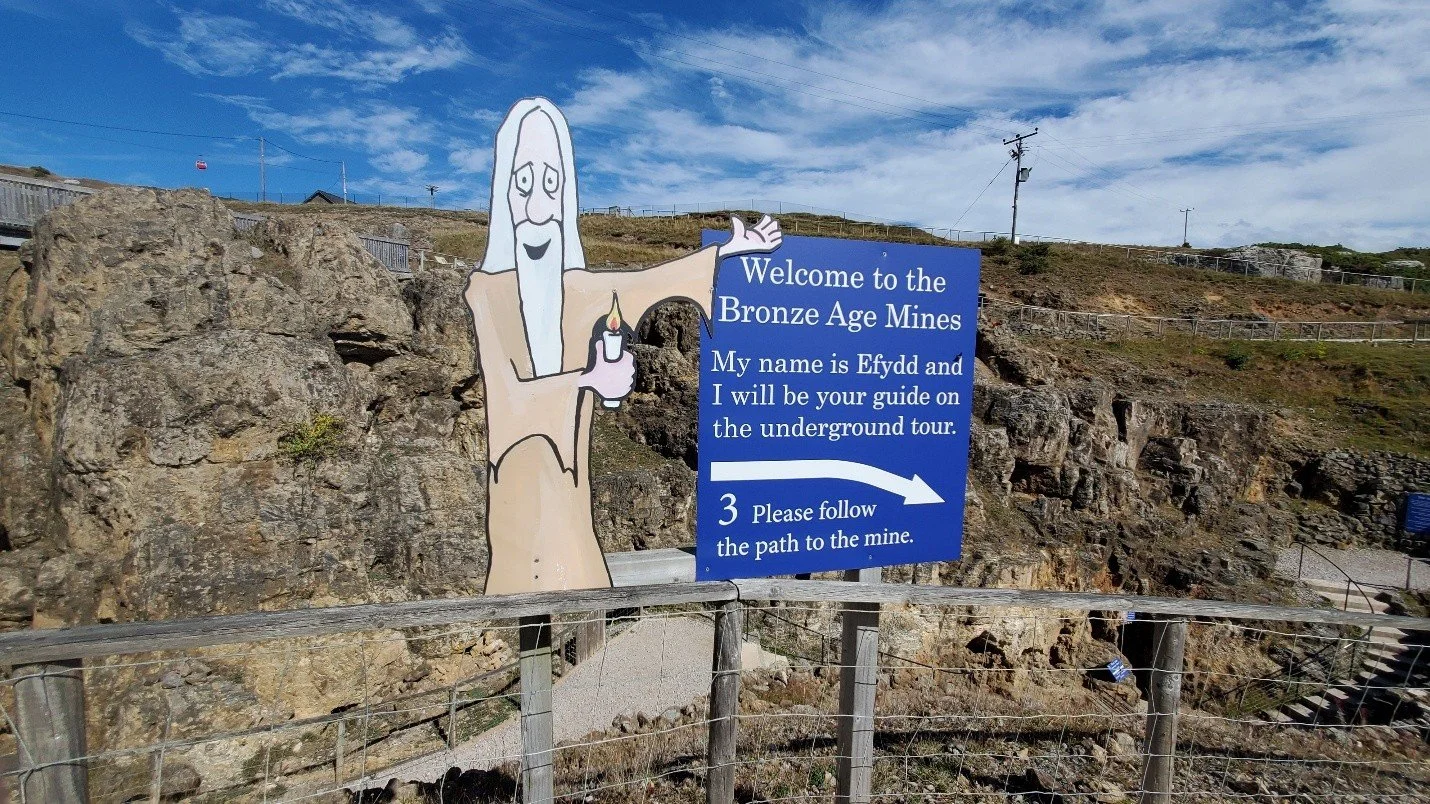
His name was Efydd.
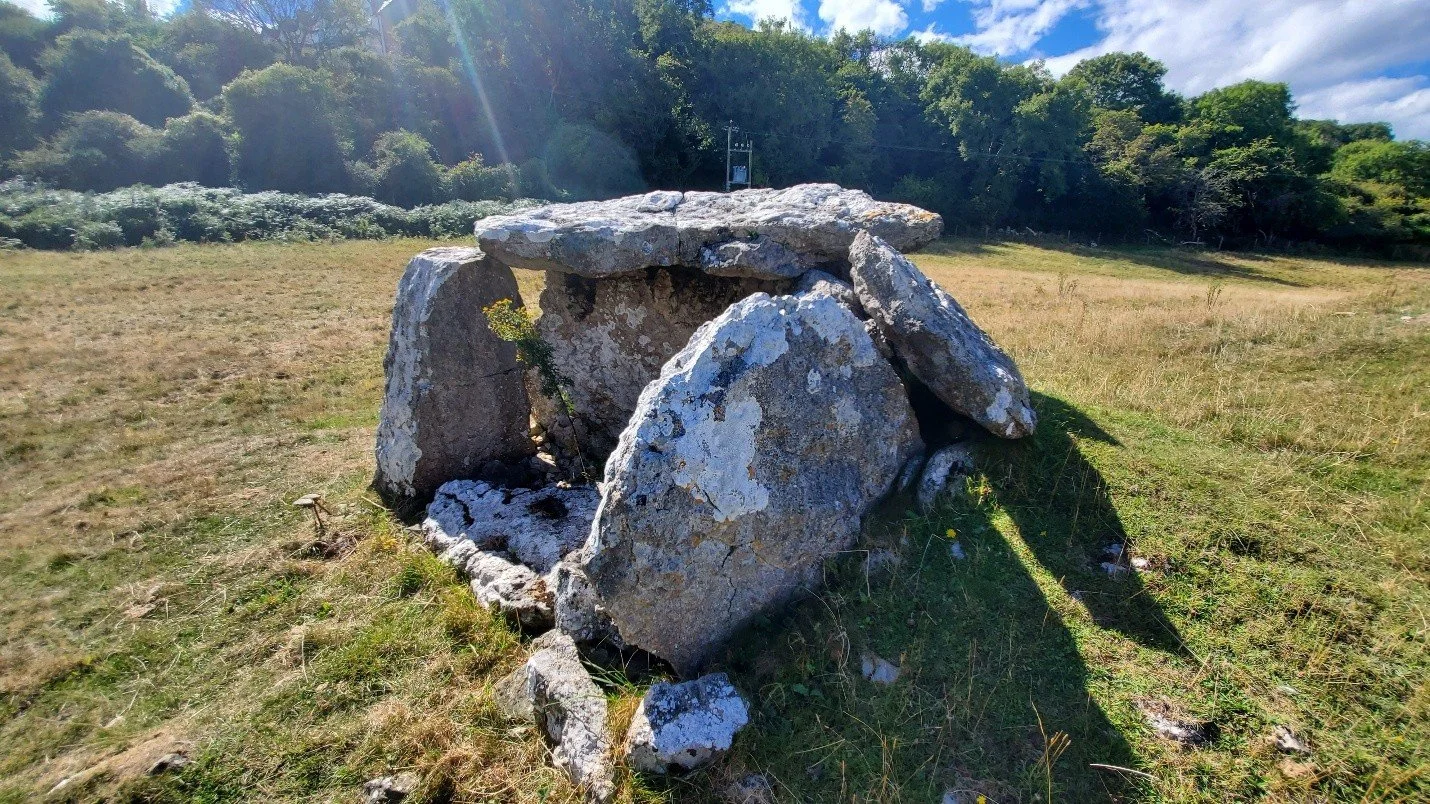
Next we went to look for a megalithic site that was close by. We ran into a little black cat who looked mad so we decided to not call him over. He then came right up to us and demanded pets, which were of course given. He then led us to the Megalith we were looking for. A very good boy and helpful kitty. 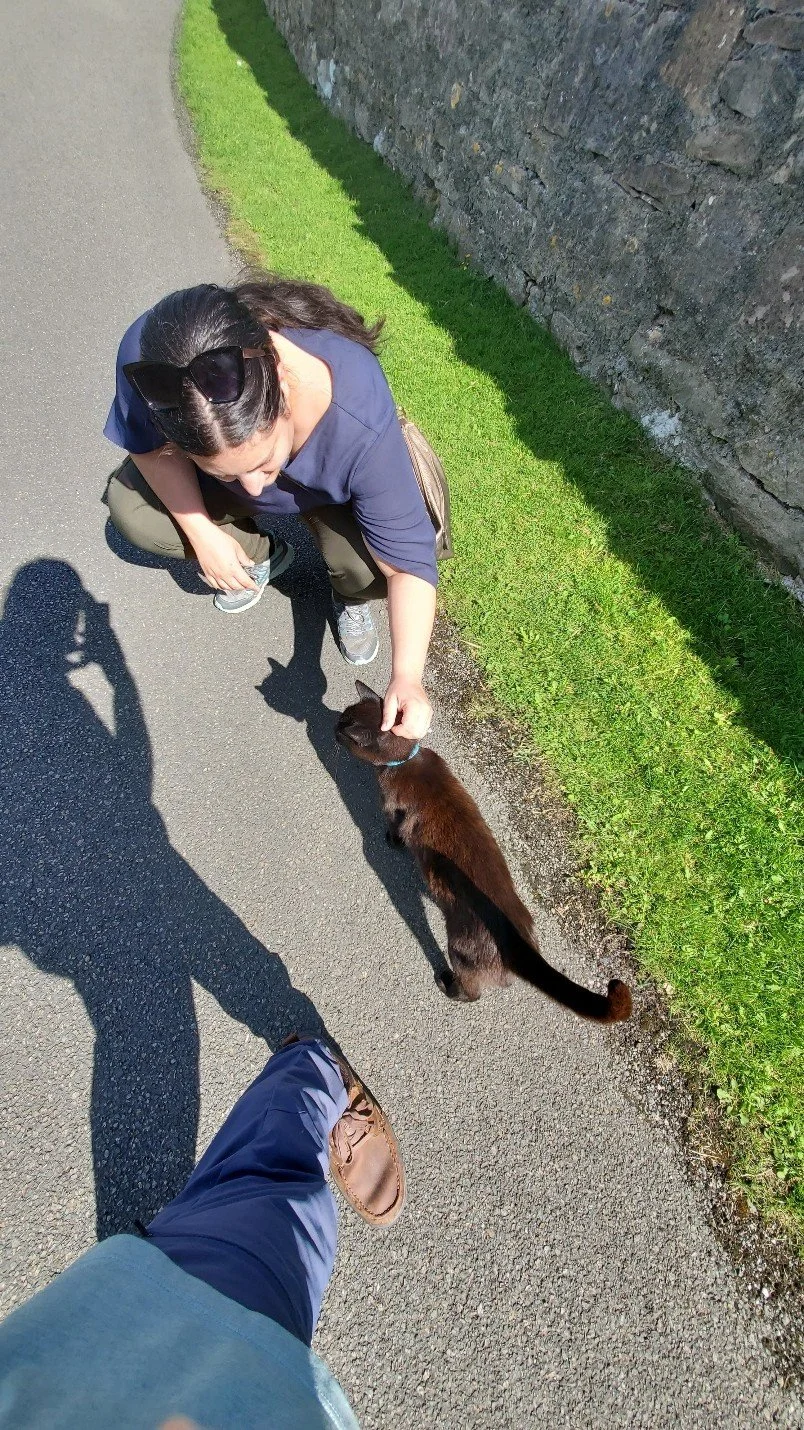
Left: Our lil Kitty the previously mentioned good boy.
top: The megalith burial chamber he led us too.
On our way back to the tram we remembered Chris told us a story of how during the pandemic, goats from the Orme area had moved down towards the town. We were on the lookout for goats and saw a few but they fled before we could get a picture. 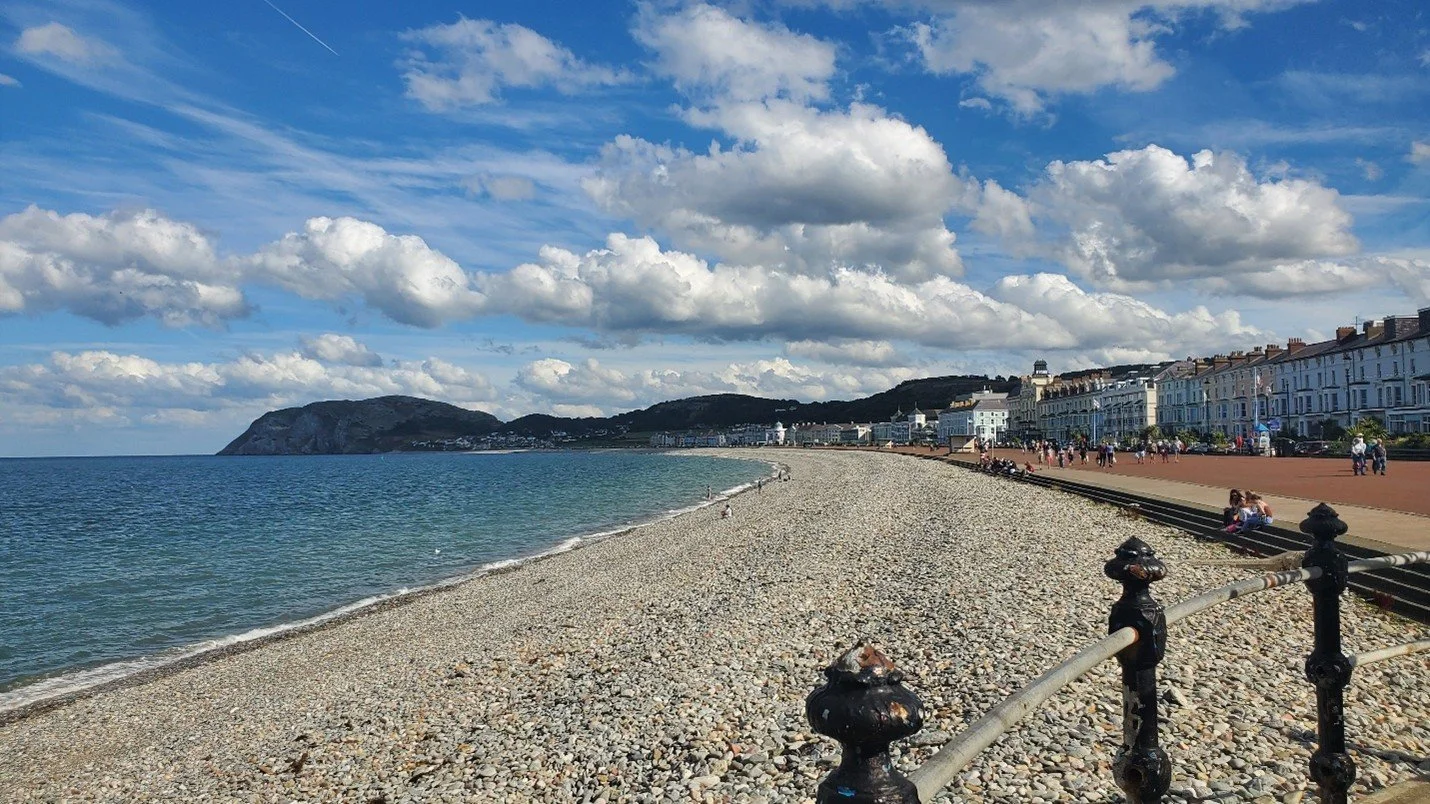
The stony beach of Llandudno with the white Victorian houses near the promenade
We hung out in Llandudno, getting some food and just exploring around the promenade. We got a bit to eat and saw some very aggressive seagulls trying to steal some food. We rested up for a day in Conwy. Day 4: Conwy!
See part 2!