A Week in Wales part 2
Day 4: Conwy!
Here it is, the moment we had been waiting for, Conwy! We had driven past the large castle three times now with Chris and had heard about how beautiful the castle and town is. While it is not as large as Caernarfon, it is on a large rocky outcropping making it look more impressive then Caernarfon, which is on relatively flat ground. We took a hop on hop off sightseeing bus tour which took us from right from Llandudno pier to Conwy and several other sites.
https://www.hop-on-hop-off-tickets.com/llandudno-bus-tours
We took the red route which is a very easy way to get to Conwy from Llandudno.
Along the way the bus commentary described to us the history of the Orme area and that it is called the Orme because it is the old Norse term for Sea Serpent. Legend has it the headland looks like a giant sea serpent and Vikings who were settling (or raiding) the area saw it appear out of the mist and were scared sh*tless at seeing such a huge sea monster.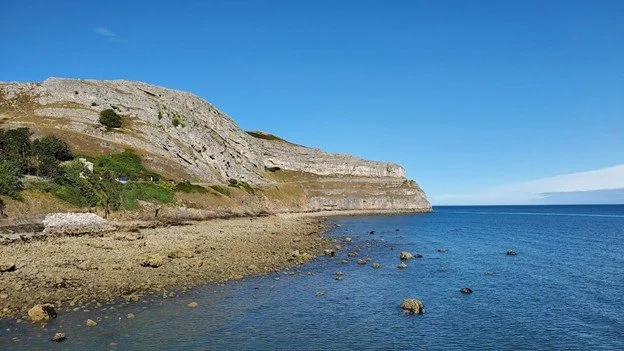
In this shot from the Pier, you can kind of see how in the mist and darkness this might look like a giant sea monster.
There is a modern bridge built next to the castle so coming in on a double decker tour bus gives you a very good view of the massive castle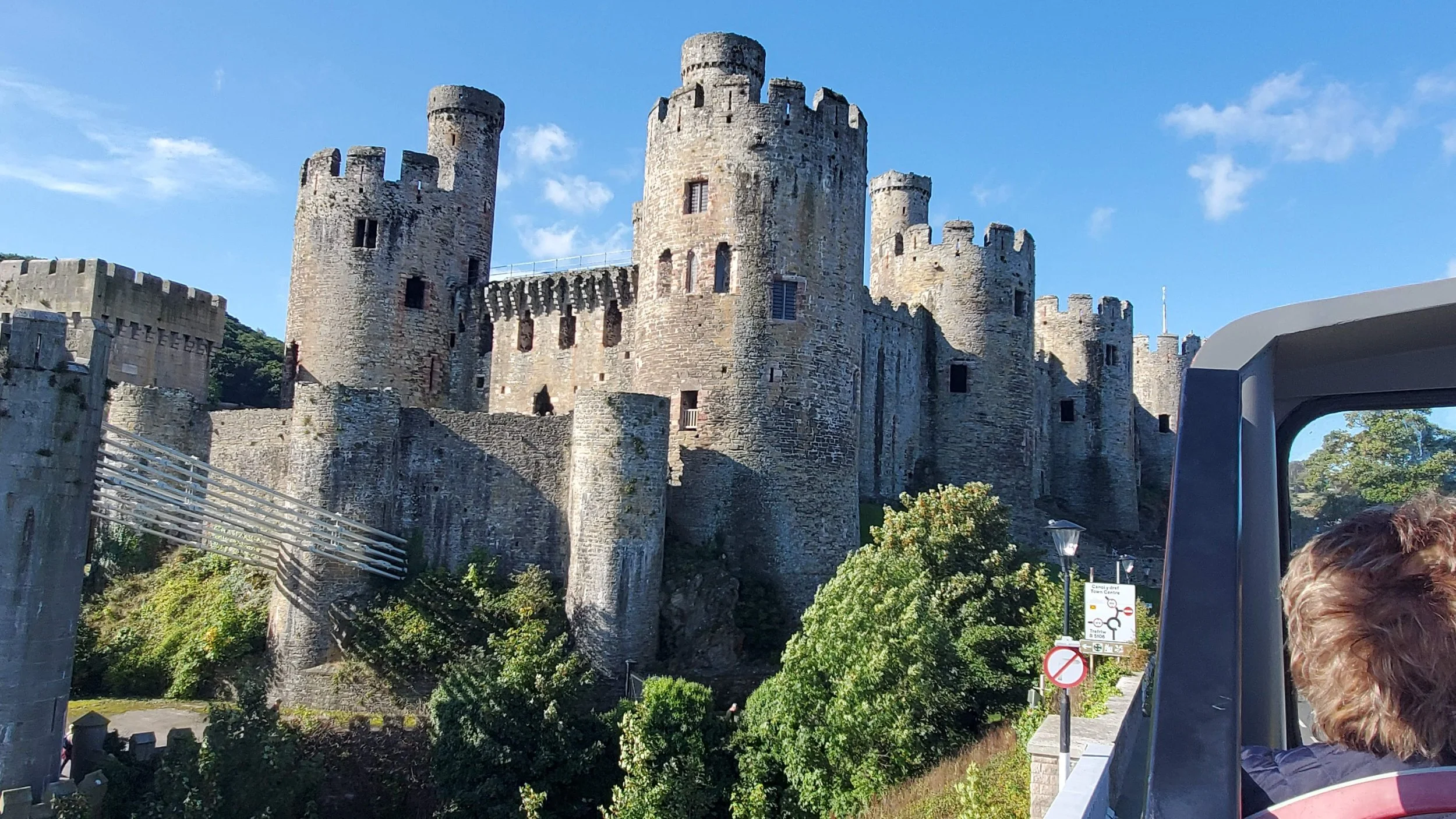
The large towers of Conway as we passed by. The castle is a concentric castle, meaning it has no central keep. Instead, it has massive towers as large as keeps and several rows of walls with towers. In this show you can see the smaller shorter wall before the castle and the larger towers behind it.
Before we stormed the castle, we ate at a nice little bakery that served breakfast across from a Lancaster square, which has a statue of Llywelyn the Great.
Next we walked up to the old city wall and climbed up. It let us straight to the castle which was impossible to miss. 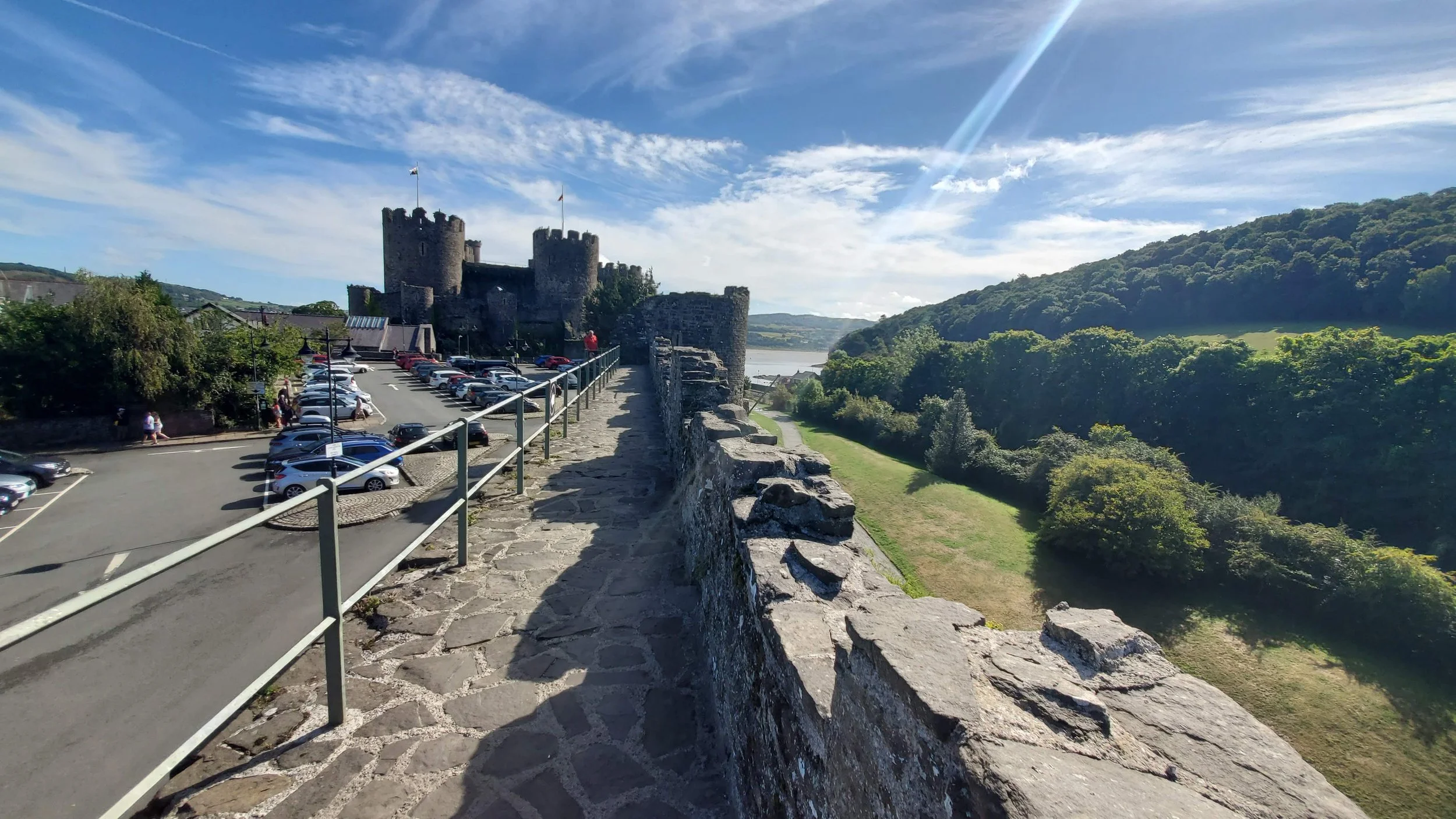
Wall leading to the castle .
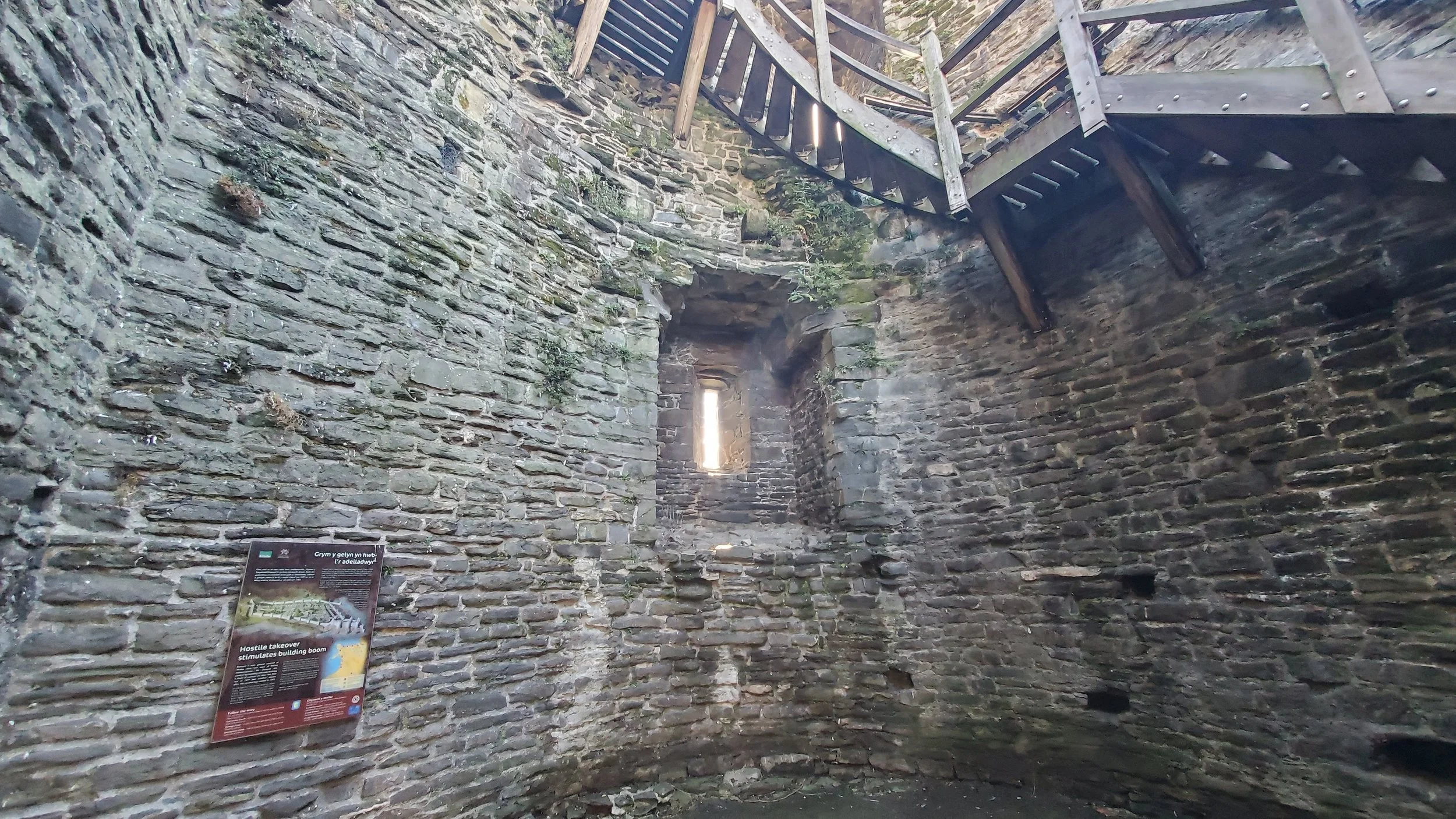
Inside of a tower on the wall.
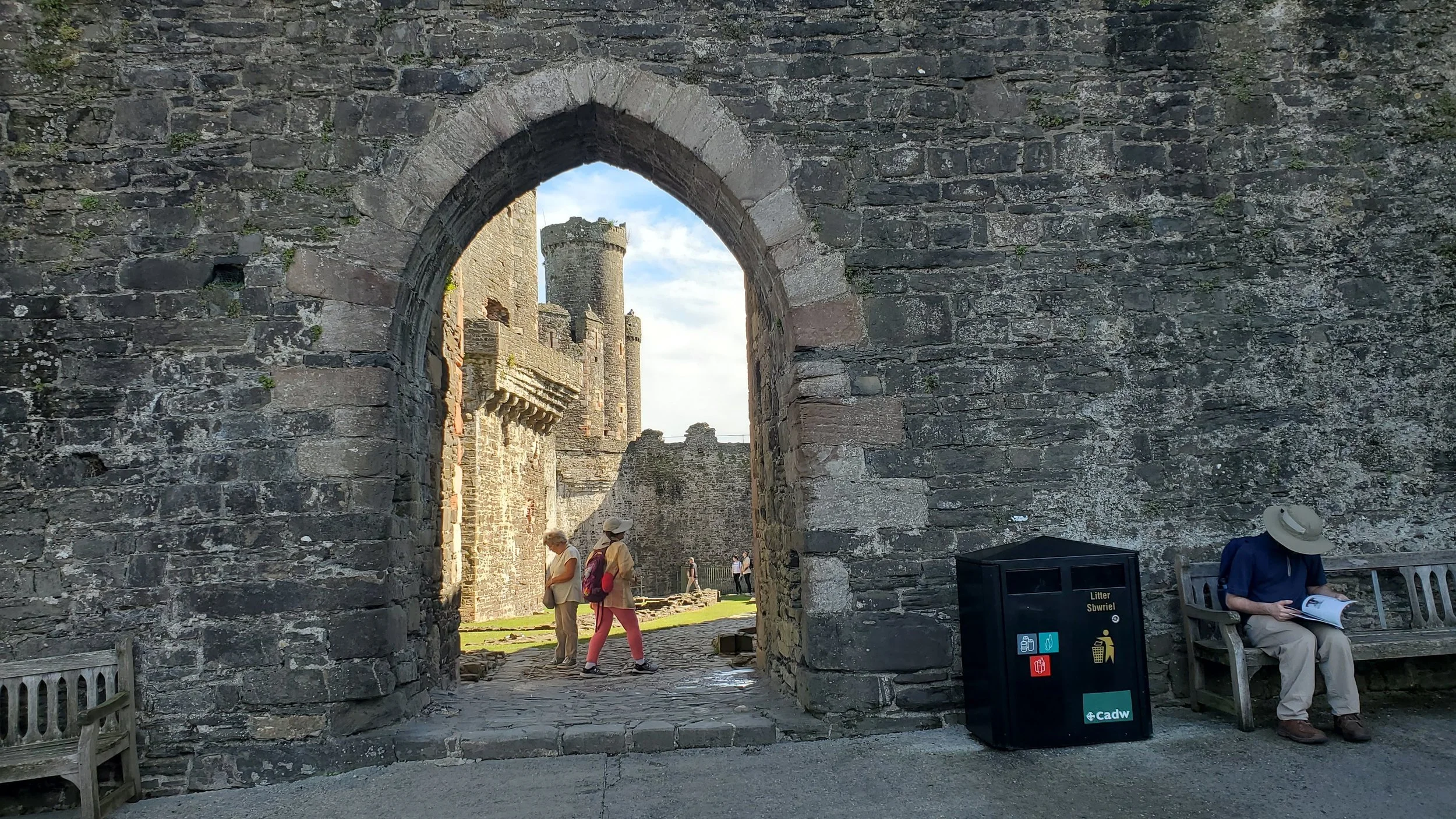
One of the multiple gates. I like how this photo uses the gatehouse like a frame showing the other towers.
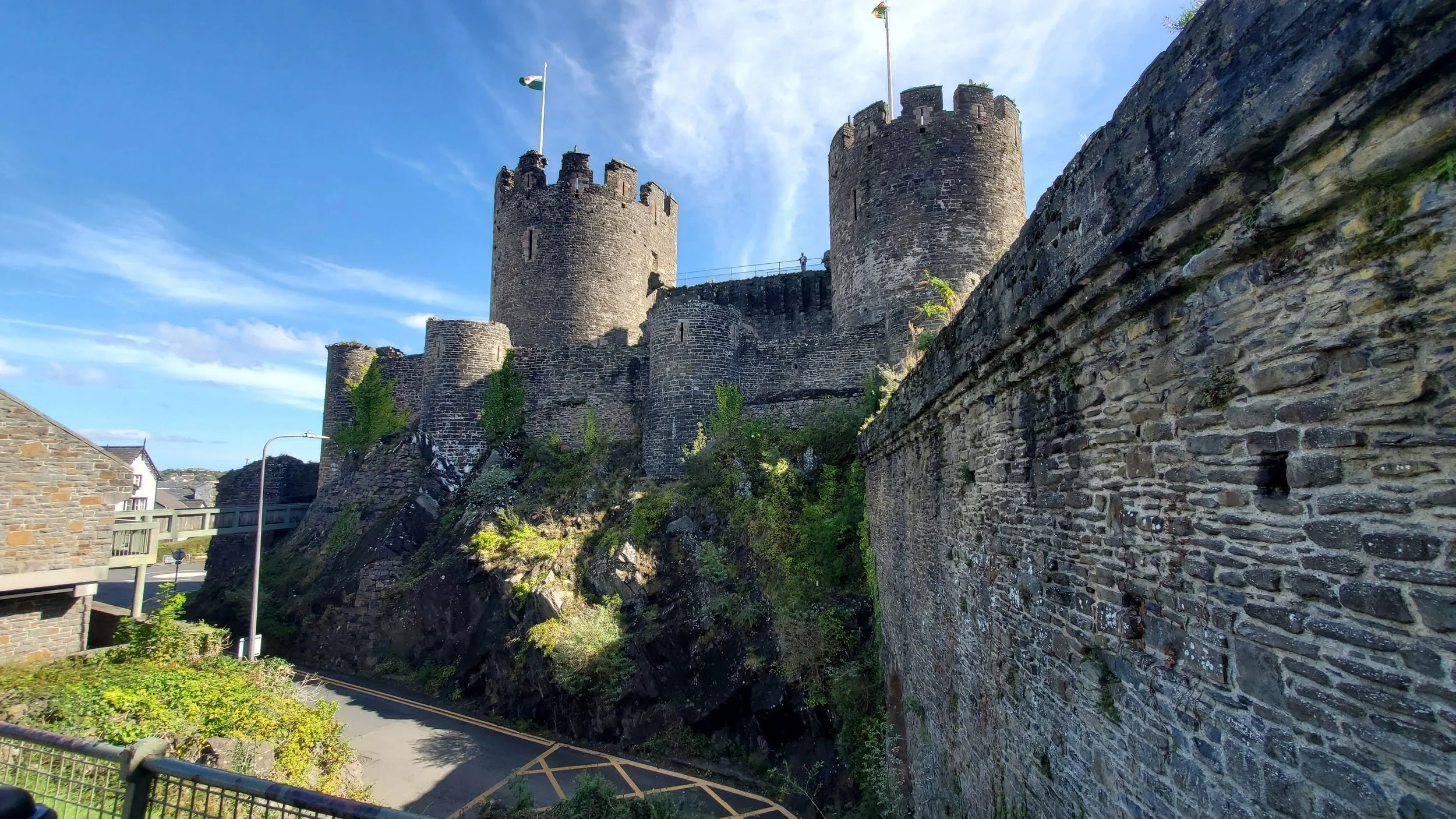
A closer shot of the castle
You have to climb up a steep incline to get into the castle. Originally a large ramp was there. Once inside your in the first bailey or courtyards with one of the ruined halls to the right. Further ahead is the second bailey, basically the more inner part of the castle where the King would stay. We only have records of him staying here once in 1294 during a Welsh rebellion against their new English overloads. They were clearly not happy about all the giant castles but up as well as strict laws being passed making them second class citizens in their own lands.

Before entering the King's zone, we explored some of the large towers and the wall itself. Like Caernarfon it is very maze like with lots of stone passages, really everything you expect (and want) from an medieval fortress. 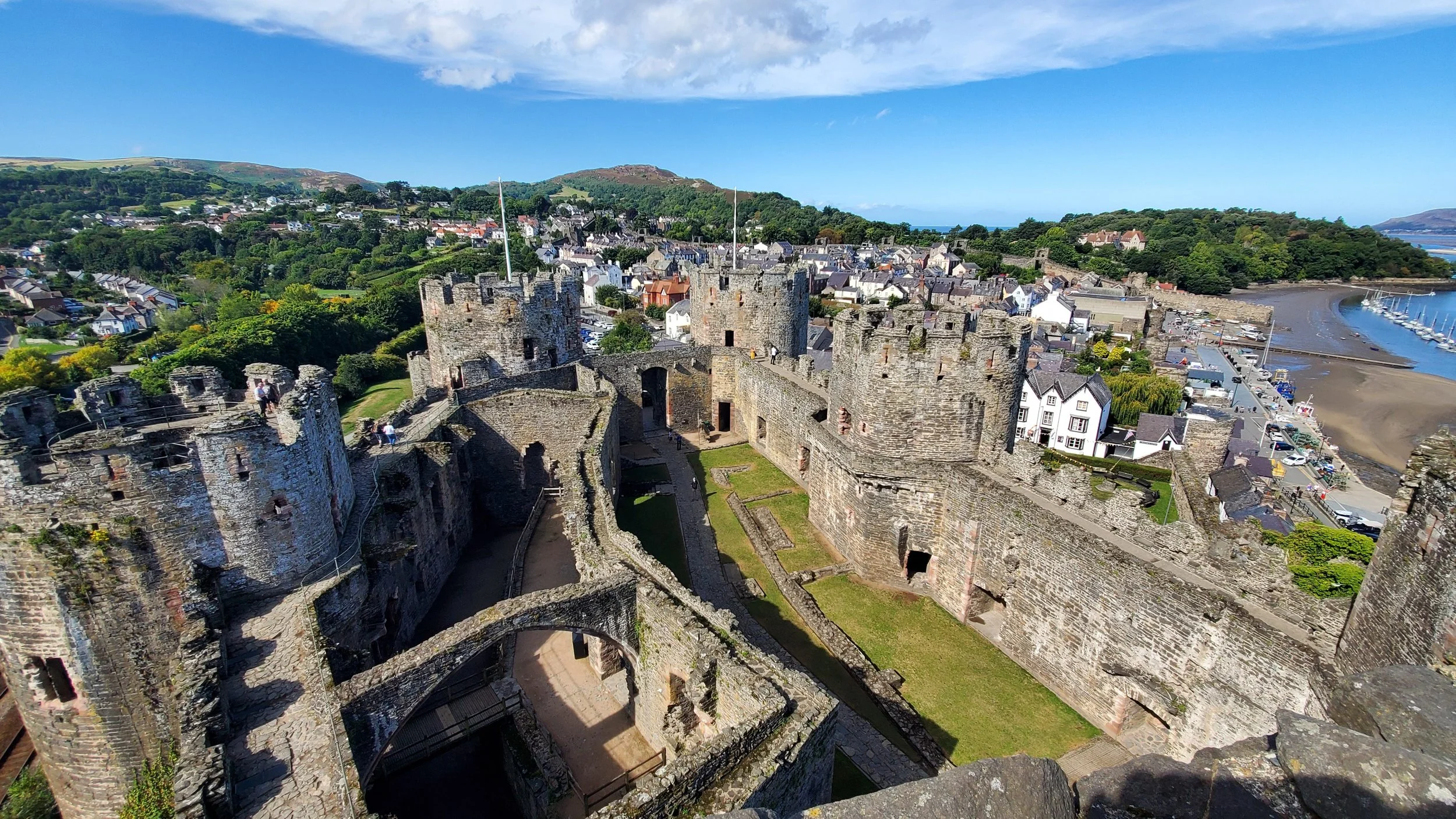
One of my favorite photos. This is the outer bailey from one of the towers in the inner bailey. The great hall ruins is to the left, and the gate we saw earlier is on the ground next to it. You get a good look at the mountains beyond and the town, nestled along the green hills.
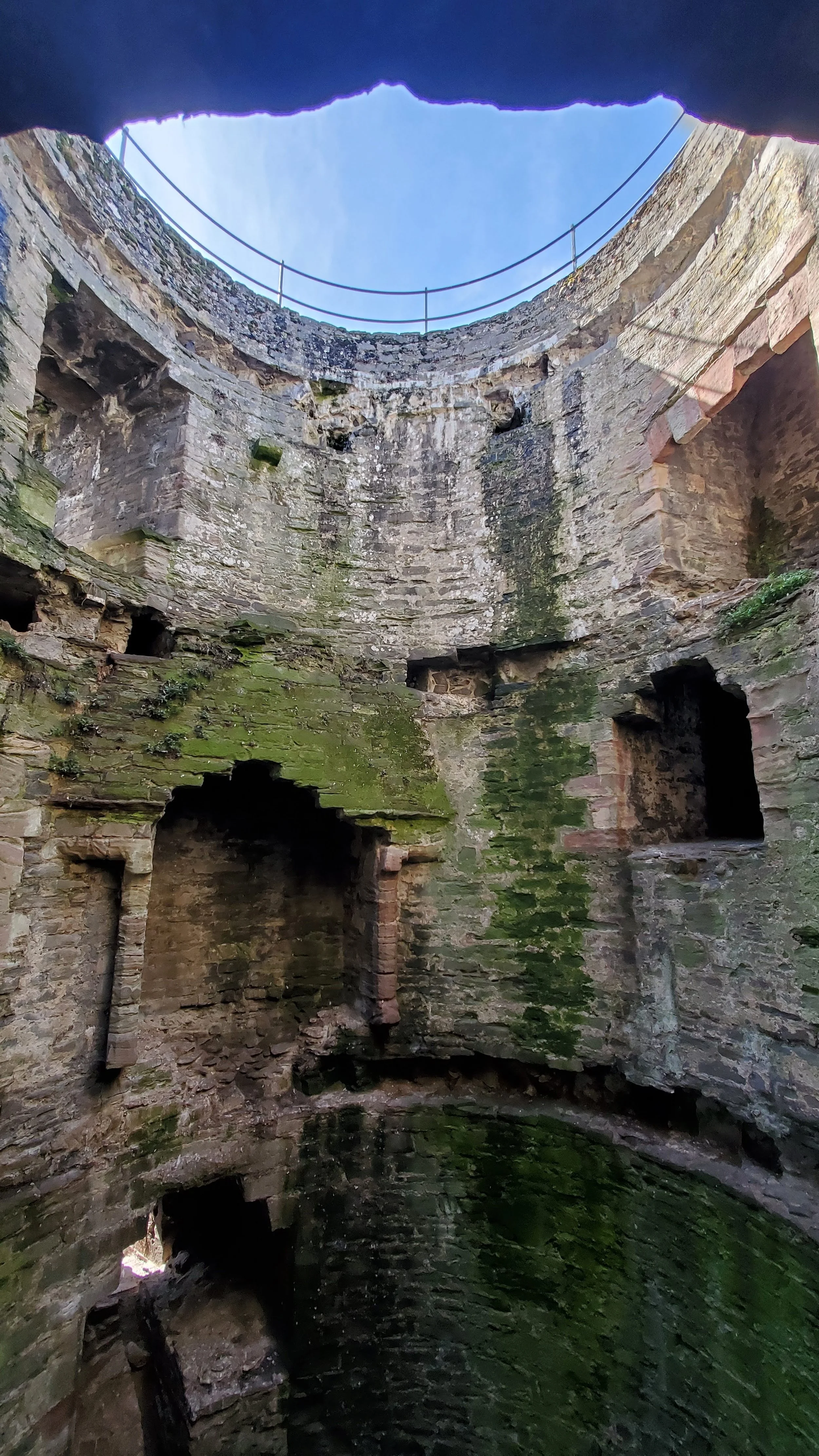
Inside of one of the towers. There are fireplaces on the walls so you can see where each level was. The tower is hollow now without floors and roofs, but this show shows you where the floors were.
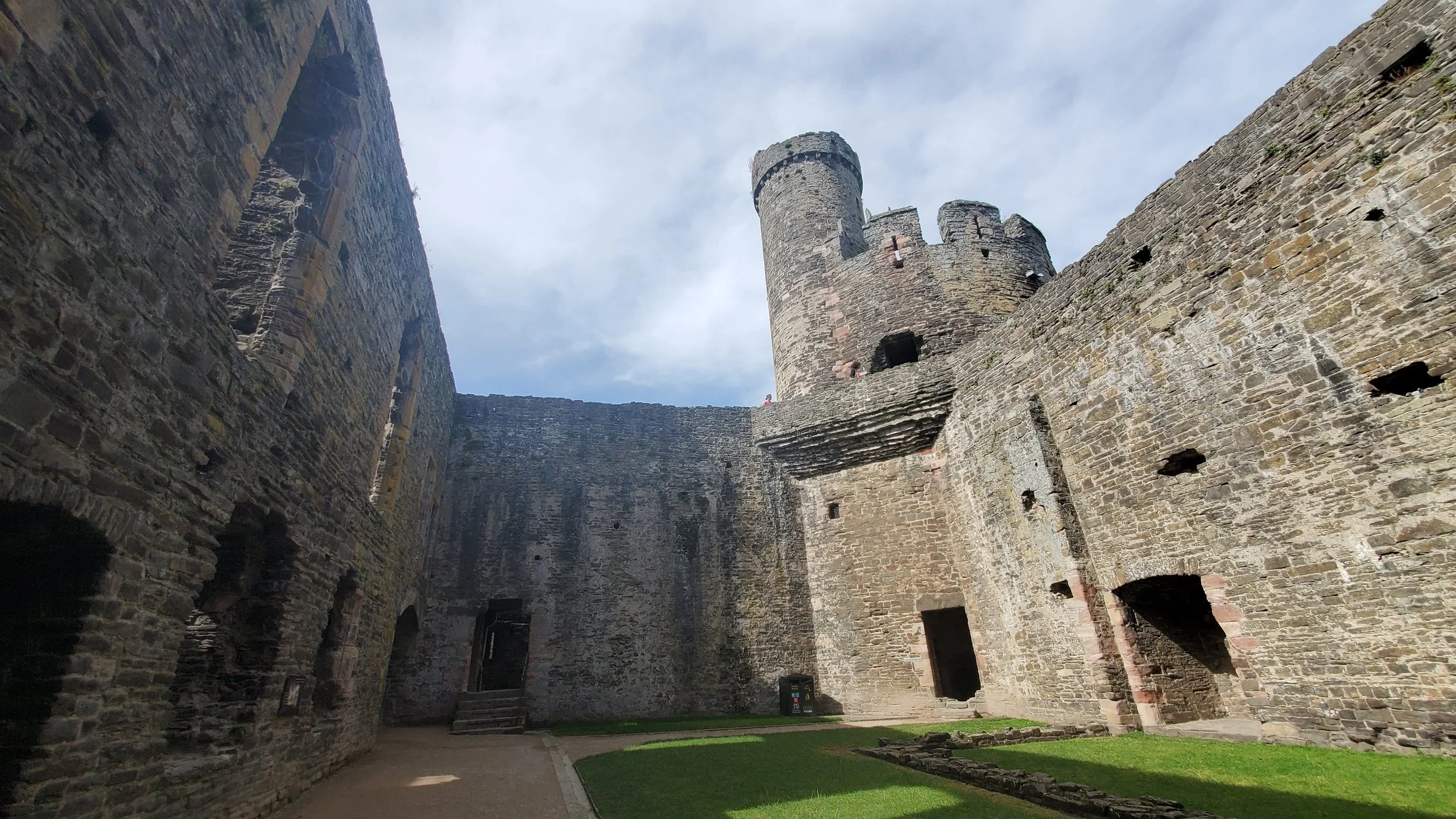
The King’s inner bailey. The wall separating the two is on the left.
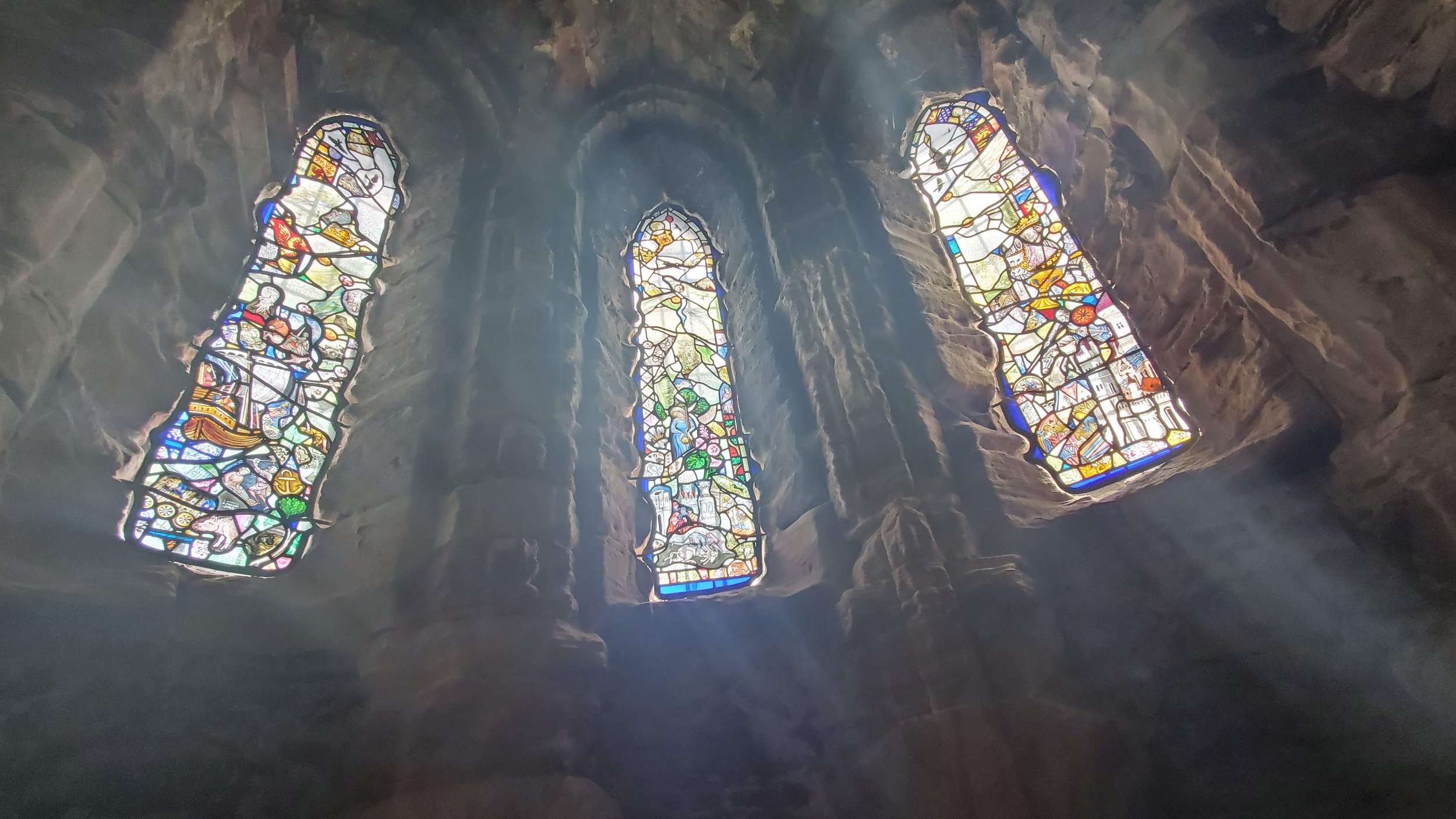
Stained glass in the King’s private chapel. He had his own level in the chapel where he could watch from above, equipped with his own toilet in case of emergency.
We spent at least two hours in the castle and could have spent longer if we read every panel. Instead, I usually skim them and take pictures to read later since I am a slow reader. I also like to feel like I'm in the moment. When we left the castle we headed for the Knight Shop, which is a Medieval gift shop filled with awesomeness. Swords, armor, shields, and fantasy and dragon relayed items. We bought some medieval style tarot cards. I am not a tarot card reader, or a mystic of any sorts, they just looked cool and would fit more easily in our bag than a sword or a shield. You can see the castle from the gift shop, adding to its medieval-ness.

Conwy is a very small town but has a lot of history. We walked the medieval walls to get a good view of the area and the town itself. The walls extend directly into the beach, which reminded me of Age of Empires II when you build walls in odd places. 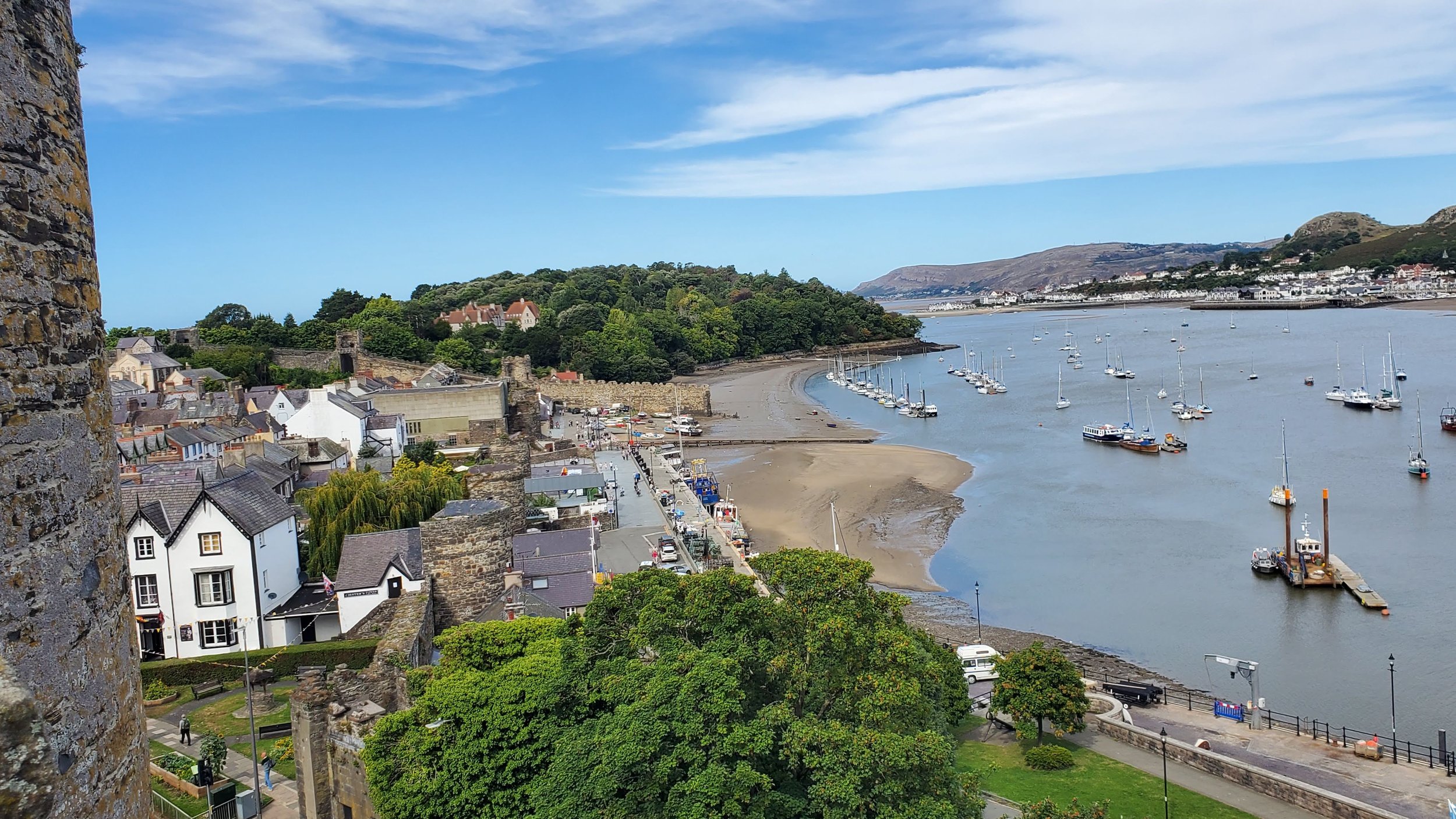
The walls of Conway from the castle. The white building to the left closest to the camera is the Knights shop. You can see the wall going straight into the beach and suddenly stopping. The English would have been in trouble if the tide was ever this low since you can easily walk around it.
The second big site to see in Conwy is the Tudor house, which showcases what life was like during the 16th century. It is the home of a rich Tudor merchant the house named Plas Mawr (obviously Welsh. It's one of those houses that is nice enough to get a name) meaning great hall. The hall was built by a diplomat serving in Queen Elizabeth I’s court, between 1576-1585.

Like everything in Conwy the house is in walking distance. If you show them your ticket to Conwy Castle you get a discount. There are two ways to see the house; one is an audio guide, the other is a large, laminated paper which tells you what each room was. We chose the paper.

The relationship between Wales and England improved during the Tudor reign since the Tudors had Welsh ancestry and even referenced Ancient Welsh Prophecies when Henry VII came to England to take the throne from Richard III. One of the Welsh Tudors (Tudur) was a man who captured Conwy castle for Owain Glyndŵr during the 1400-1415 war for Welsh independence. The Tudor banner even had the Red Welsh dragon on it. 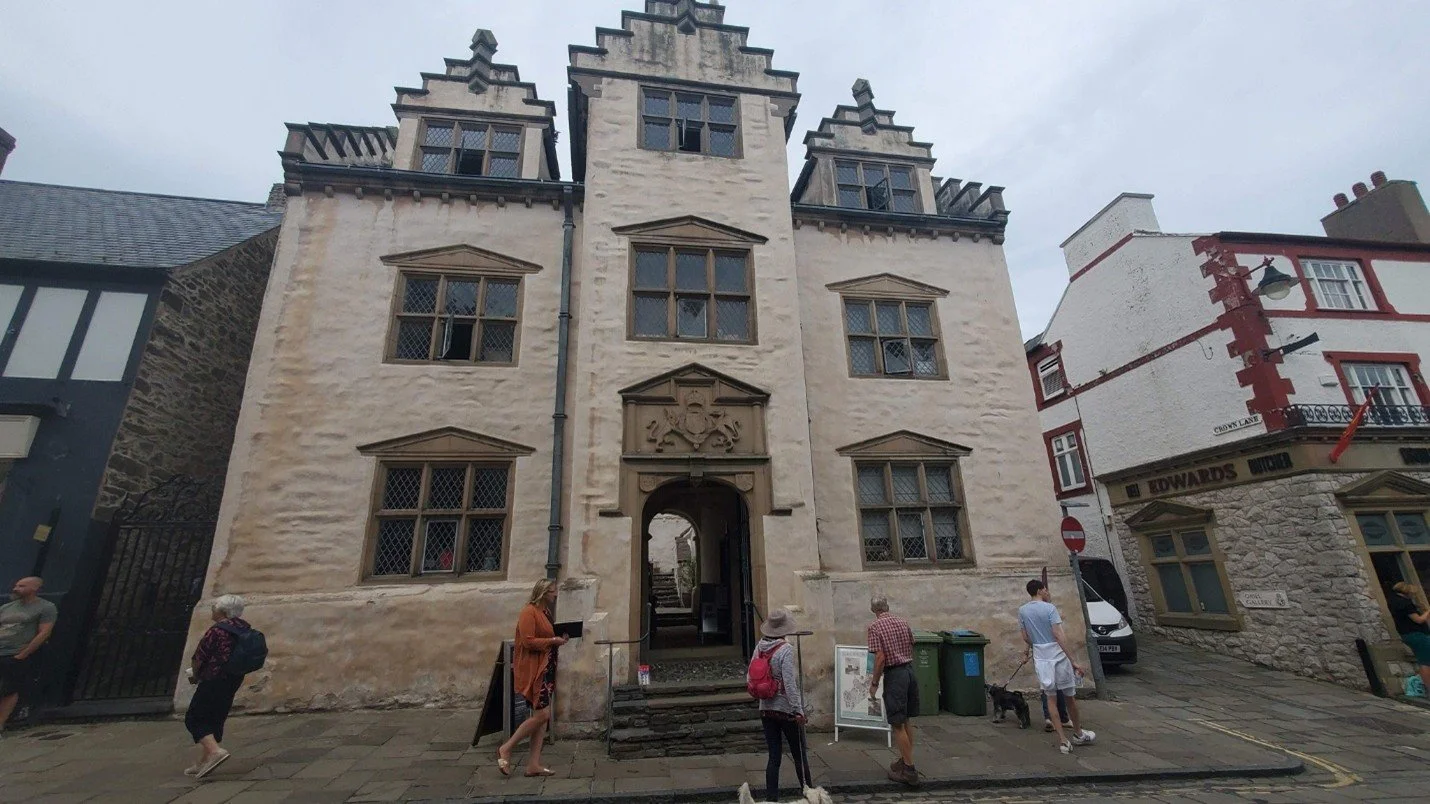
Street side of the Tudor house
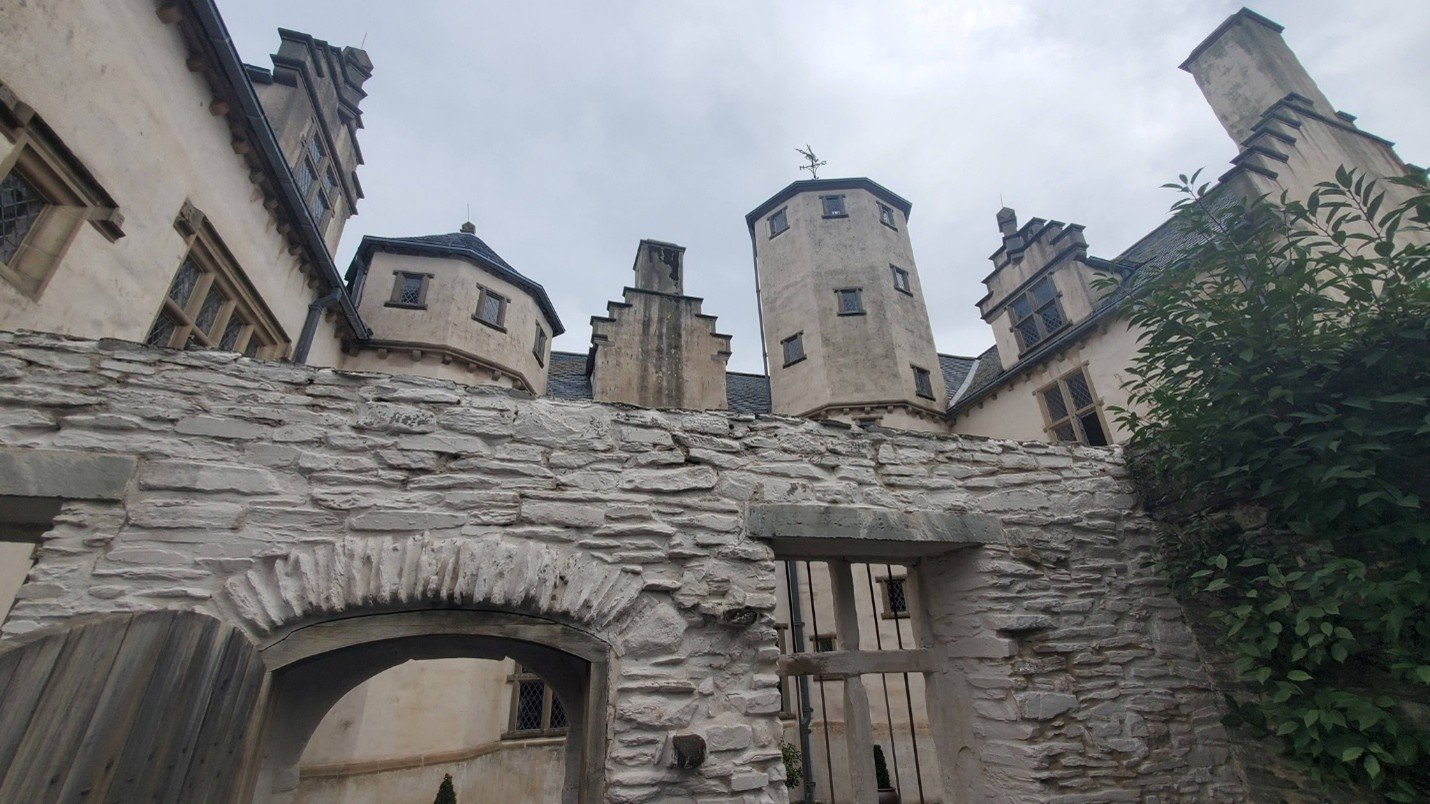
Inside the back courtyard looking at the towers in the house. Tudor architecture style is very similar to medieval style architecture, but more fancy and more money.
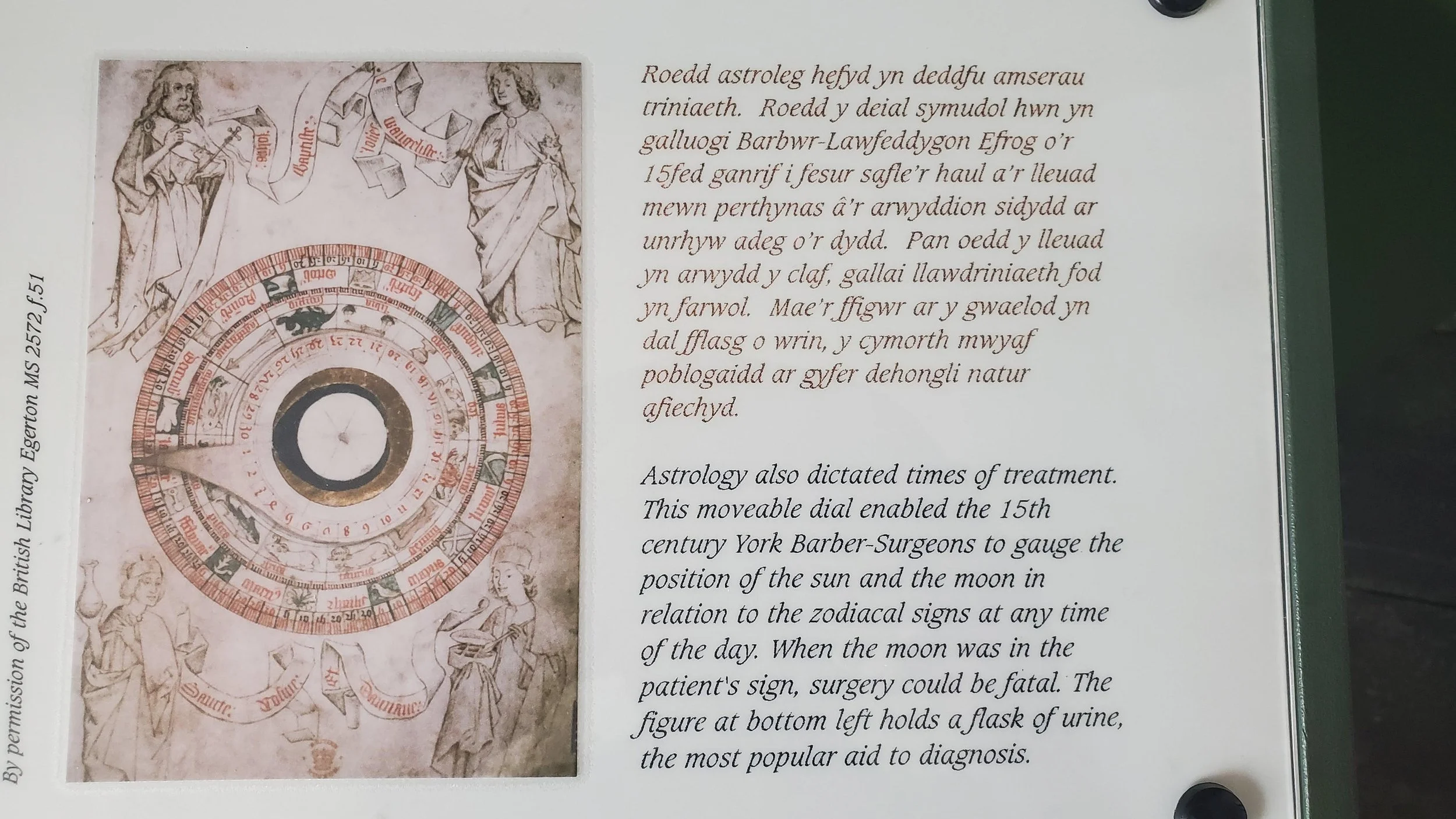
A panel about how important Astrology was back in the Tudor times. The position of the planets would effect when surgeons would work.
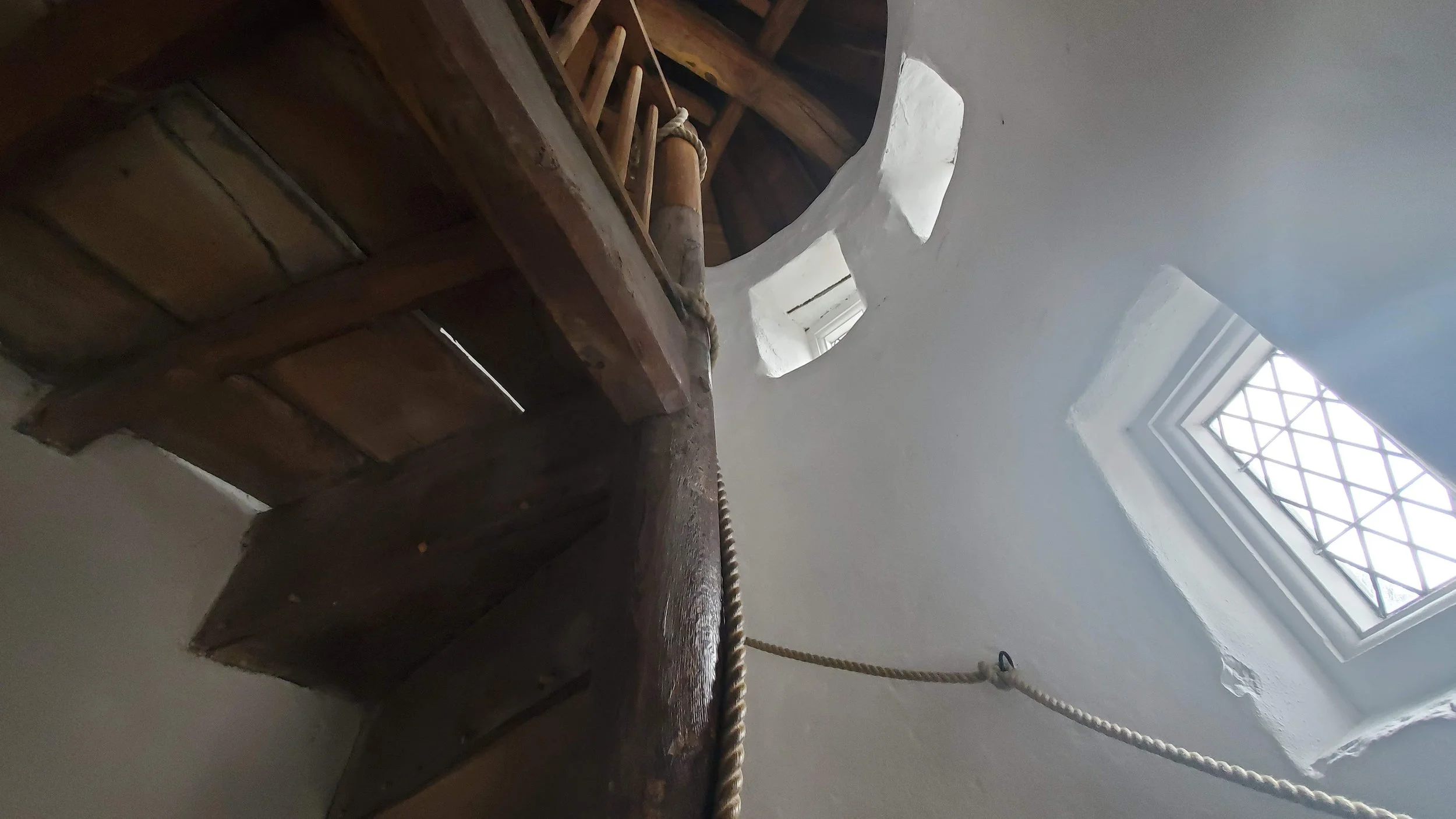
Narrow staircase leading up the tower.
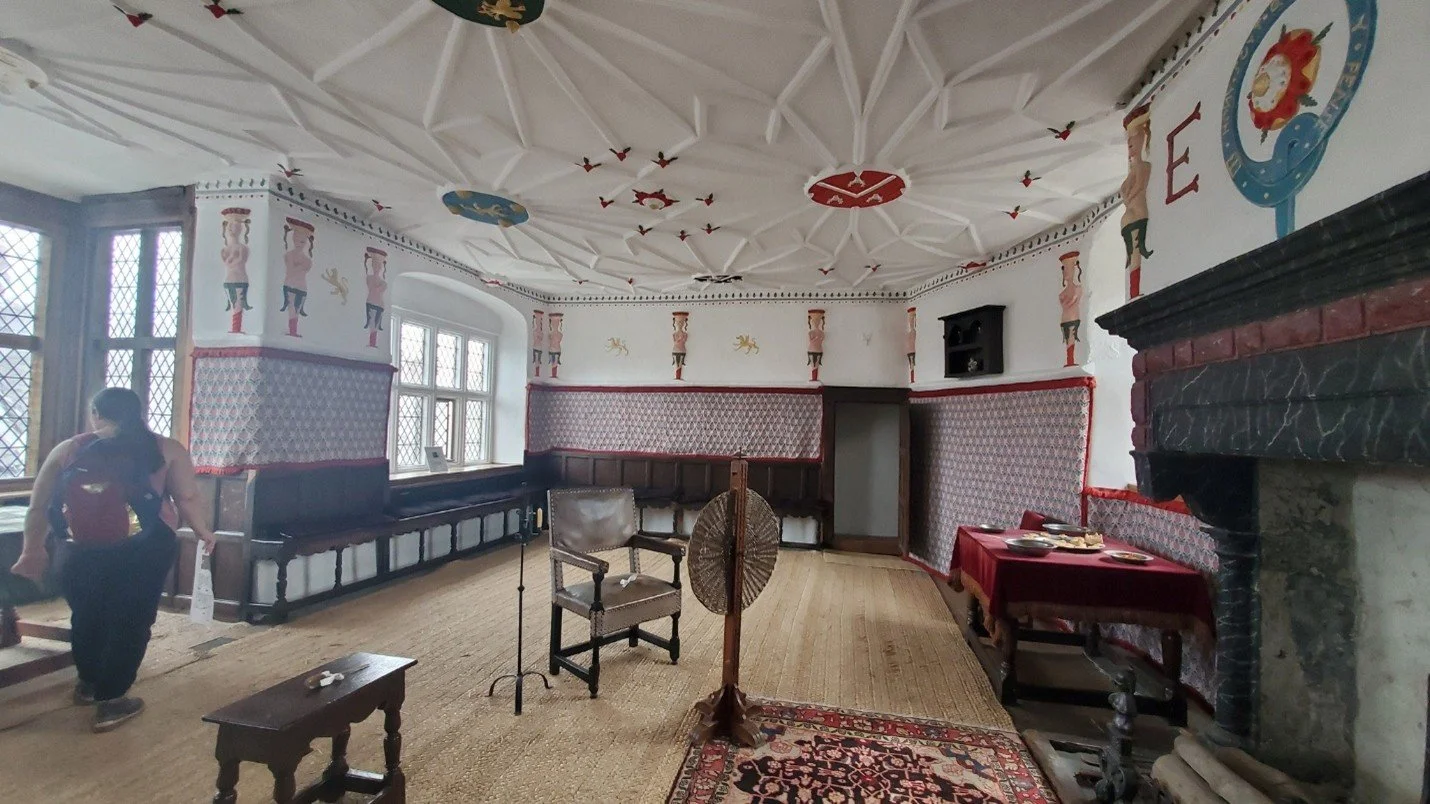
Well decorated Hall in the house.
There was also a cool exhibit about astrology, back when people believed that the movement of the stars and planets effected their lives directly. The old church in Conway is also worth checking out. We did not go inside since it was closed. If you want to see an authentic medieval castle and town Conwy is definitely worth it. There's enough to do in a day with the castle, Tudor house, church, wall. There's also the smallest house in Wales which we did not go into (too small). The beach area also looked like a fun hangout; it would be interesting to see the town in different tides. I don't think you need more than a day though to really see everything and get your souvenirs.
There rest of the day was spent buying some souvenirs (like a mini ceramic models of the castles) then back to Llandudno for dinner and sleep. The food in Llandudno was pretty good, I think I mostly had burgers and fries, nothing super special but the bread was much better quality than normal burger buns, if that makes any sense. Day 5: Book town to Cardiff
Day 4 was our last day in North Wales. On day 5 we transferred from North Wales to Cardiff. I would have liked to spend a little more time there in the future. We used North Wales Tours again for the transfer to Cardiff since the public transportation from North to south Wales is surprisingly sparse. It is apparently easier to go from east to west and back into England then to go from North to South Wales, without a car. Our driver, Bryan, picked us up at the hotel and we headed South. Bryan had some interesting stories and apparently was in a tour company that did business with Ryan Reynolds. Was not expecting this tour company in Wales to be connected to a Hollywood actor but there you go. We went on some fun back roads through grazing fields of sheep and opening gates to small farms. Bryan asked some farmers a few times for directions. Again, the roads were very narrow and scary, and I am glad I did not drive.Our one big stop was to a town near the English Wesh border called Hay-on-Wye. The town is known for having tons of books and is an ‘official’ book town. I bought several books about the history of Wales, one of which is in the sources section. 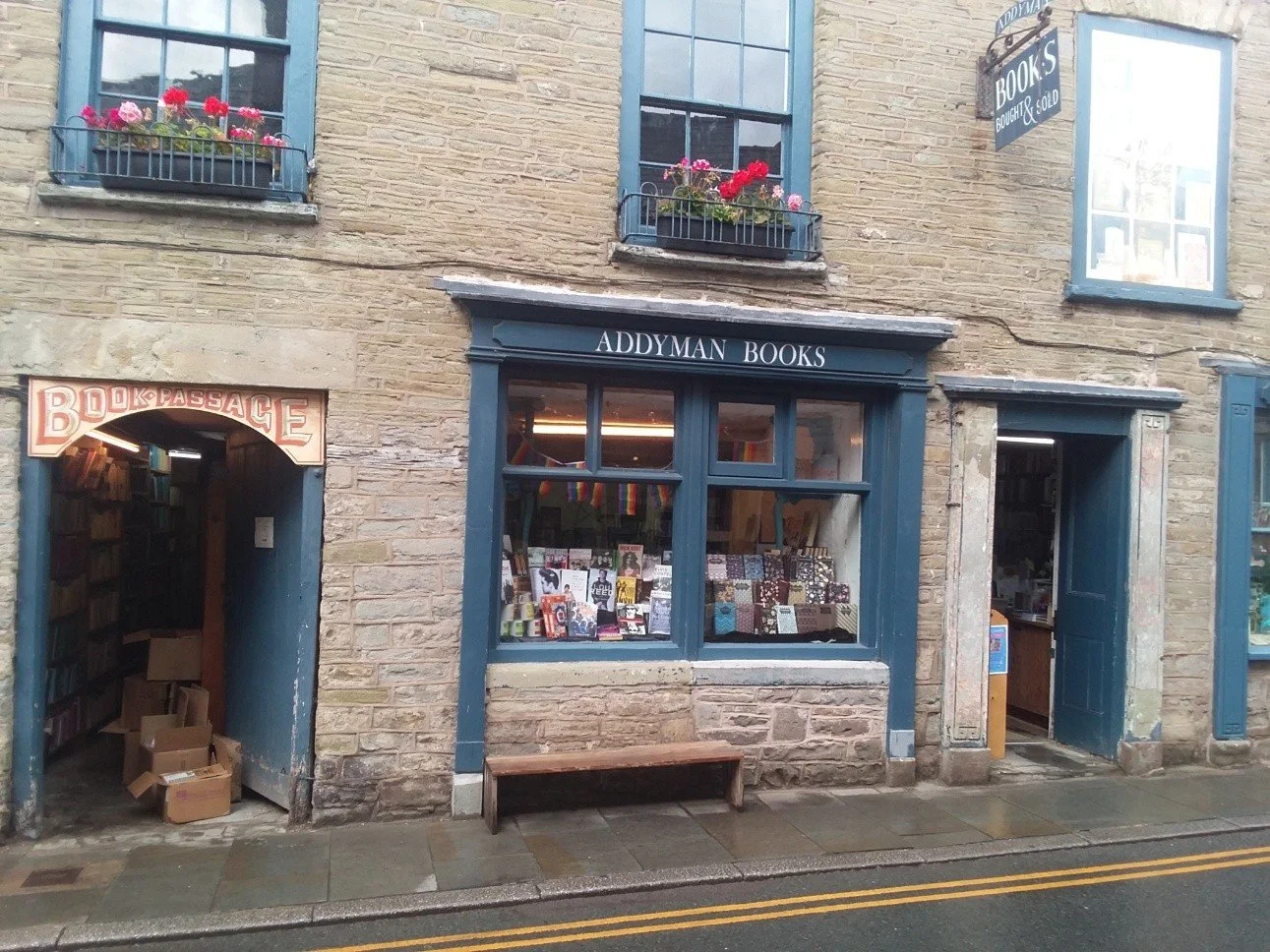
A quaint bookstore in Hay-on-Wye.
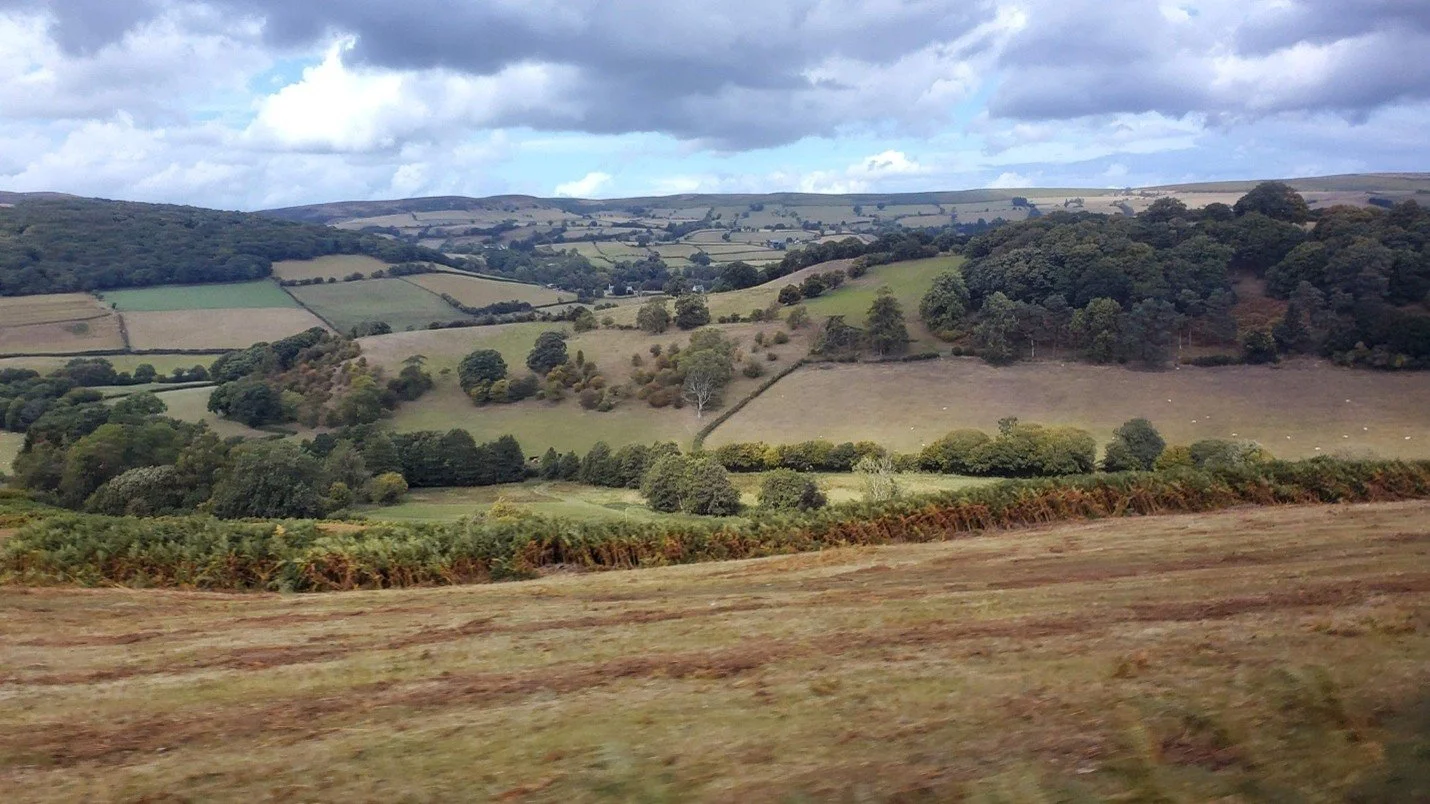
Welsh landscape changing to more traditional British farmlands as we left the rugged mountainous north to the gentler sloping hills of the south.
Bryan dropped us off at our hotel, Novotel Cardiff, which had a really nice pool. The rest of the day was spent lounging and enjoying the pool and restaurant at the hotel. It had taken nearly all day to transfer, especially with our stop to the book town for lunch and book browsing.

The Novotel restaurant had very good food and we ate there three different times (wish we had taken pictures or wrote down what we ate so I could be more helpful). Bread in Wales was very good, which I do remember. It is fluffier and tastes much fresher than boring American bread. While in Cardiff we had Welsh cakes a lot. They are small crumbly little cakes that are sort of like scones.
Day 6: Cardiff!
Day 6 was all about Cardiff, the capital of Wales. Cerissa had been there on a past trip, but this was my first time. Since this was a very castle centric trip, and it’s probably cardiff’s biggest attraction, the first thing we saw was Cardiff Castle! Our hotel was within walking distance, so we headed off towards the castle. We passed some of Cardiff's famous covered markets and pedestrian street that takes you straight toward the castle.
Cardiff Castle is surrounded by a wall which, along with most of the castle, was rebuilt in the 19th century during the Romantic period. It was originally a Roman fortress and later had a Norman castle built. There are still parts of the original Roman fort and keep within the walls. The castle grounds open for free but if you want to explore the keep or the rooms of the castle palace you have to pay. The castle was originally a Norman motte and bailey castle (one of the first types of castles). They were essentially a strong tower (called the keep) on a large hill at the center of a walled enclosure. While Cardiff castle's wall is mostly a reproduction, the keep on the motte is original to the 11th century, dating back to when the Normans invaded south Wales.
After the Normans took England in 1066, they turned their sights on Wales and took a large part of the South. The North remained independent mostly due to its mountainous terrian. The Welsh were also separated into several Kingdoms, so conquering the South did not guarantee that the North also fell into line. 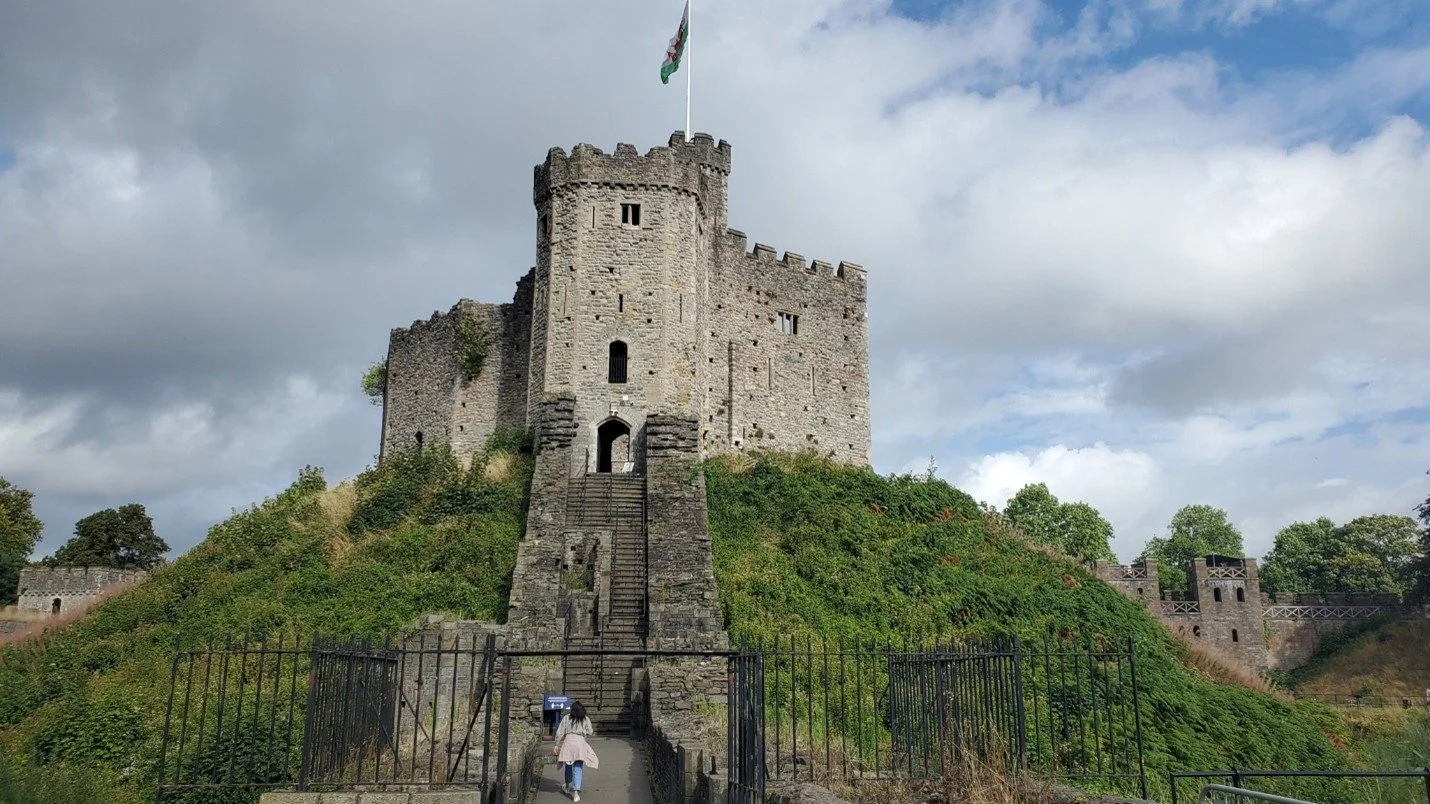
The original Cardiff castle keep, looking good with the Welsh dragon flag flying.
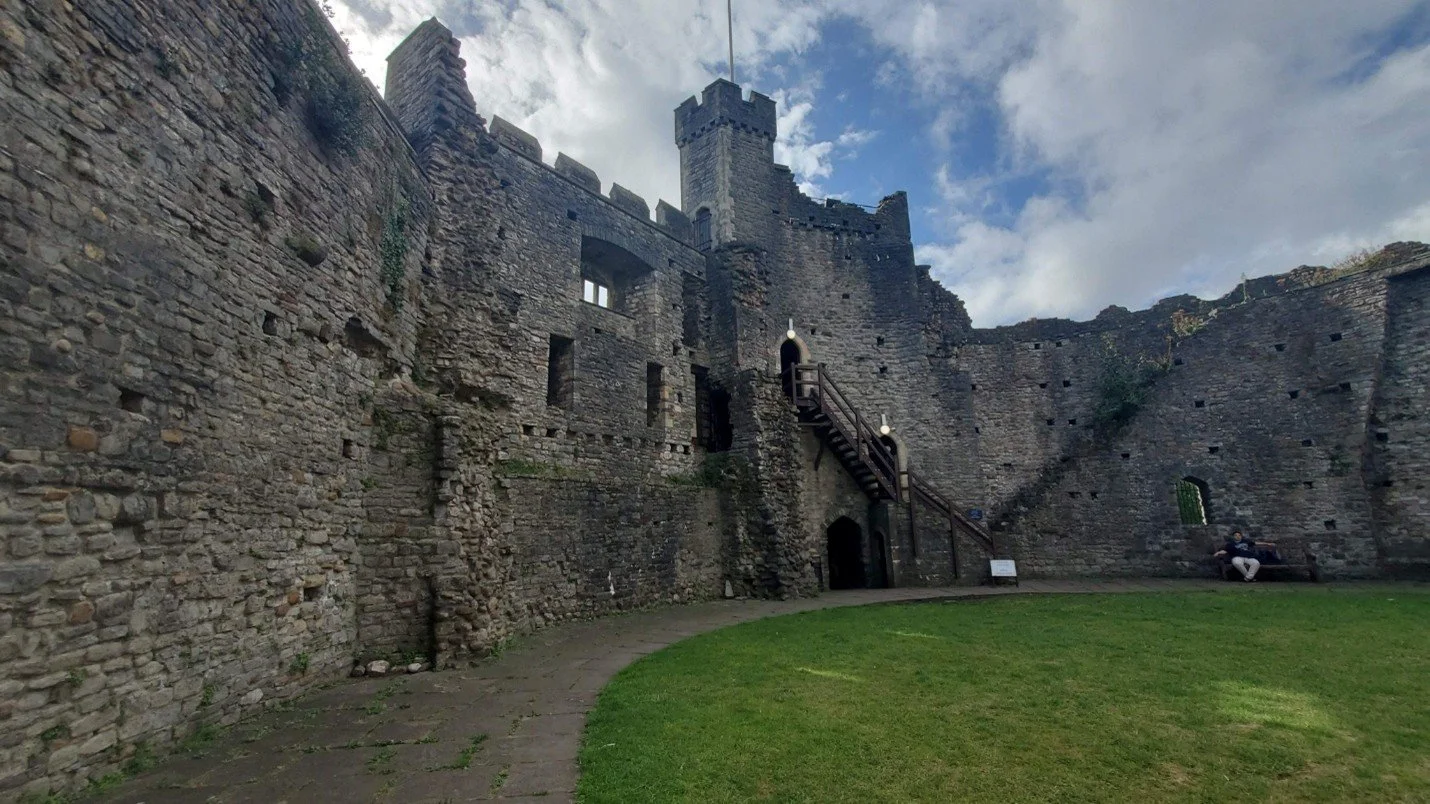
Inside the keep. This type of keep is called a shell keep, as it is round with a space in the middle. Unlike other keeps which are large towers, like Dolbadarn. There was only one small tower within the keep that you can see here in the two doorways with the staircase. Most of the rooms were bare but they had panels telling you what the rooms were used for.
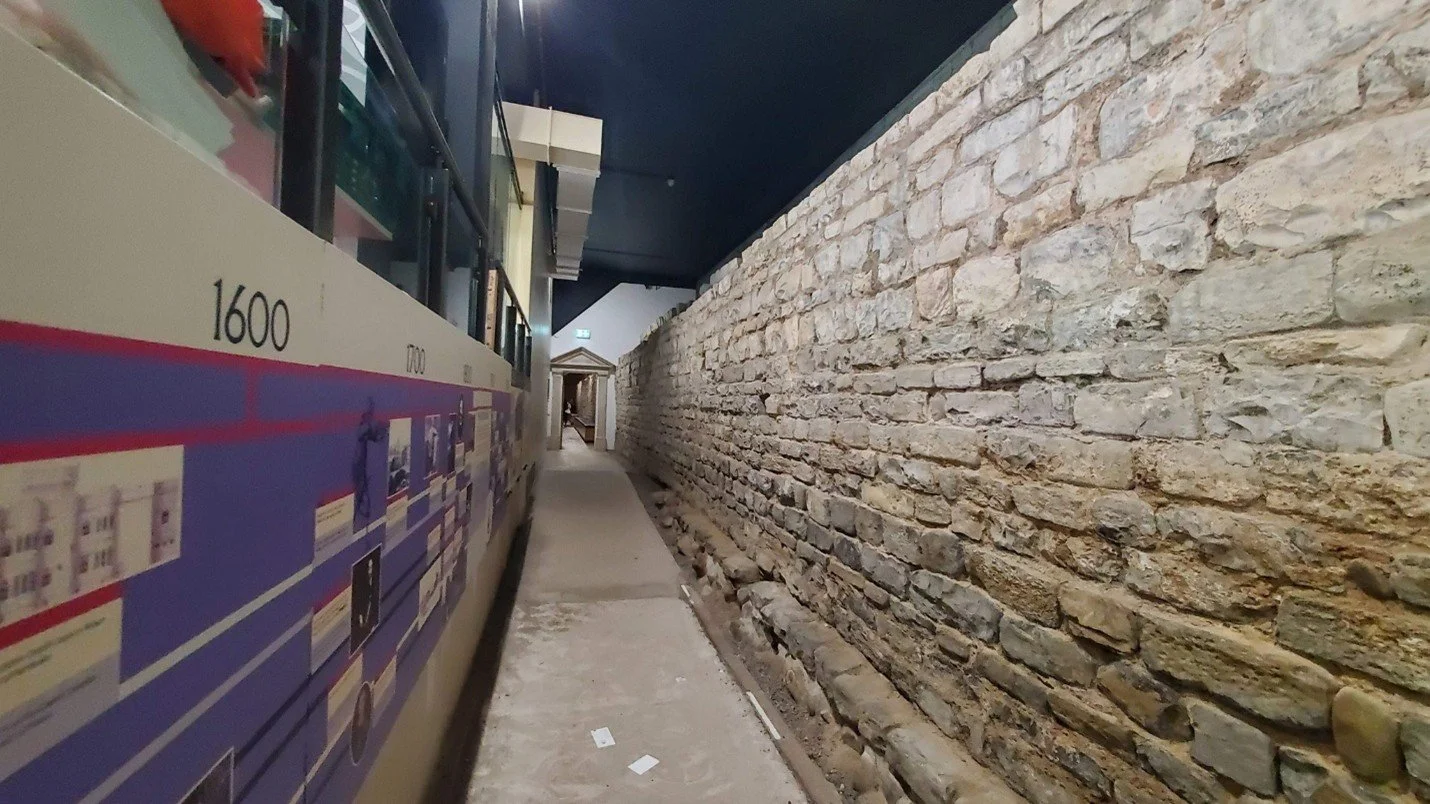
The original Roman wall behind the cafe at the castle grounds. It was built around the 2nd or 3rd century. I liked the Roman style doorway which led to the mural of Roman soliders.
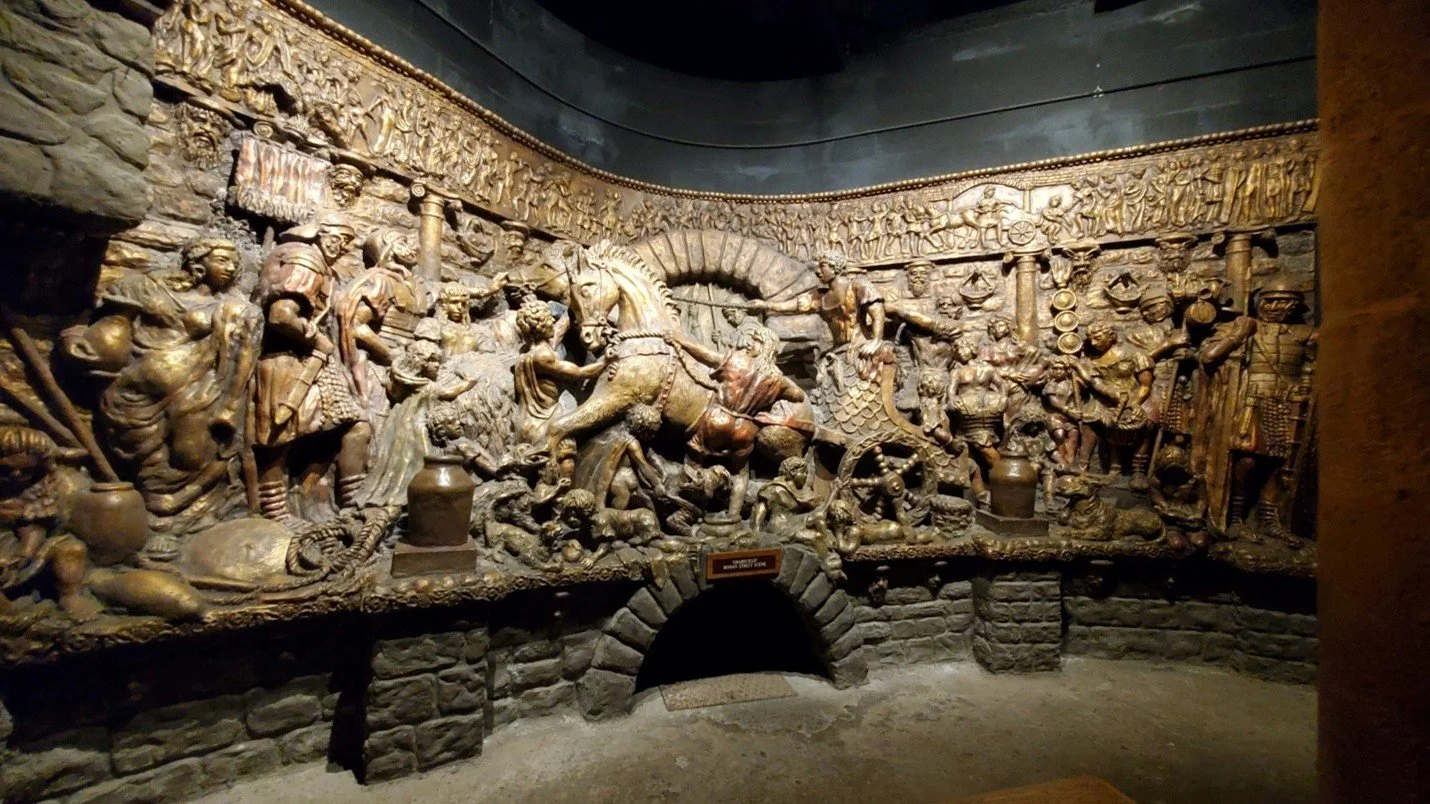
A mural of Roman soliders
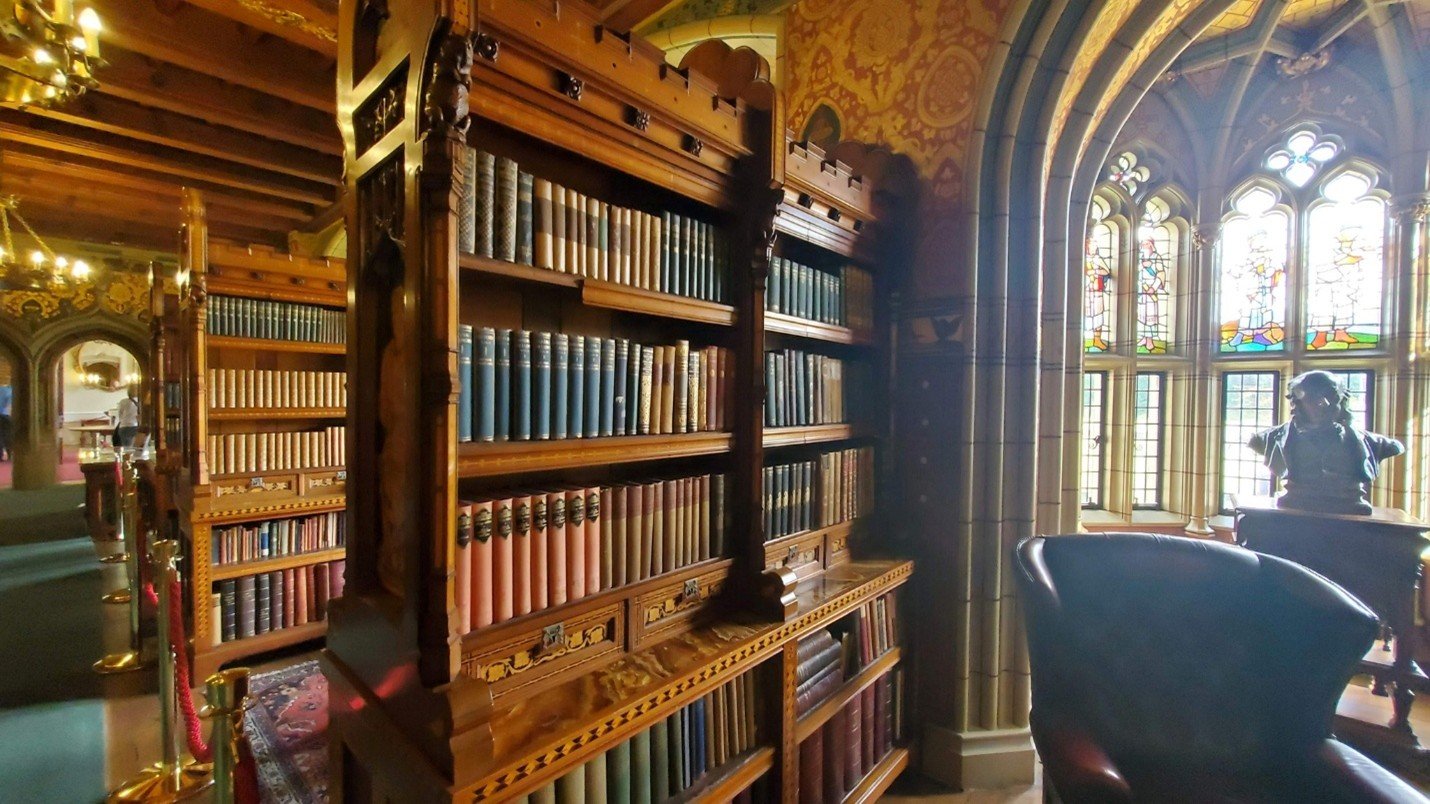
As mentioned, the rest of Cardiff castle is mostly a 19th century Romanticism recreation. In the 19th century Europeans were crazy about the middle ages (as are we all) and built a lot of romantic and very exaggerated medieval looking created castles and houses. Below are some pictures form the 19th century section of the castle. I am more a fan of older more original/somewhat ruined medieval castles, rather than the recreations.
Within the wall of Cardiff was an exhibit about WWII with annoyingly loud noises. The Castle keep and Roman wall I thought were much better than the opulent 19th century rooms or the WWII area. 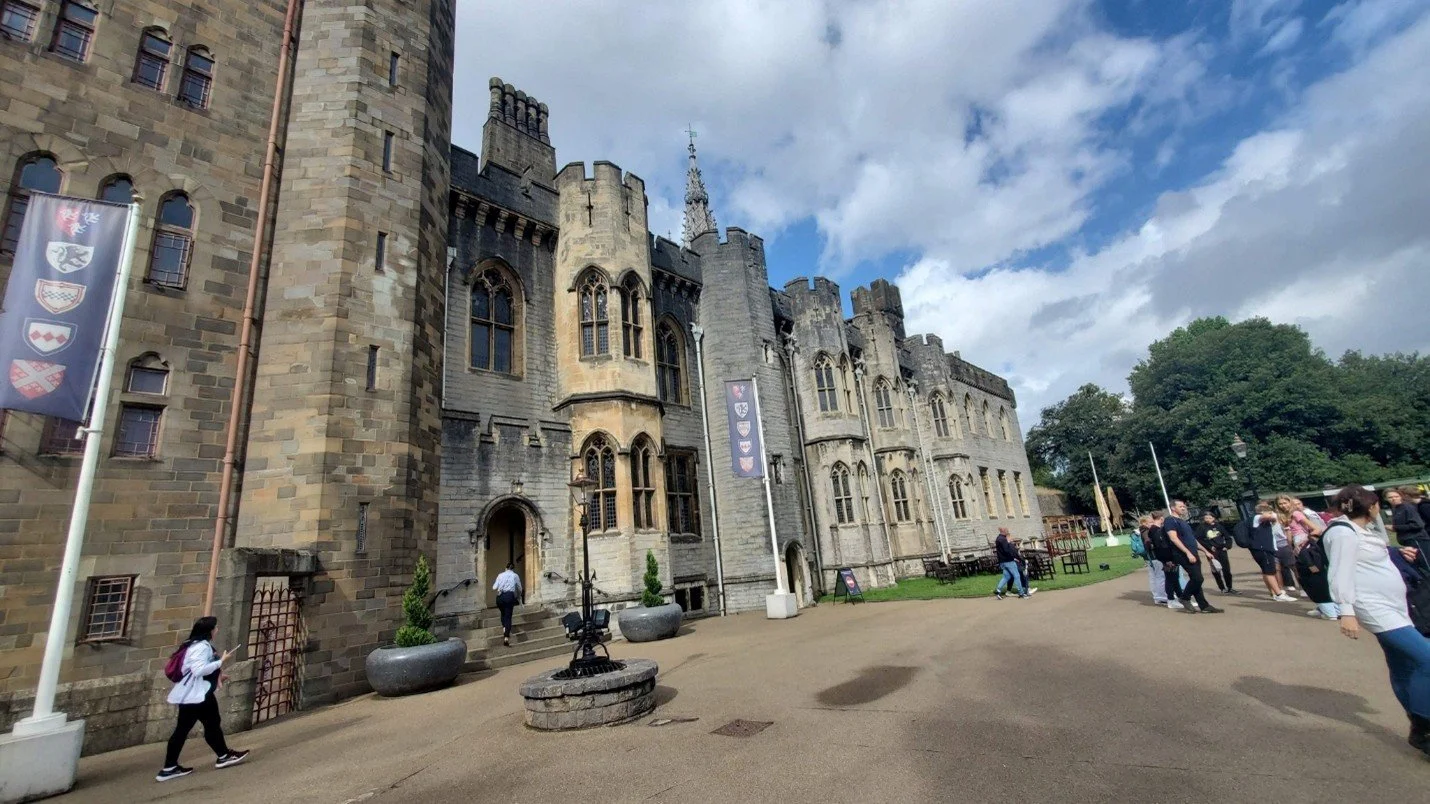
We ate at the castle café then got on a Cardiff Hop on Hop off bus which took us to some other parts of Cardiff. While we were waiting for the bus to leave, we’re always early, we talked to the bus driver, a very friendly Welshman about how much larger the distances were in larger countries were compared to the UK.

The next place we saw was Cardiff Bay which has the Wales millennium center. It looked like a nice laid-back place to do a cruise or get some food, but unfortunately, we weren’t hungry and were planning to do the Cardiff Museum. We walked around a bit looking at the pretty neat modern architecture then went back to the bus stop and to the Cardiff museum. We really enjoy hop on hop off buses and the Cardiff one was a good way to get around the city. 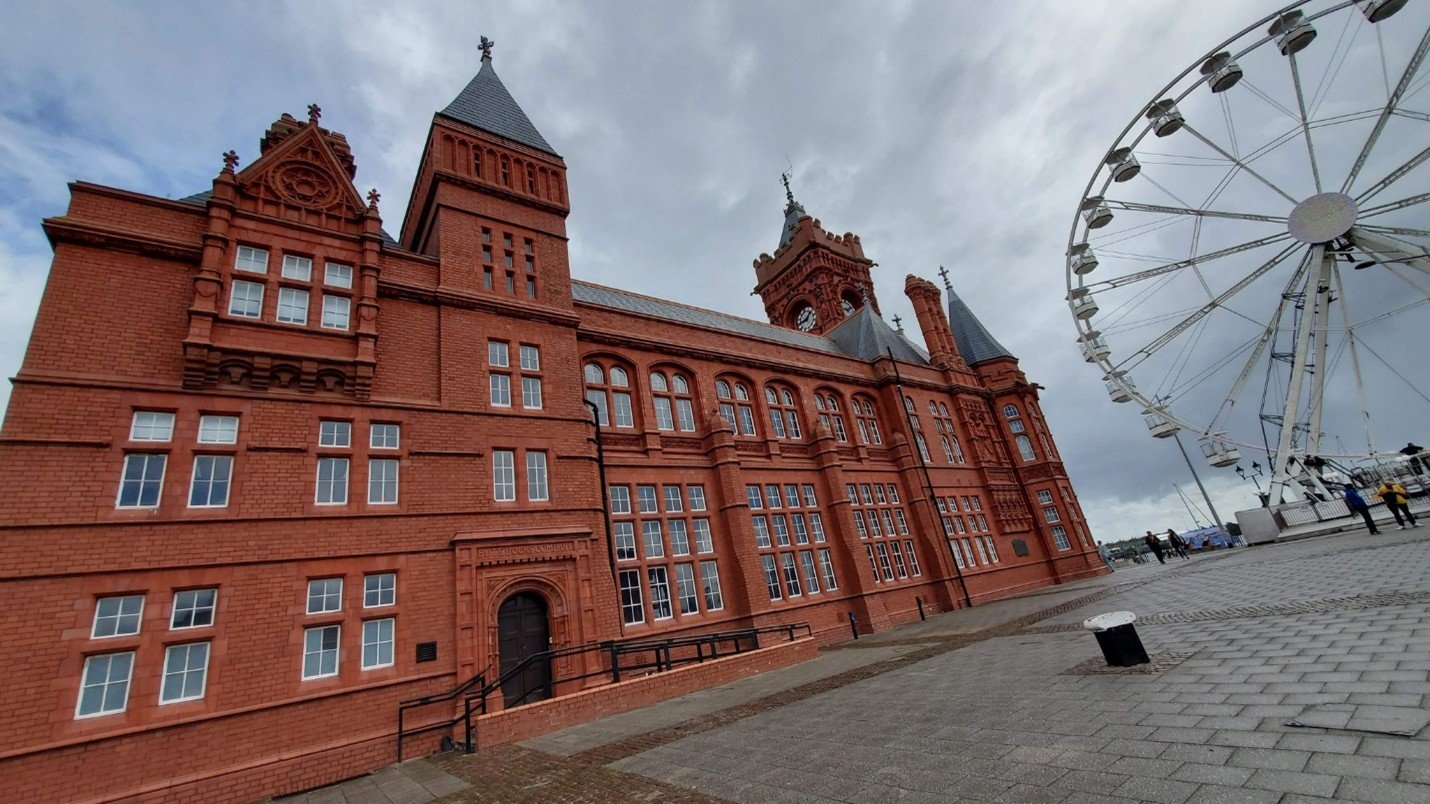
The Cardiff Pier.
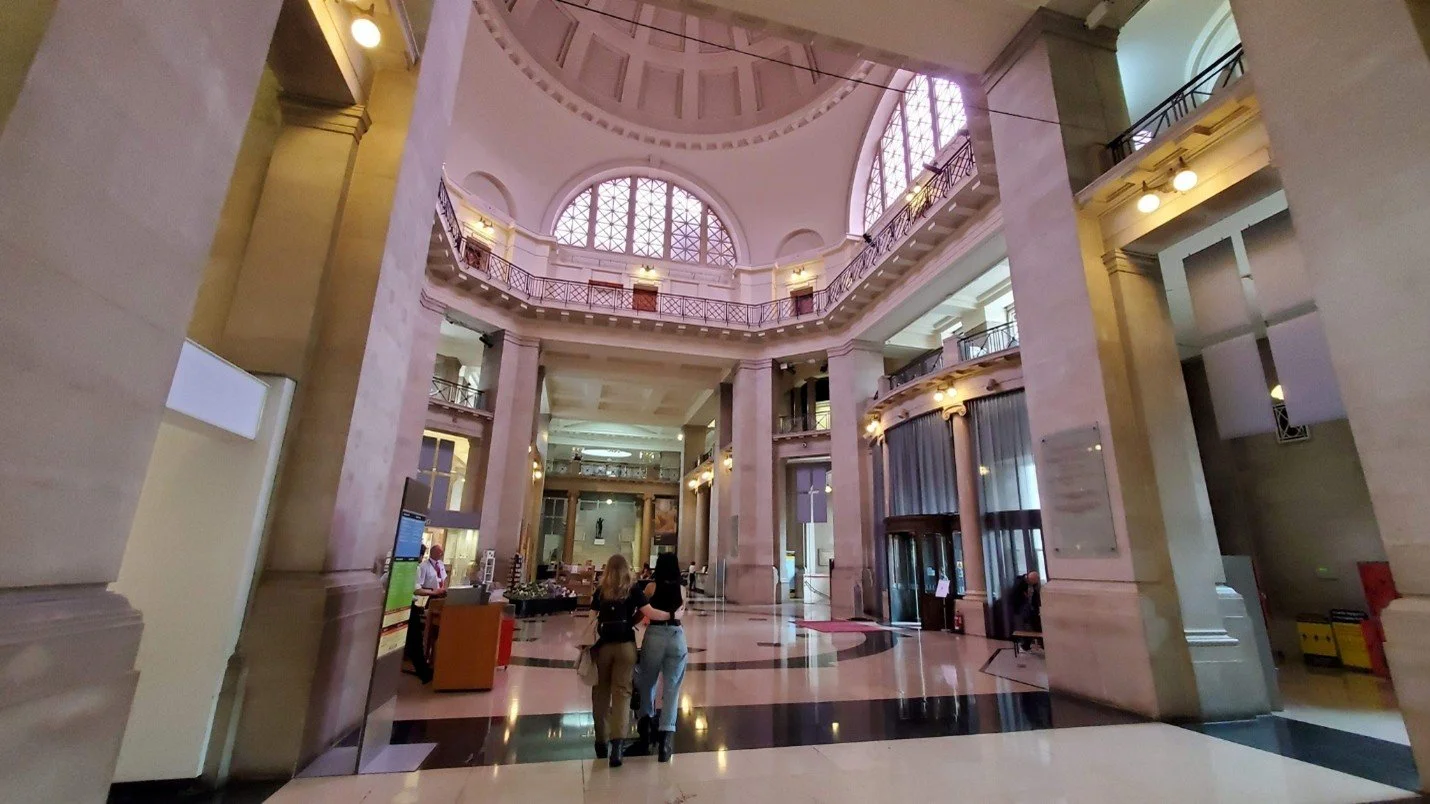
Entrance to the National Museum of Cardiff which is free. I wish we had seen some more since I believe we missed some exhibits on ancient Celts.
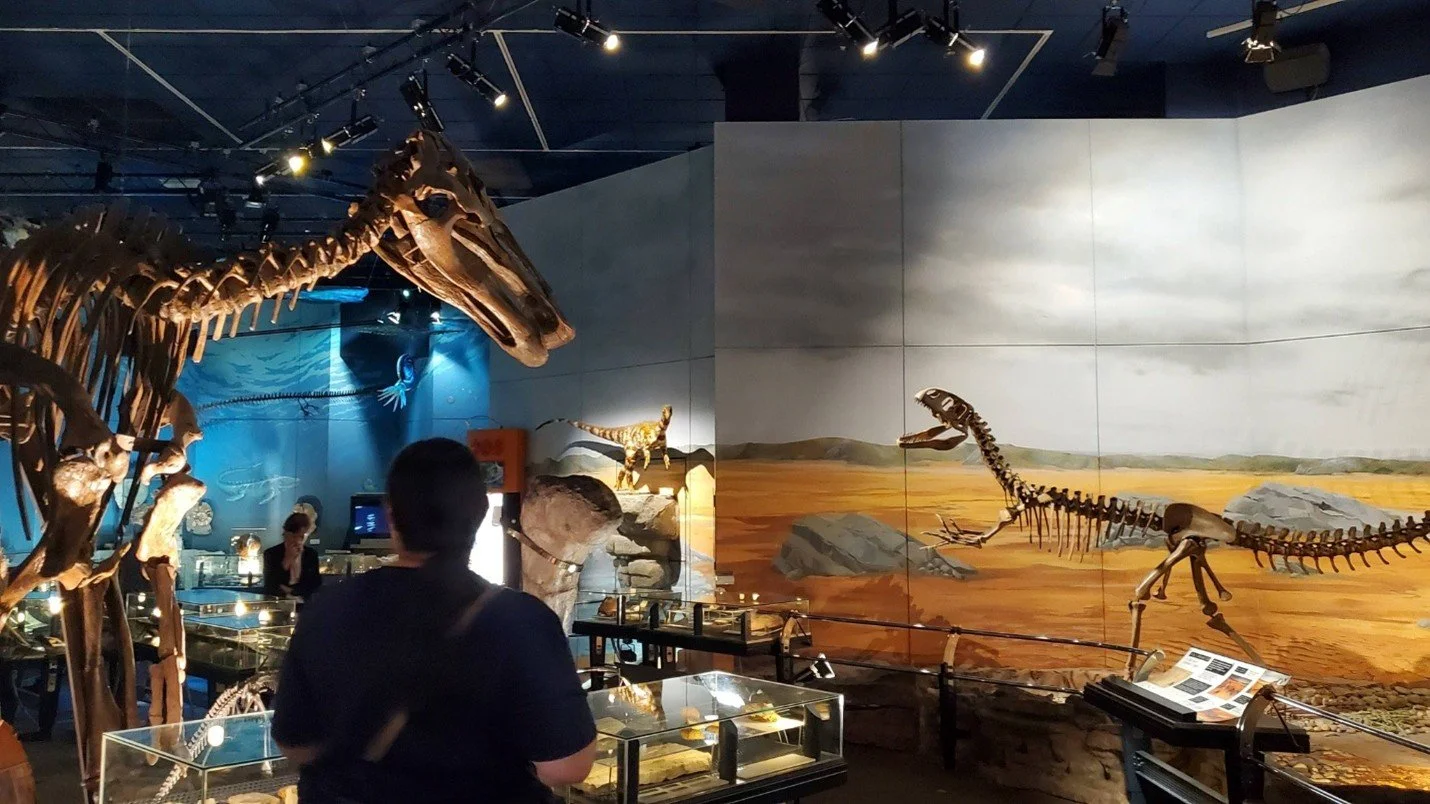
Can’t go wrong with Dinosaurs and ancient extinct animal exhibits.
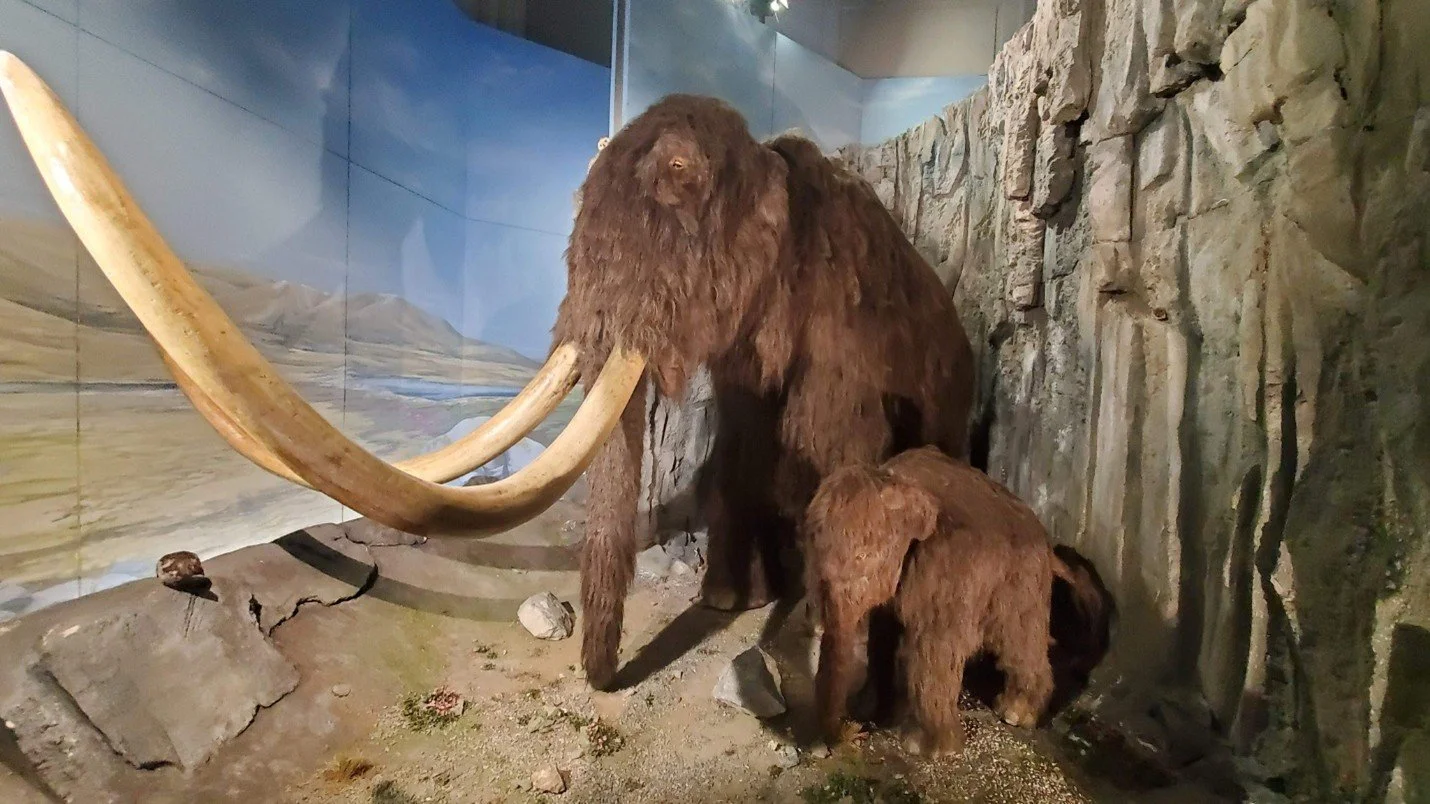
a mammoth and with a baby.
We wrapped up the day going to the castle Arcade, a glass roofed shopping mall. It was a very cool Victorian shopping area. We got some Welsh cakes from Fabulous Welsh cakes and confirmed they were fabulous. Cardiff is a fun city but it's very doable to see the highlights in a day. Maybe add a bay cruise in and wait to eat till your at the pier. Day 7: Folk museum
Our last full day in Wales we went to the St. Fagans National Museum of History. The museum is a collection of historic buildings and culture of Wales. They have buildings from the Iron age to the 20th century.
There is a direct bus that you can take from Cardiff center to St. Fagans Museum.
https://www.cardiffbus.com/services/CB/32Check the bus schedule. You could also take an uber or taxi as its only about 30 minutes away. I always enjoy places like this where they recreate historic villages and you can see what the architecture looked like throughout a thousand years. The area is very large and you can easily spend an entire day there. The weather was a little wonky with some downpouring here and there so we didn't stay as long as I would have liked to, but we saw most of the highlights. Some highlights were a reconstruction of a Welsh Prince’s royal hall from the Middle Ages, some round houses (also a reconstruction) and last but not least a medieval church with reproduction paintings on the walls.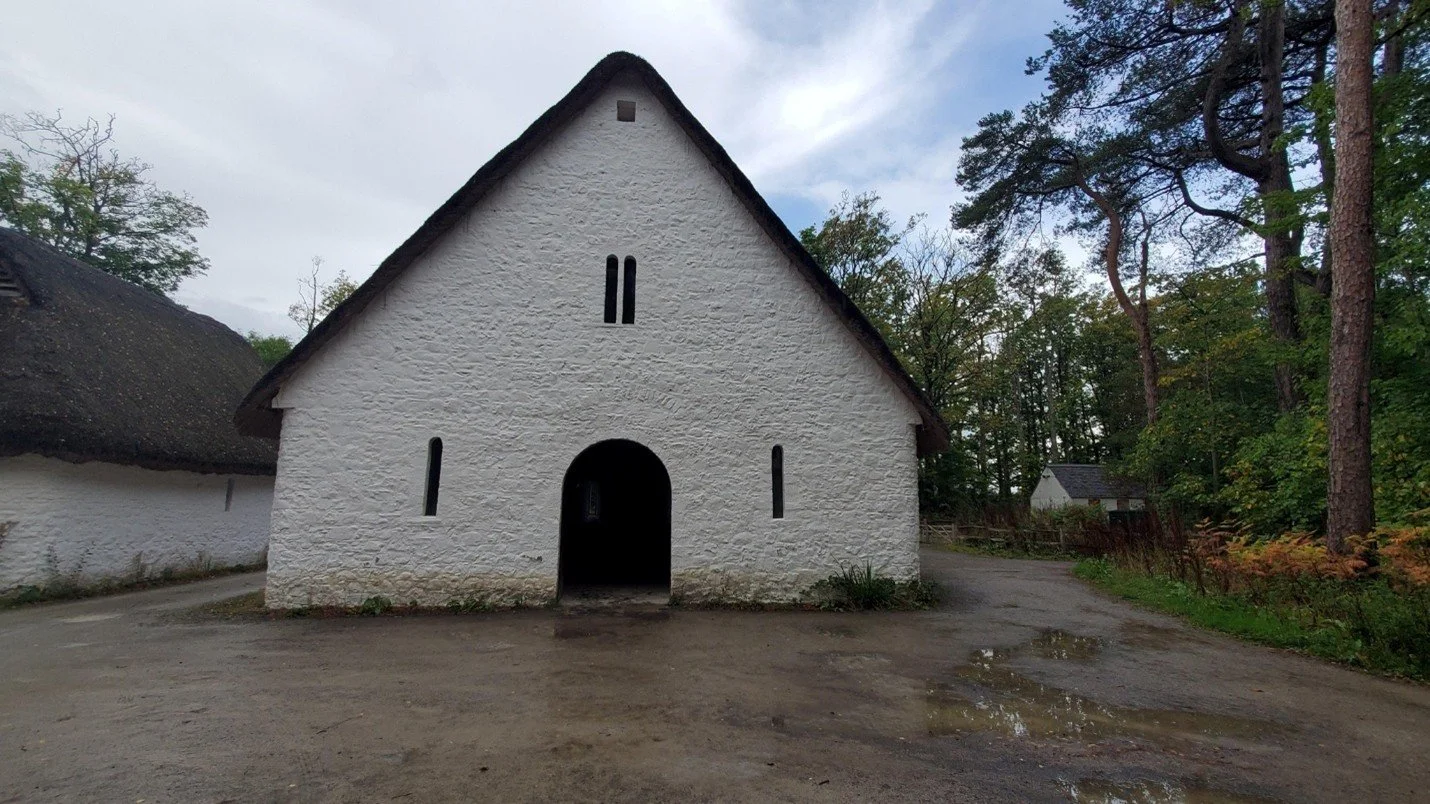
Reproduction of a Medieval Welsh court, where the Prince would govern from.
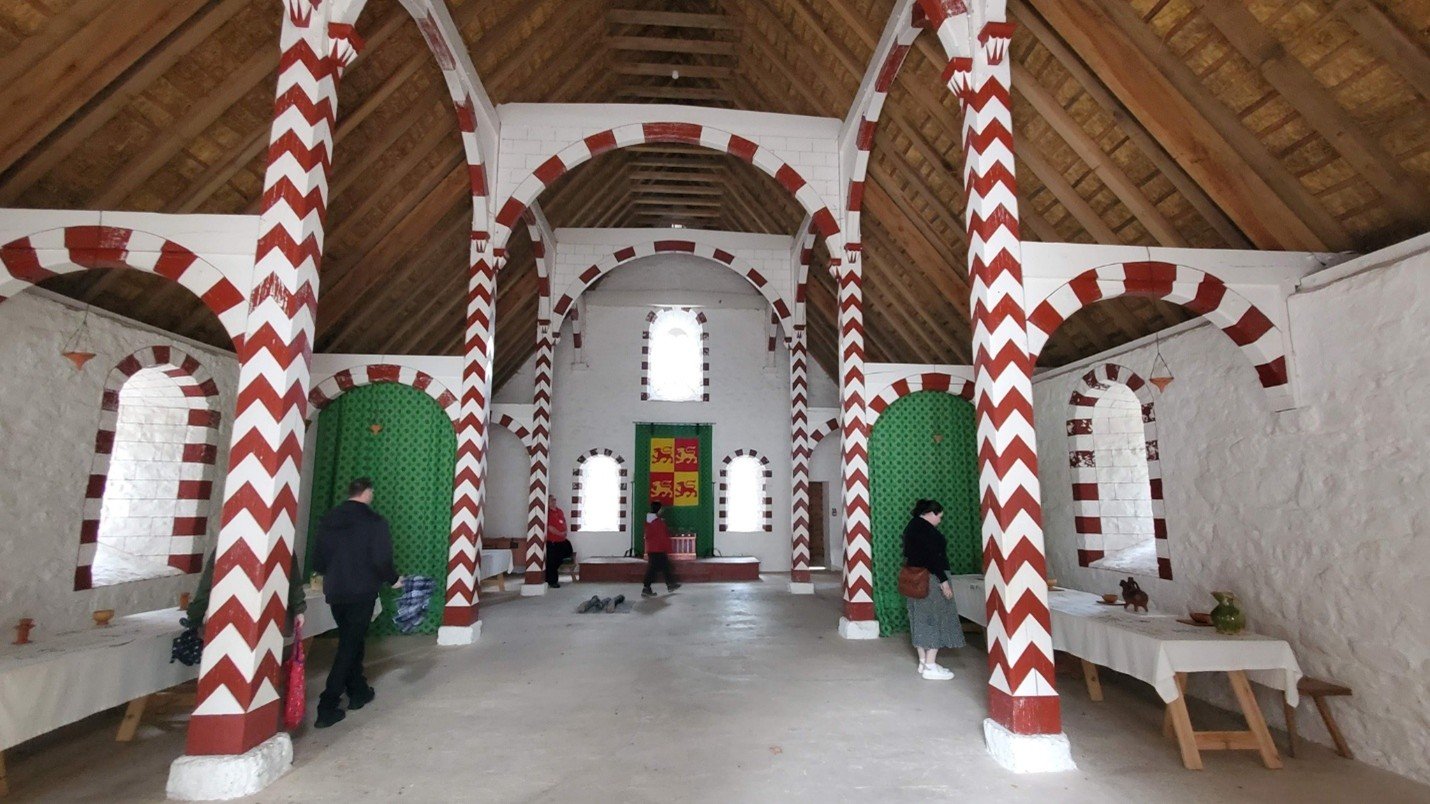
Inside of the hall. The high roof designed to make it look more impressive. I spoke with some of the staff and he said the windows, while they look like arrow slits, were actually designed to let in more light.
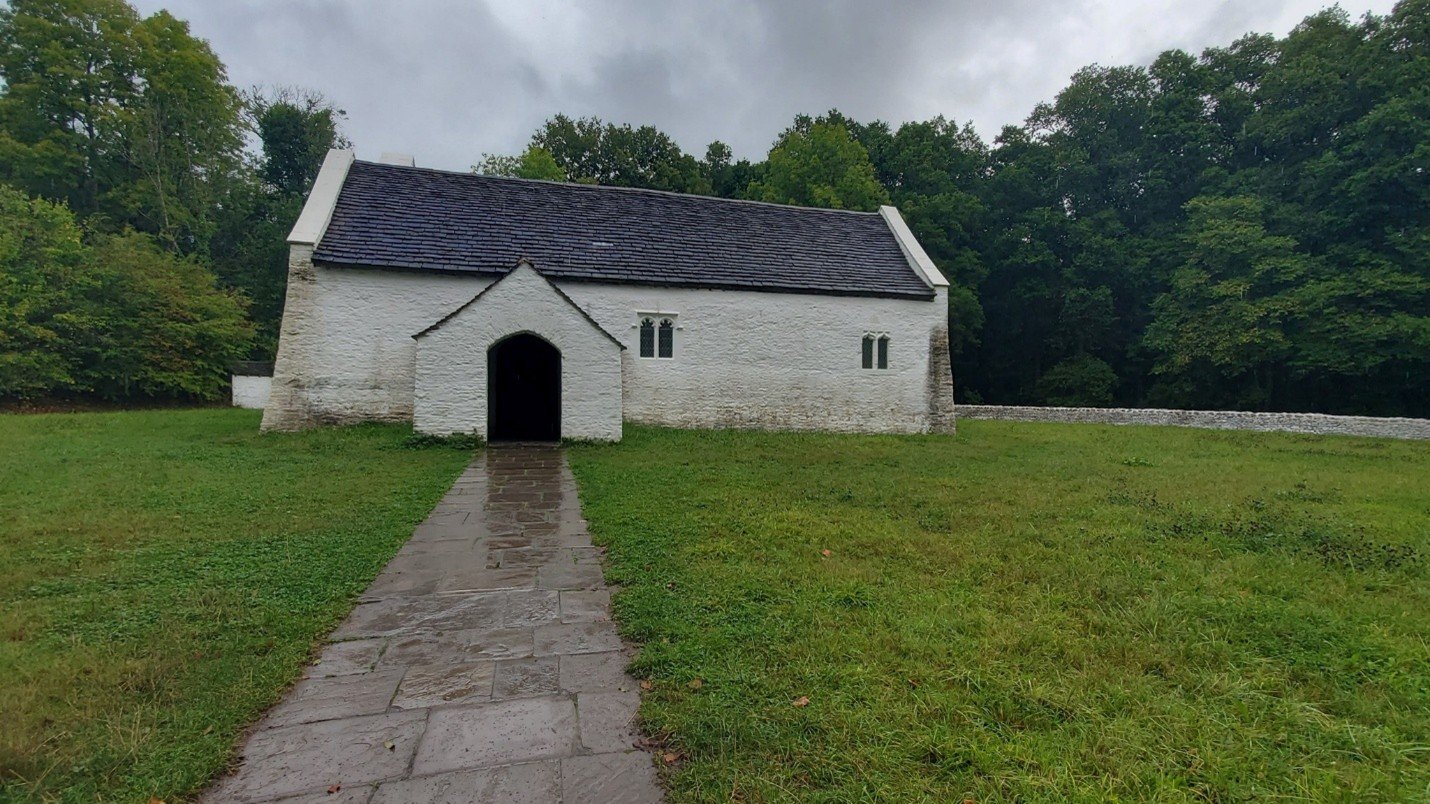
St. Teilo’s church. Like almost all buildings at St. Fagans, this was move to this location. They have panels showing where in Wales the buildings came from. This church was built in the Middle Ages.
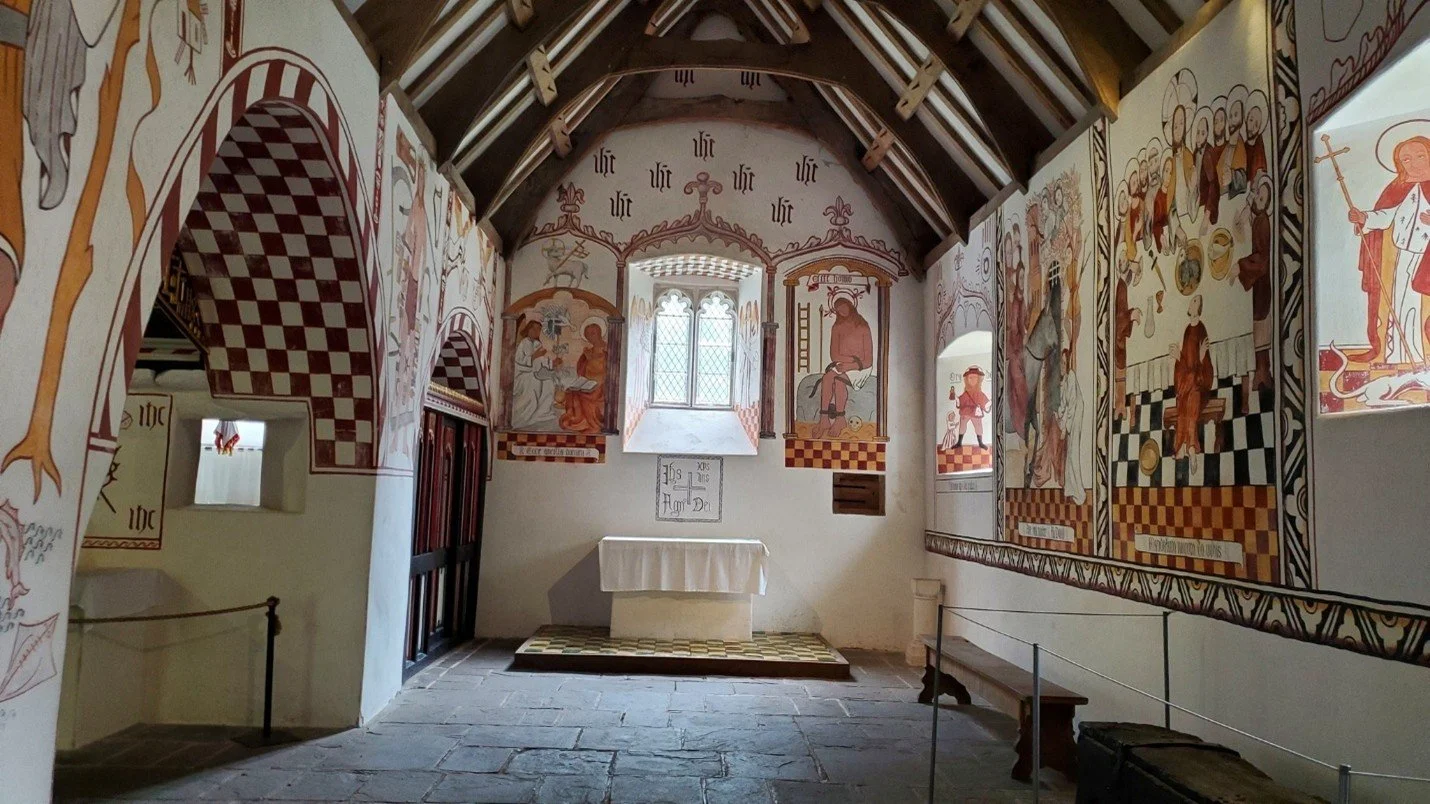
The inside of the church. They found that when the reformation came to Wales in the 16th century, all the beautiful paintings here were whitewashed. They found the paintings years later and in recent times retraced them so you can see what the church used to look like before the reformation.
One of the staff in the church of St. Teilo that we spoke with lived in an upstate NY town not far from where we live. He later even recommended a similar folk village museum in Long Island NY. 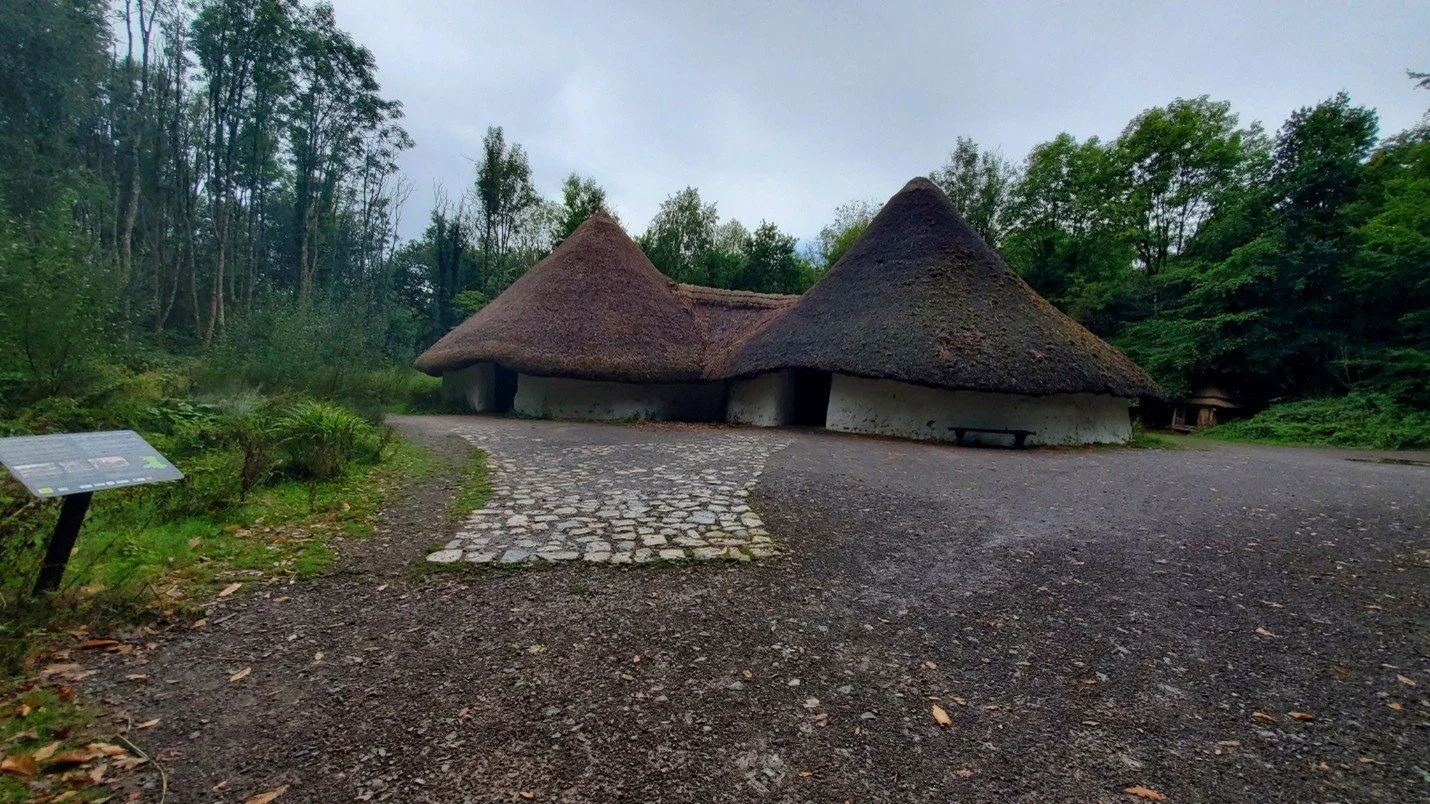
Iron Age Round houses. These were reproduced in St. Fagans in recent times. There are panels showing how this was built.
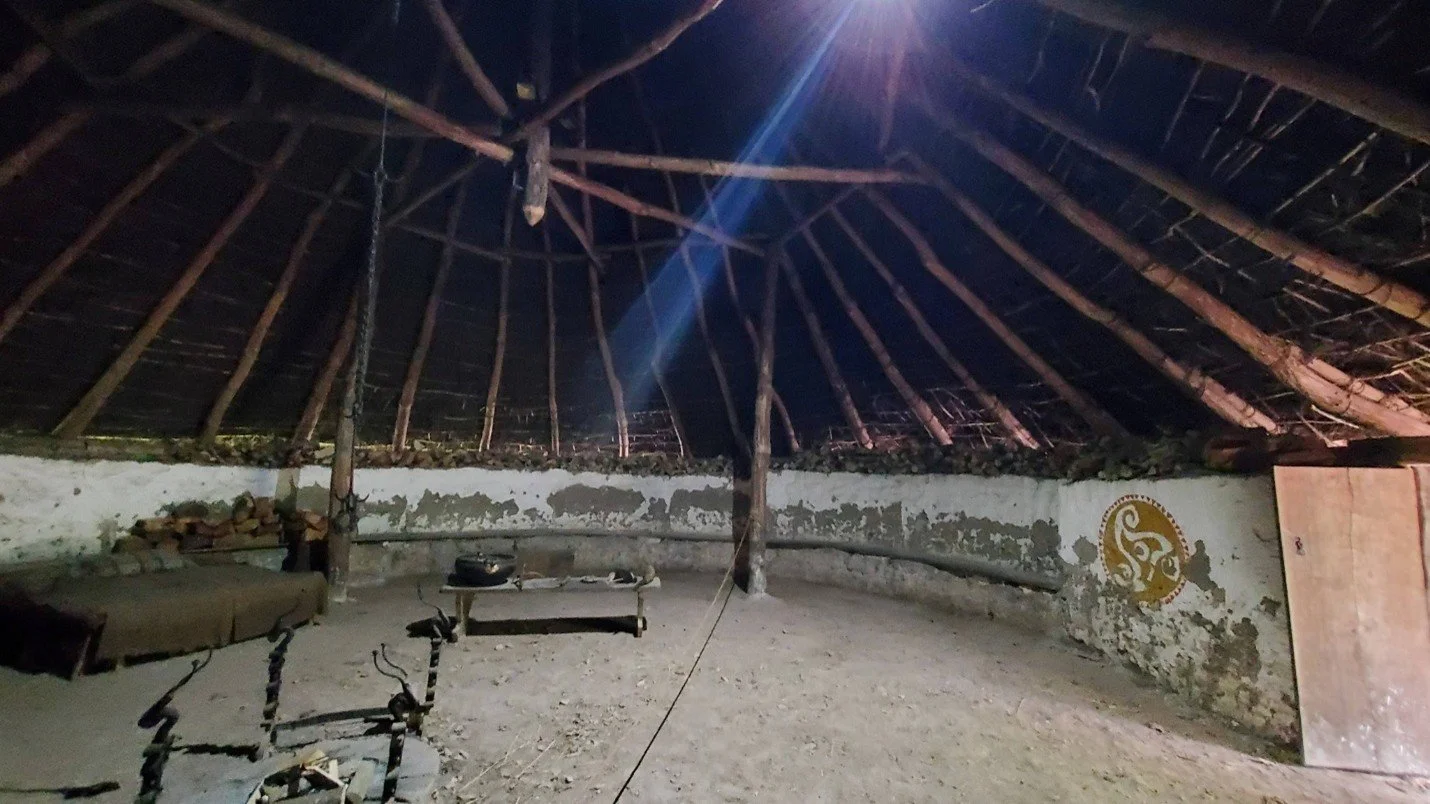
Inside of the Iron age Celtic houses.
St. Fagan’s museum was a great way to see architecture and learn about Welsh culture and see the different styles of architecture throughout the years and in different parts of Wales. The staff were very friendly and had great information that they were so excited to share. Can’t give it a high enough rating. With that our trip to Wales had ended. Would love to go back and especially see more of South Wales, since we didn’t really see anything outside of Cardiff. North Wales was stunning and can’t thank Chris enough for his awesome tour.
I have wanted to go to Wales since High school being obsessed with Castles and a history buff. Wales does not disappoint. I recommend not just going to the south but going to the North as well. More of the epic landscape and older Welsh Kingdom's are in the North, along with the most famous castles. I would try to also see a Native Welsh castle while there, at least one. Dolbadarn castle is probably the easiest one to see since it has a lot of day tours there and also good bus routes.Legends and Lore
Wales is a land full of legends, from Merlin to giants and prophecies, you will be spoiled for lore. Mabinogion
The Mabinogion is a collection of Welsh Myths, collected and published in the 12th century, though most believe the stories oral history goes back much farther. It has legends of heroes visiting the underworld (Annwn in welsh) as well as stories of a giant who ruled Britain (Bran). There are also sea gods and magicians and magic spells. Some of the earliest Arthur tales are also in the Mabinogion, including early quests for the holy grail. Dragons and Prophecies
We all know dragons are awesome. Wales has the coolest flag since it has a red dragon. The dragon on the Welsh flag goes back centuries. The origins of the red dragon as a symbol for the Welsh people can be traced back to a story from The History of the Britons written in the 9th century. The story goes that he is building a fortress that keeps collapsing. He seeks Merlin who advises him to dig up the foundation of the fortress. When they dig it out two dragons who are locked in combat fly out of the ground. One dragon is red the other white. The red dragon eventually defeats the white. This is taken as a prophecy, the white dragon representing the Anglo-Saxons and the red dragon being the Welsh who would eventually defeat them. Geoffrey of Monmouth who wrote the famous History of the Kings of Britain in the 1130s also recounts the same story. Geoffrey also wrote The Prophecies of Merlin which told (as you might have guessed) various prophecies that the mythical Merlin supposably told. Geoffry borrowed these from older Celtic traditions related to the Welsh. The Prophecy that the Welsh would eventually triumph over the English was used throughout history by Welsh leaders, most prominently Owain Glyndŵr when he fought for Welsh Independence in the early 1400s. Even Henry VII, the first of the Tudor Kings used the prophecy of Merlin to try and gather Welsh support when he first landed to press his claim on England and Wales. The red Welsh dragon was even on his banner. 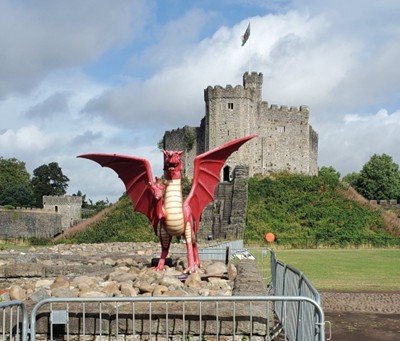
A Red Welsh Dragon statue in front of Cardiff Castle.
Owain Glyndŵr the Magus
During the Welsh war of Independence, the Welsh leader would hide in the mountainous Snowdonia in north Wales. Owain and his forced would melt into the rugged terrain rather than fighting the English. They would lure them deeper into the mountainous terrain. Many English expeditions were met with storms and bad weather. This led to the belief among many of the English that Owain was a wizard, conjuring storms to stop the English. The English lived in hear that Owain would use his magic to summon storms to end their lives. In 1402 a comet blazed across the sky, just as Owain’s rebellion was kicking off. The bards and mystics of Wales read the comet as a good omen for Owain. Comets in general were seen as omens of good or bad fortune until the Enlightenment and scientific revolution in the 18th century. 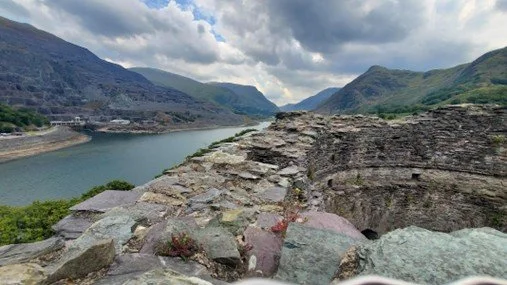
One of the mountain passes in Snowdonia, from on top of Dolbadarn castle.
Magic Wells
As we saw from the magic eel well and the great Orme serpent, the landscape of Wales itself is associated with many legends and ancient stories. Sacred springs or magical Wells are also a thing you find often in Wales and Britain as whole. There are long Celtic traditions of sacred springs as portals into the otherworld, giving people special knowledge (as the eels did) or healings.

A lot of the wells would later be associated with Saints after Christianity took hold and become pilgrimage sites for people who were looking for healing. This is probably an old pagan folk tradition that survived and was Christianized. This is where the tradition of wishing wells comes from and tossing coins into bodies of water.
Sources / Suggested readings:
-Ross, David. Wales: History of a Nation. United Kingdom: Waverley, 2014.- Carradice, Phil. The Welsh Braveheart: Owain Glydwr, the Last Prince of Wales. United Kingdom: Pen & Sword History, 2022.- Ellis, Rowynn. Welsh Monsters and Mythical Beasts: A Guide to the Legendary Creatures from Celtic-Welsh Myth and Legend. Canada: Eye of Newt Books, 2022.- Gravett, Christopher. The Castles of Edward I in Wales 1277–1307. United Kingdom: Bloomsbury Publishing, 2012.- Davies, John. A History of Wales. United Kingdom: Penguin Books Limited, 2007.