Iceland Road trip!
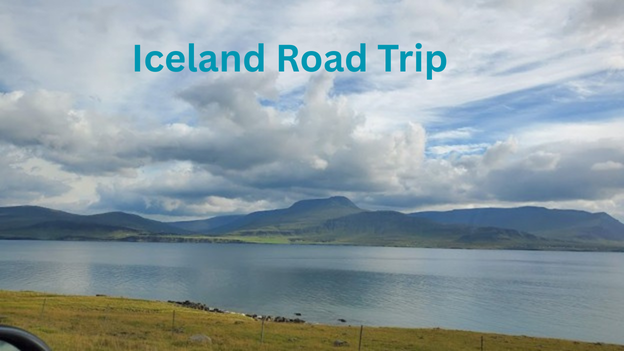
Iceland is a small country sitting out in the Atlantic between Scotland and Greenland. First settled in the 9th century by mostly Norwegians, Iceland was one of the last large islands to be inhabited by humans, as there were no native inhabitants when the Norse settled in the early Middle Ages.Iceland was a small rural community, living in traditional turf houses because there was a limited about of wood. These now iconic houses were constructed of stone foundations, wood for structural beams and sod or turf for the rest of the building. Though a small society in a colony at the edge of Europe, Iceland was an incredibly literate society. Such Medieval classics like the Sagas and the prose Edda were written in Iceland. The Prose Edda is a collection of stories of the pagan Norse gods and really the only written source to the Norse world pre-Christianity. Iceland functioned as an independent country from its founding until the 13th century, when the King of Norway claimed control. The country was run by the Althing, an assembly that took place at Thingvellir. Thingvellir is located where the European and American tectonic plates meet. Iceland is often called the Land of Fire and Ice because of the massive number of volcanoes and icebergs. Its landscape was formed by these epic natural forces creating a truly unique environment to explore. Legends of elves, trolls, witches and magic permeate the mystical landscape with stories and Sagas of the supernatural dating back to the founding of the country. Contents: Day 1: Reykjavik Day 2: West Iceland: Medieval tunnel, lava waterfalls and dead volcanoesDay 3: Holar, snowstorm, windstorm and the Devil Day 4: Monastery, Monster and Fjords Day 5: Viking village and black sand beaches, Sci-fi bathroomDay 6: Waterfalls with a side of waterfalls Day 7: Parliament and plates Day 8: Folk museum and elf garden Day 9: Giants, Winds and Viking shipDay 1: Reykjavik
We started our Iceland adventure by taking a redeye flight from NYC to Reykjavik. Somehow we arrived even earlier than expected and had to sit around the airport waiting several hours for Happy Campers, the company we rented our campervan from, to come and pick us up. Finally get were brought in a small bus to the Happy Camper HQ to get our van! Our plan for this trip was to do the Ring Road or Road 1, which is the only road that goes around the entire island of Iceland. This was my first time in Iceland and Cerissa had previously spent a few days on a layover and wanted to come back and see more of the country. They have a lot of really great websites and Happy Camper gave us a tablet that had a lot of attractions and campsites that was helpful. Still hungry and tired, we went into nearby Reykjavik to try and get through the jetlag. Before we could, I was drawn into a history museum, The Settlement Exhibition in downtown Reykjavik. This was a small but awesome little museum dedicated a Viking era longhouse that was dug up. It was found in the early 2000’s during construction of another building. They dated the longhouse remains to have been inhabited from 930-1000 CE (AD) 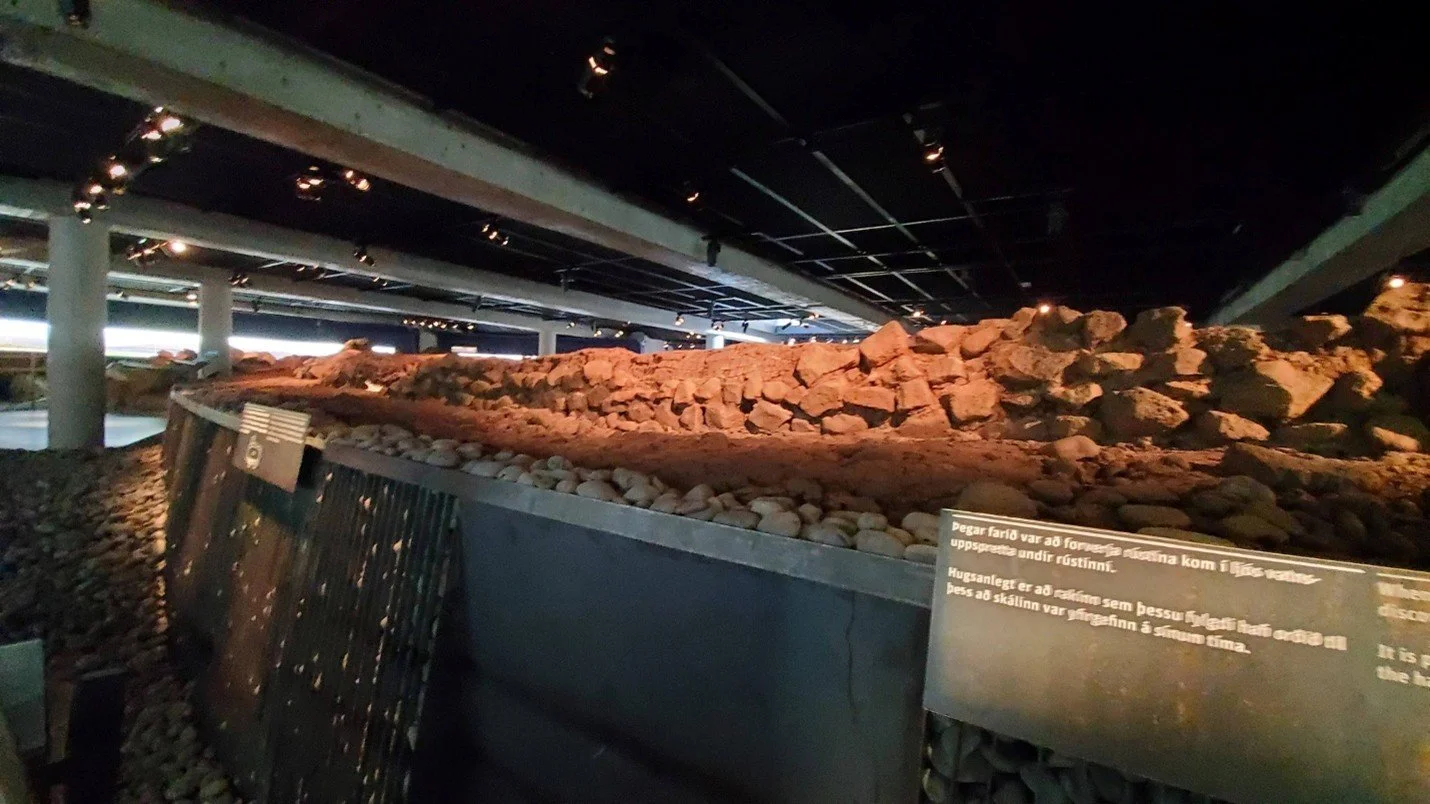
The turf and stone walls of the side of the longhouse.
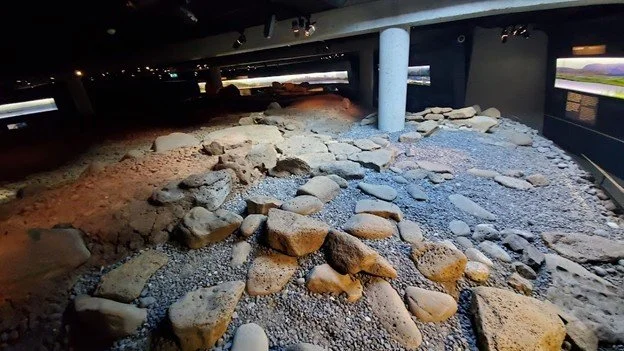
Paving stones forming a fancy ‘porch’ for the longhouse. The museum also had a lot of information about the Viking settlement of Iceland.
The Settlement Exhibition is a great introduction to the history of Iceland as it is all about early settlement. The Viking Longhouse ruins are lovingly preserved underground (they found them when they were looking to build a car park) but there is also a lot of other information about the Viking settlement, including digital recreations of what the hall looked like, as well as a digital mural running around the museum showing what Reykjavik looked like back in 1000 AD.  They also have noises of the sea and birds to make you feel like you've traveled back in time. Don't miss this if you're in Reykjavik. The building it's in is not very large so it may be easy to miss, but its right downtown near other big sites.

Walking around the Museum

Next, we sauntered down to the Harpa Concert Hall, which is a fancy building with beautiful glass, and some classic fjords across the bay. We did not go inside but rather looked at the modern architecture and the fjords that were peeking out from the other side of the town. Even in the largest city in Iceland there are reminders that you are far removed from civilization.
We walked up a rainbow street to Hallgrimskirkja, probably the most famous landmark in Reykjavik. The church itself is not very old but towers over the city giving you a good view of the Icelandic capital.
There aren’t that many old buildings in Reykjavik itself. Reykjavik and all the cities in Iceland are much newer since the country was mostly rural farmsteads for hundreds of years. It wasn’t until the 18th century that larger and more permanent buildings started being built in Iceland. So the city is actually very new and some say (I think Rick Steves said this) looks more like an American city than an older European one. 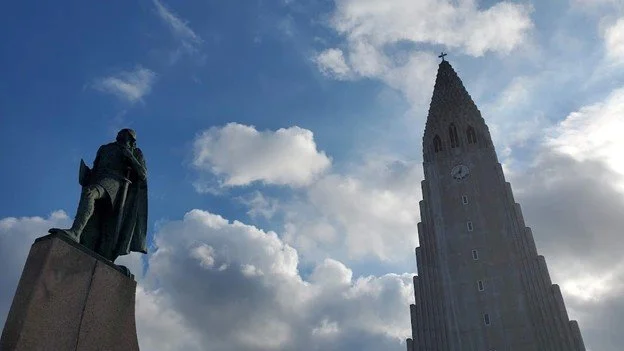
Hallgrimskirkja church with Erik the Red statue
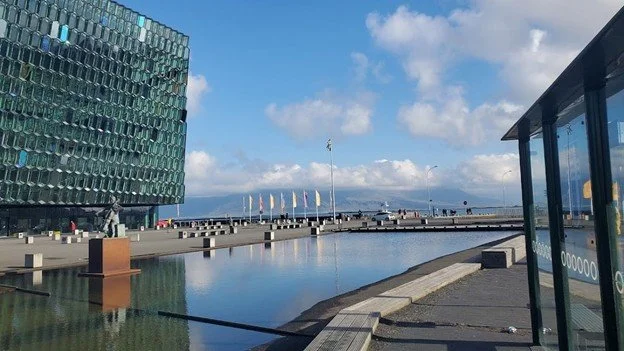
Harpa, harpin around
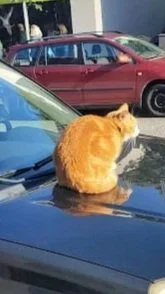
A wonderful, perfect orange kitty we saw, made us think of our orange kitties.
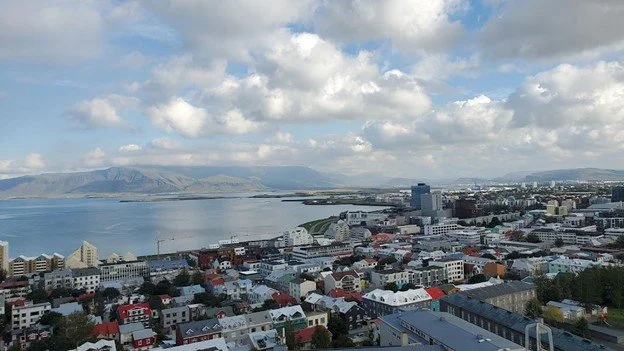
Fjords beyond Reykjavik .
We ate a place near the cat and right outside the church. The restaurant was pretty cool, it had large artistic paintings of Norse mythology. I think I had some black bread with some kind of fish; Cerissa has no idea what she had. On our way back to the car we passed Hljómskálagardur Park which contains Lake Tjornin. There was a mermaid statue in the lake using her feminine wiles to lure us in. She was the first of many statues or natural formations around Iceland connected to the country's rich supernatural folklore.
In Icelandic folklore their mermaid is called the Mer-troll, which was essentially the same as a mermaid. She is said to grab young men who are not paying attention to their fishing lines. Singing hymns keeps them away.
After the food we headed out of Reykjavik and west onto the Ring Road! 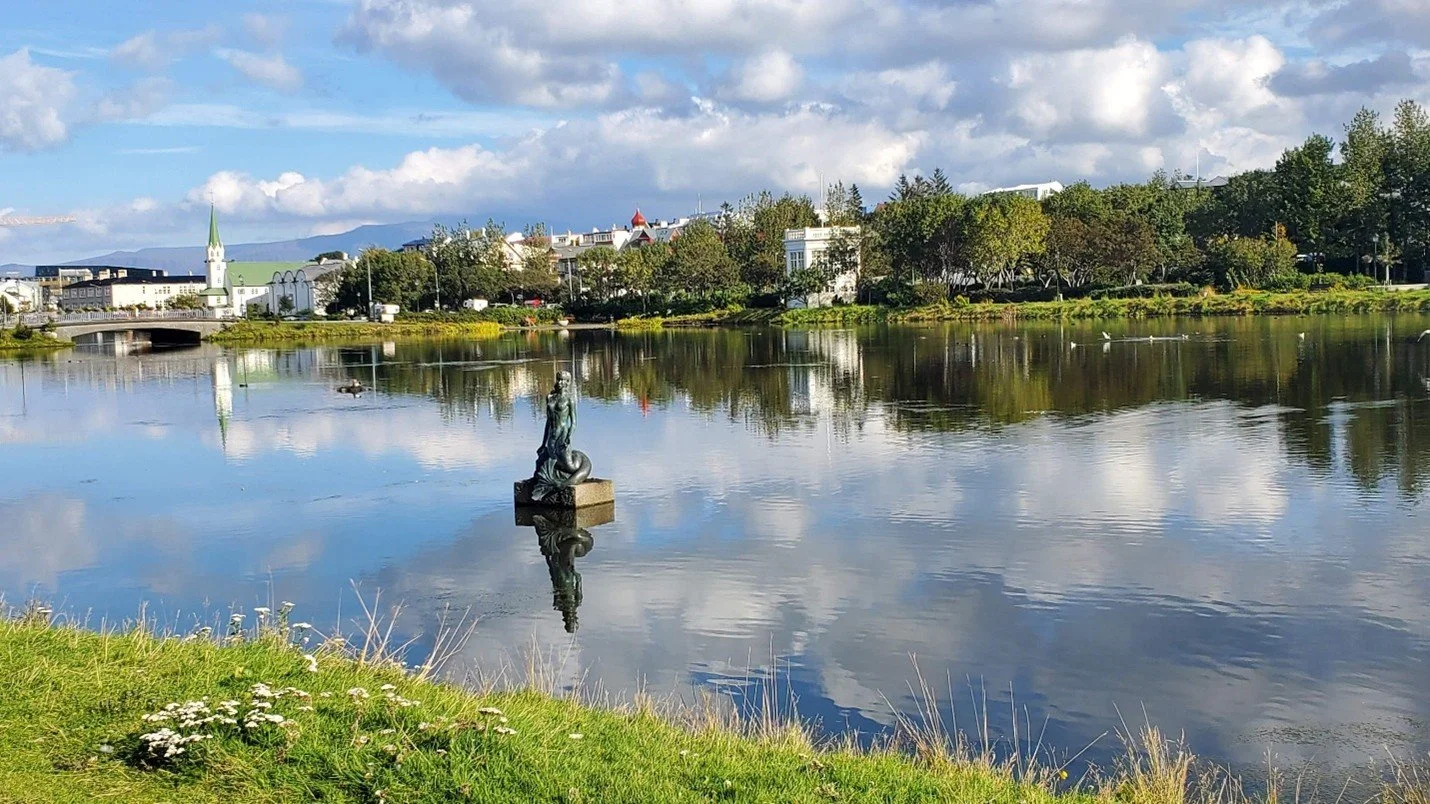
The Mer-troll. The word troll is generally used to denote anything magical.
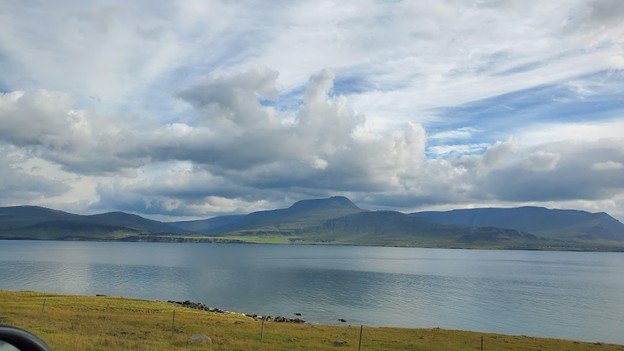
One of the first Ring Road pictures that Cerissa took out of the window. There would be lots more. Already the landscape is very impressive and we left the city behind very quickly.
Iceland is still a very small country with only 300,000 people, so there is a lot of nature and you are in it very quickly. Our first campsite was in a small field near a restaurant. We had to go in and speak to the person to pay and find the place. It was actually very comfortable as there was a big common room that had bathrooms, a kitchen area and most importantly, a lil kitty. We passed out since I was on roughly 20 minutes of sleep in 48 hours at that time. This was our first time transforming the campervan into bed mode. It wasn’t super comfortable since we both like to sleep with separate blankets. This was probably the best sleep we got since we were both so tired from the flight. Day 2: West Iceland: Medieval tunnel, lava waterfalls and dead volcanoes
We woke up early and headed to a place on google earth called Troll Garden. We didn’t really know much about this place or if we were supposed to be there, but there was no one around and no place to leave money. It was a nice little path along with river with signs telling some folklore about trolls as well as figures of trolls. More about trolls in the Legends and Lore section. Next, we headed to Reykholt. A historic village known for being the home of medieval author, historian and statesmen Snorri Sturluson. Snorri was the one who wrote the Prose Edda, the main written source for Norse mythology. He was also a large political player in the mid-13th century when Norway was attempting to take control over Iceland. Many of the chieftains of Iceland also had connections to the Norwegian King. When Snorri snubbed the King, men loyal to Norway went to his fortress home and murdered him. Poor guy. 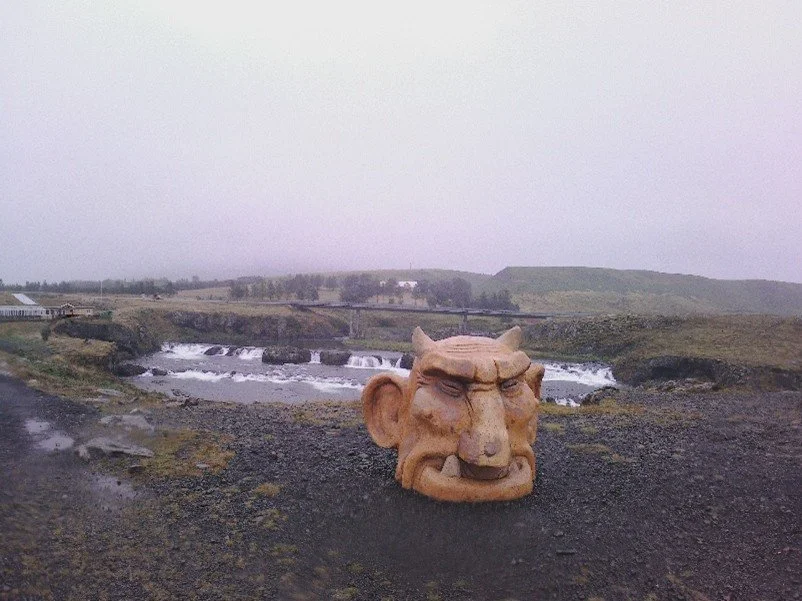
Troll head near the troll waterfalls on the troll trail…troll
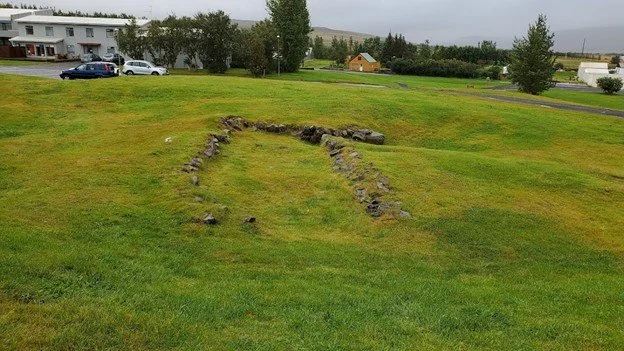
Foundations of Snorri’s house. There are stairs to a tunnel where he was killed.
Reykholt is a very quaint small town (more like a cluster of houses and a church); some of its biggest attractions are the Snorralaug (an old thermal pool Snorri used to bathe in) and the Snorrastofa museum. The most interesting thing in Reykholt, I think, was the ruins of Snorri’s house and an underground tunnel from the house to the bath that was excavated in the 1990s. The man loved his baths so much he built himself a tunnel directly from his house. Here is a short video of me looking at the tunnel. Medieval Reykholt Iceland, Snorri's farm
The museum was also very good with plenty of information about Snorri and Reyholt in the Middle Ages. It was probably the most medieval feeling place in Iceland, as you had an actual space you could enter (the tunnel) from the Middle Ages. Since Icelandic people lived in turf houses, no classic medieval architecture like castles and large cathedrals were built, and there are very few traces of Medieval structures remaining. Visiting the farm where the Norse mythologies were recorded gave the place a mythological feel. You could almost imagine Snorri in his farm recording epic ancient tales of the beginning and end of the world. Even though Snorri (and all of Iceland) was Christian at this time, they still felt these pagan stories were important to record for future generations. 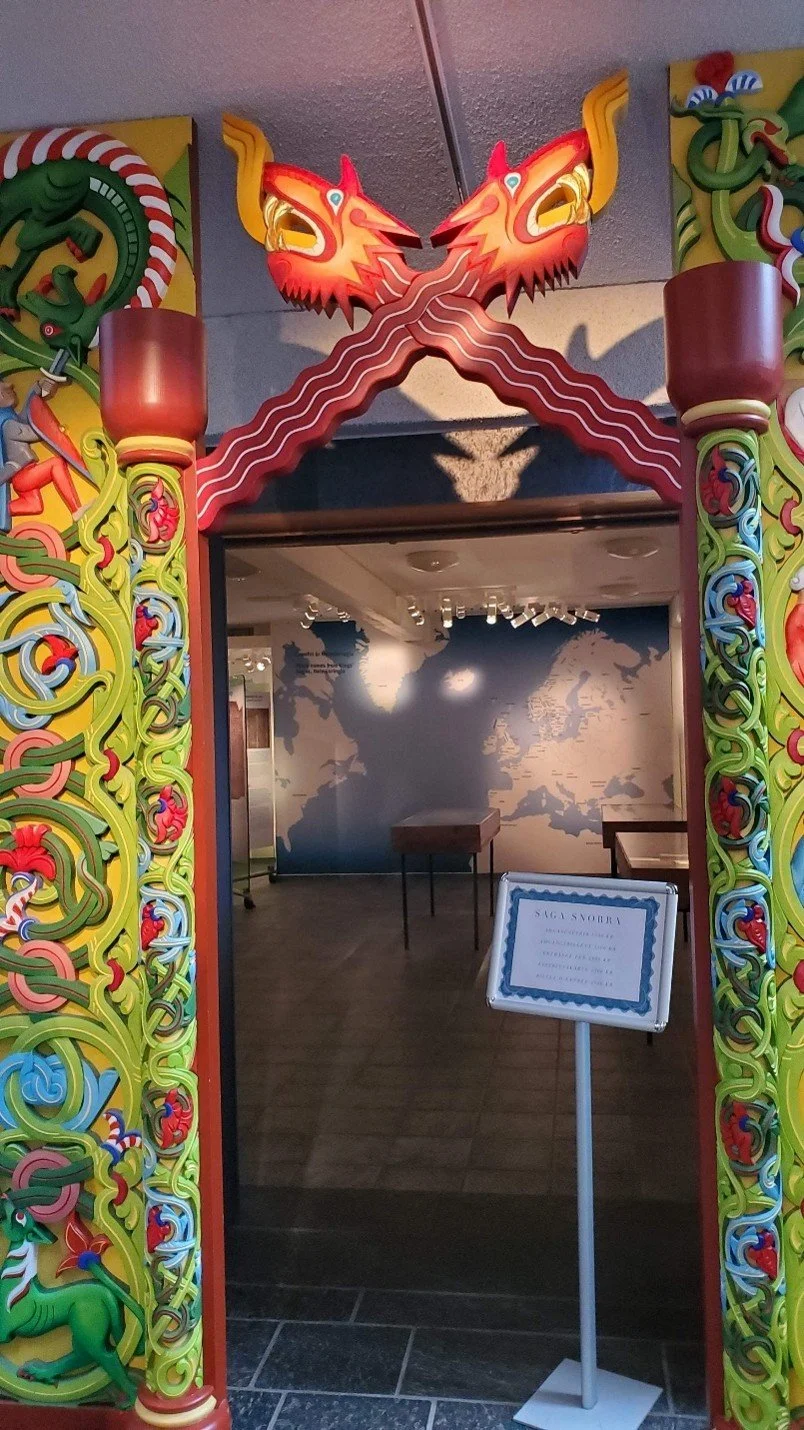
Entrance to the Snorri Museum. I liked this Viking style carving gate. The exhibit space was one large room, but there was a lot of information packed in.
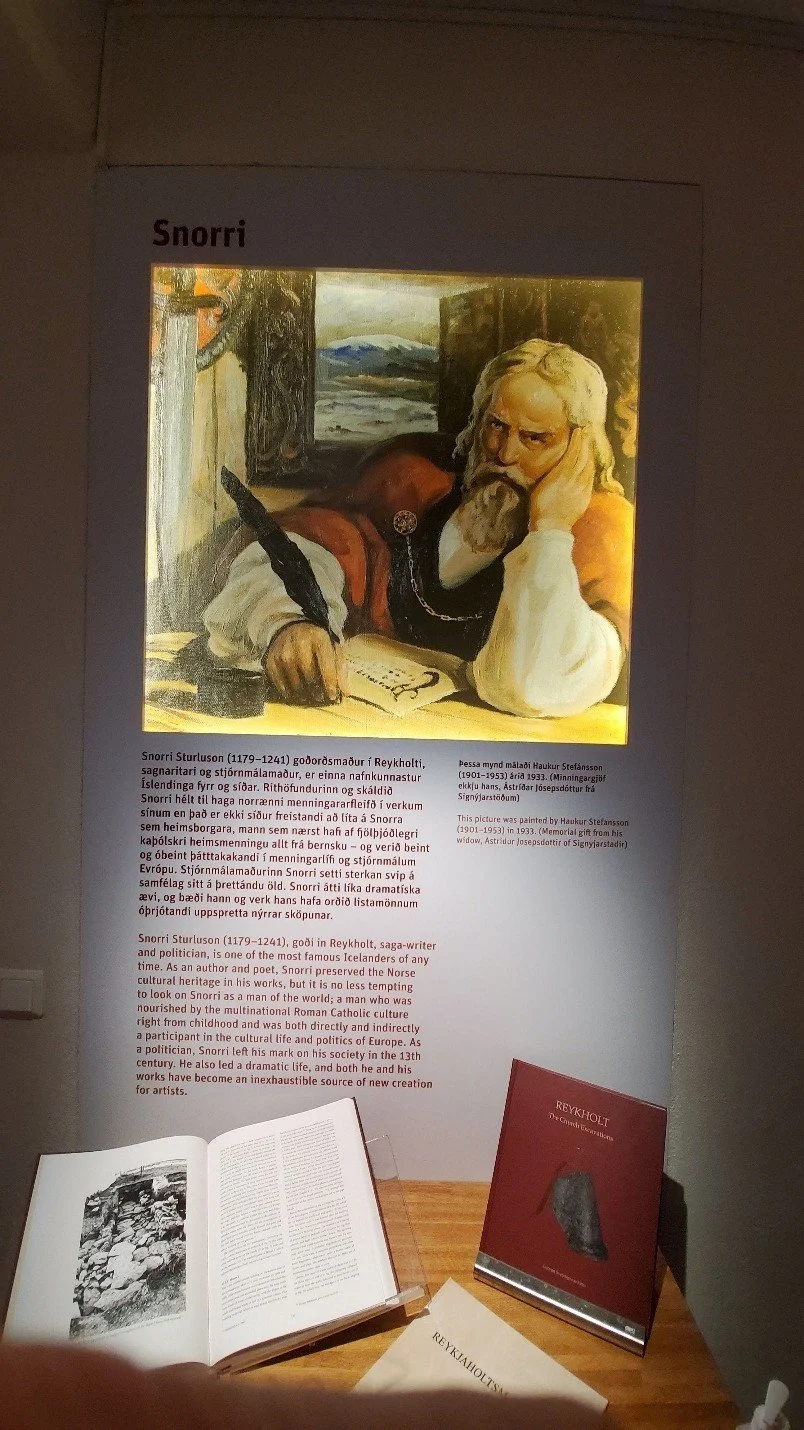
Painting of Snorri. I will go on record to say I have never seen a man who appears to want a bath more than him in this picture.
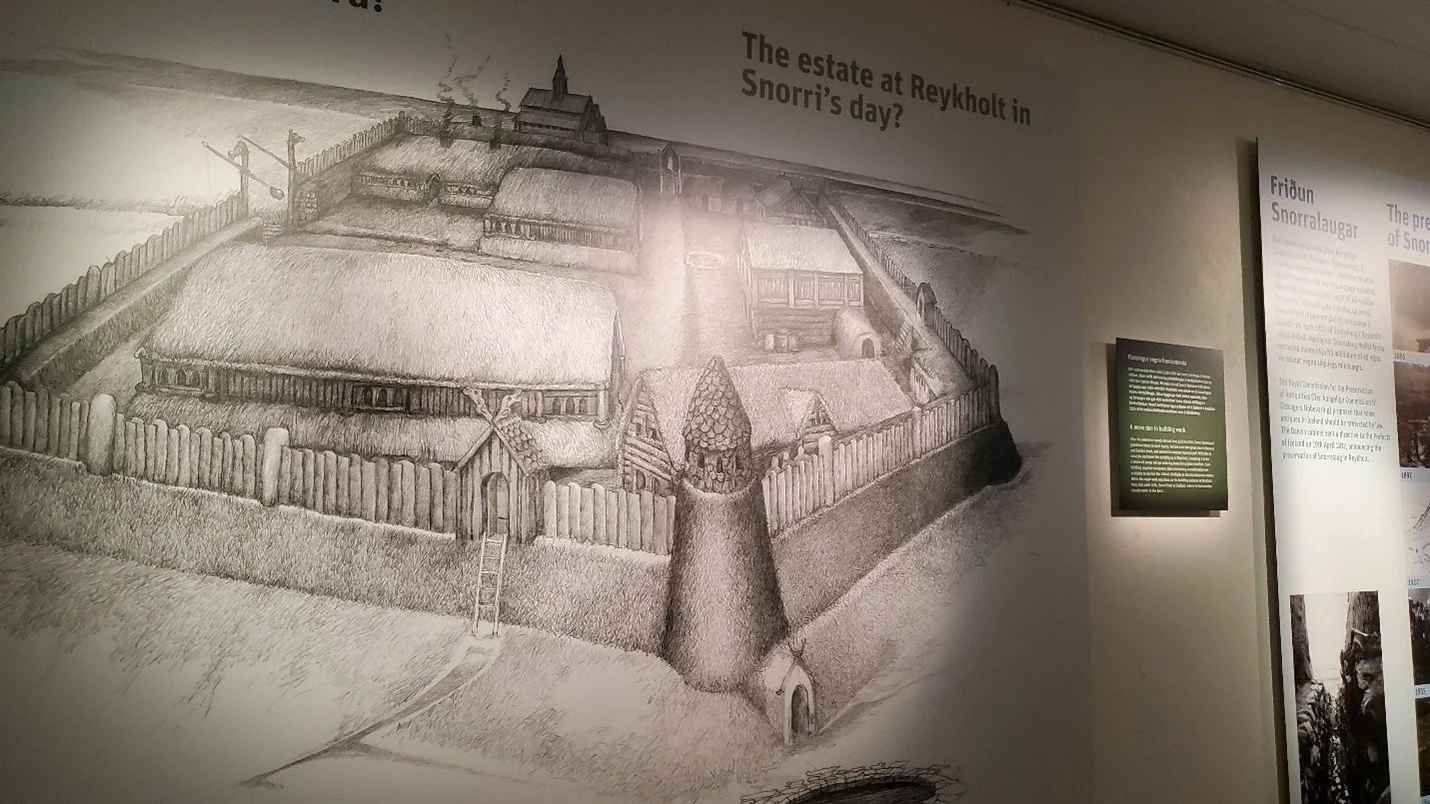
One of my favorite pictures in the museum is a conceptual drawing of what the farmstead may have looked like in the 1200s. You can see the little pool at the bottom and the doorway leading to it. That’s where the Medieval tunnel was. This was a good illustration because it really helps you imagine what the fortress looked like when you walk around excavation sites.
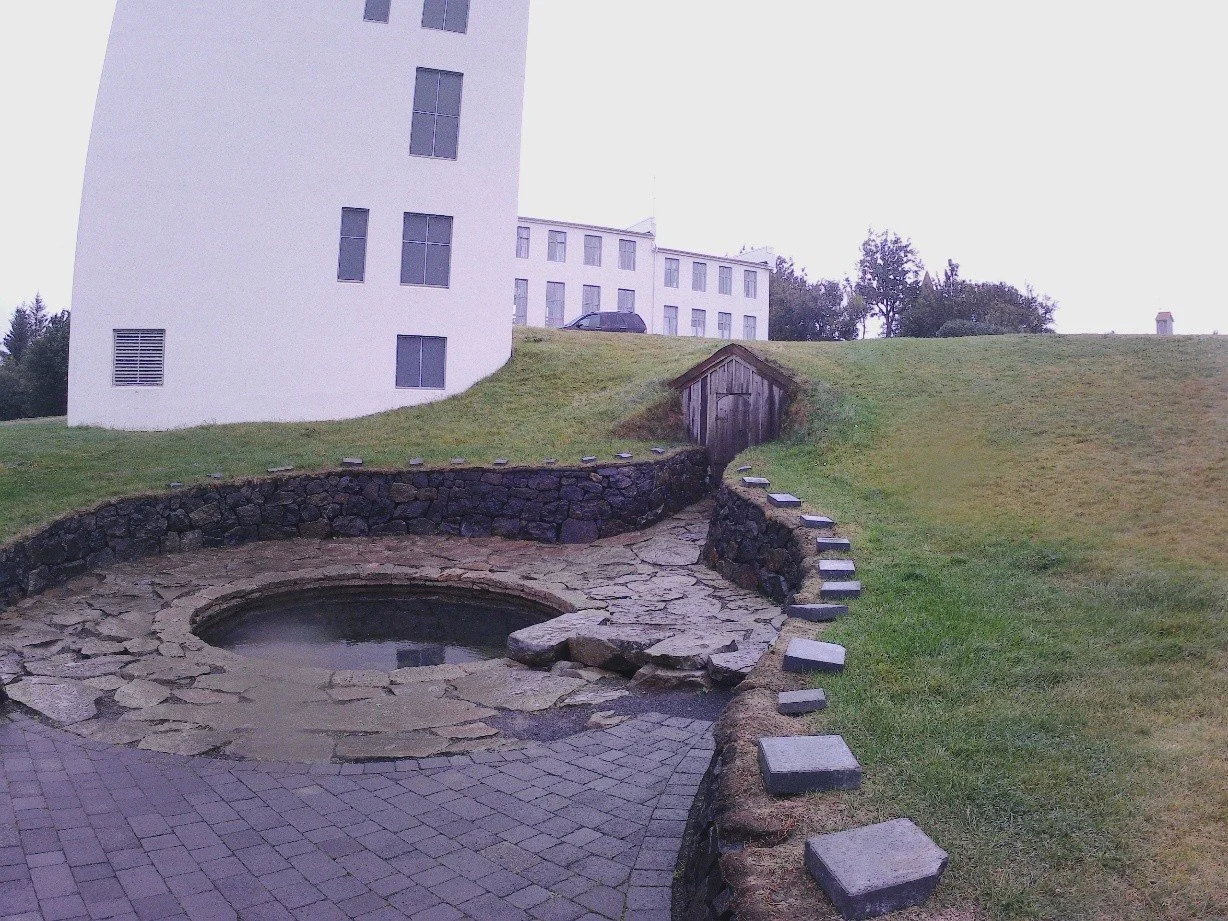
This is the Snorralaug, or Snorri’s Pool. The door built into the hill leads to the tunnel that leads from Snorri’s house to the pool. Most of the pool is a reconstruction except the base stones.
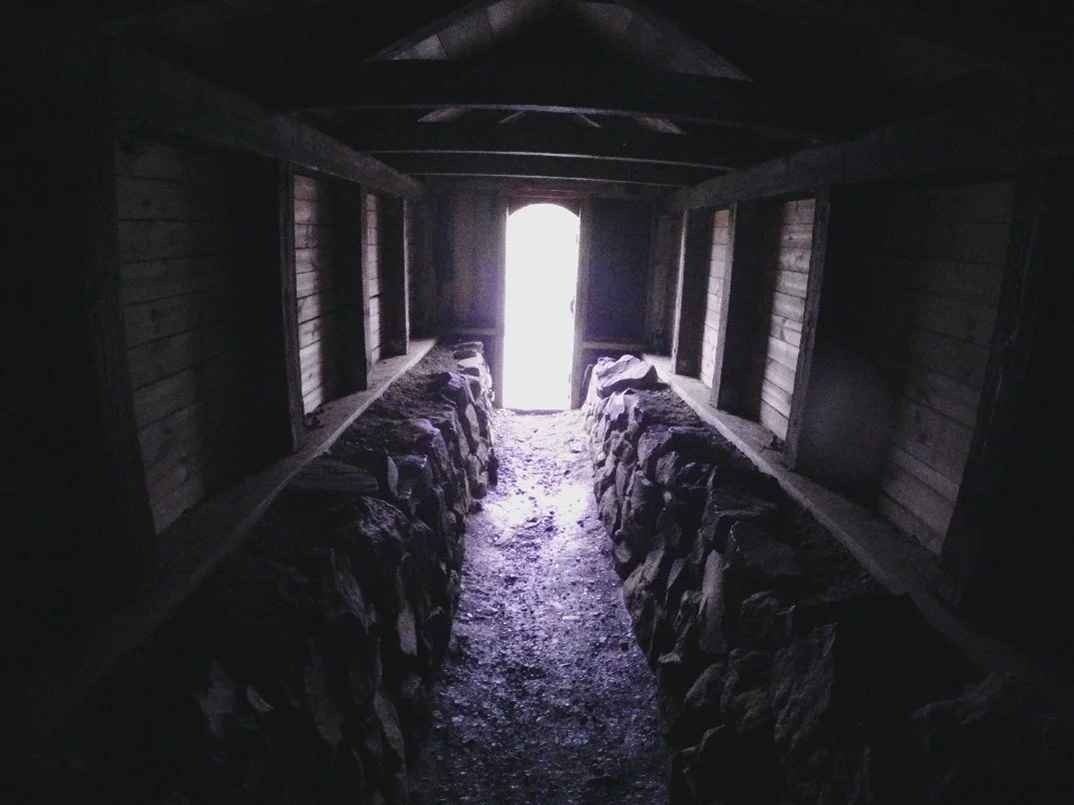
Inside the medieval tunnel looking out.
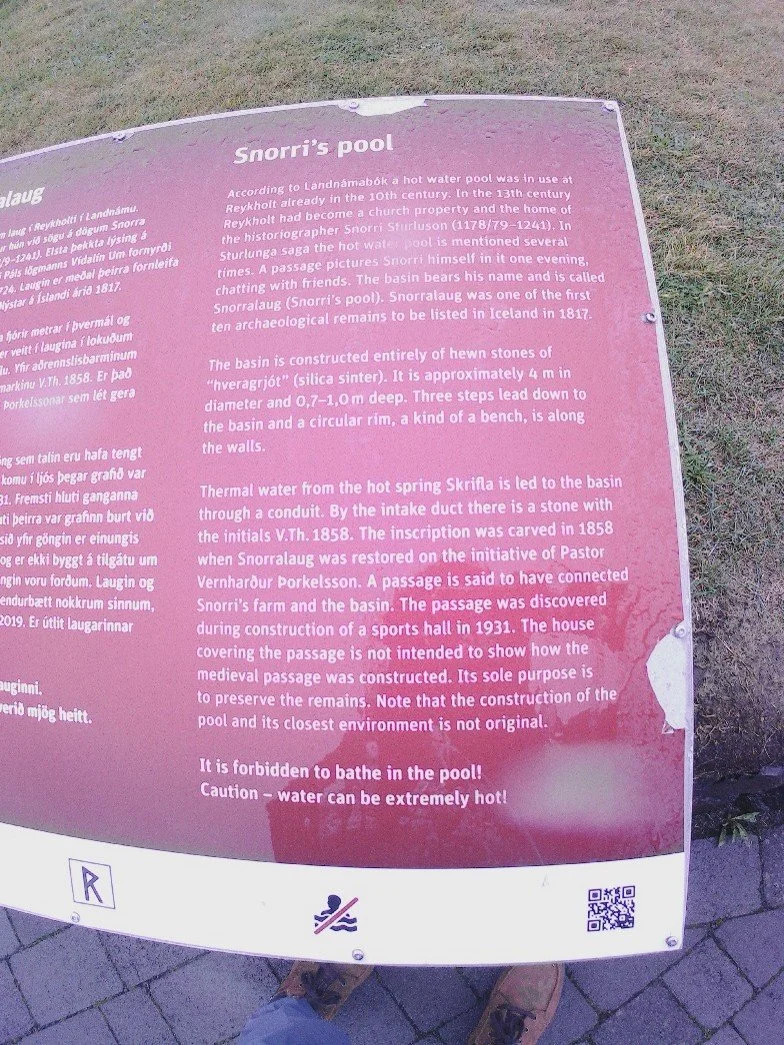
Sign about the snorri pool and tunnel
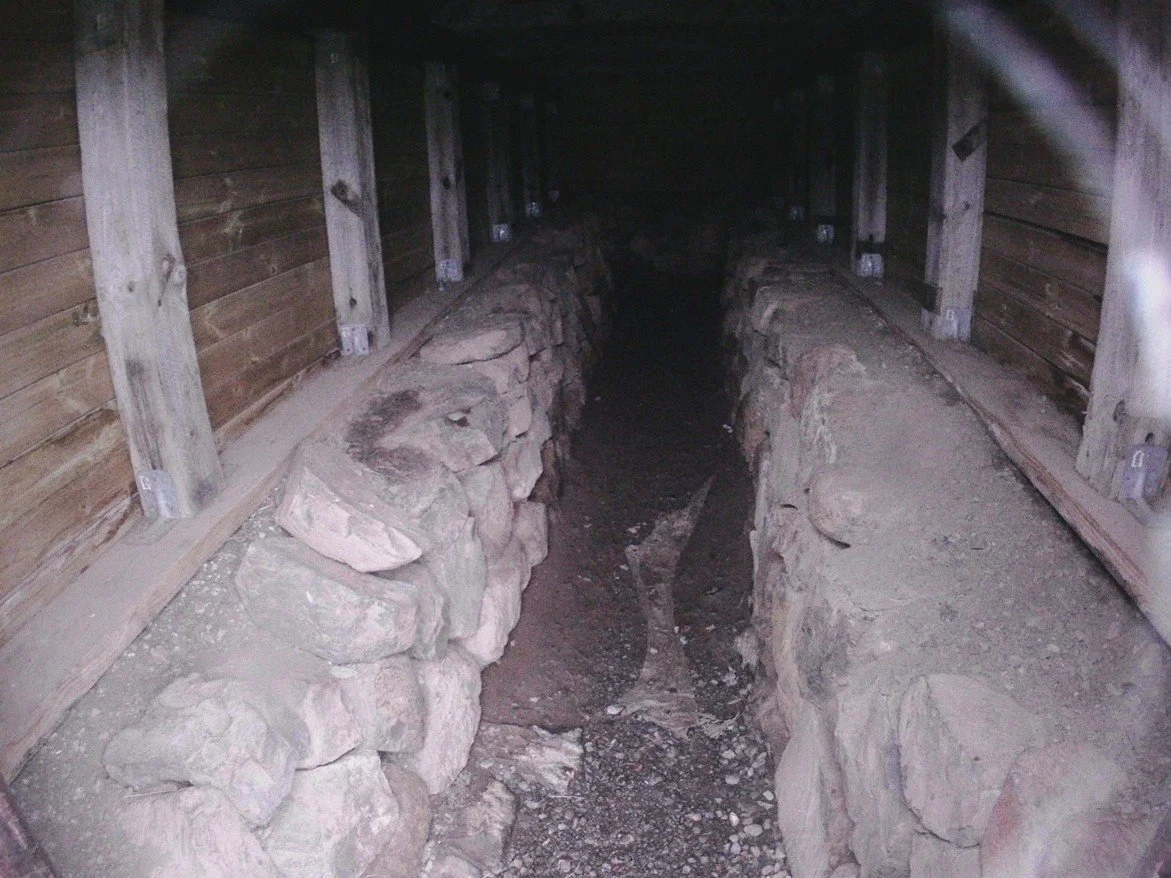
Closer look at the stonework for the tunnel. The wooden section is modern to preserve the stone lined tunnel. The stones were stacked without mortar like most stone foundations in medieval Iceland.
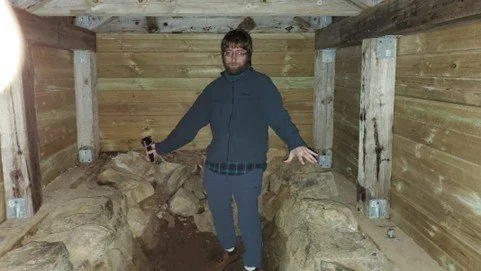
Myself vibing in the tunnel.
After Reykholt we went to the Hraunfossar Waterfalls or ‘Lava Falls’ in English. These waterfalls were not very tall, but they were around a long craggy river edge. These waterfalls are unique as the water travels through pours parts of the rock that was formed from lava. 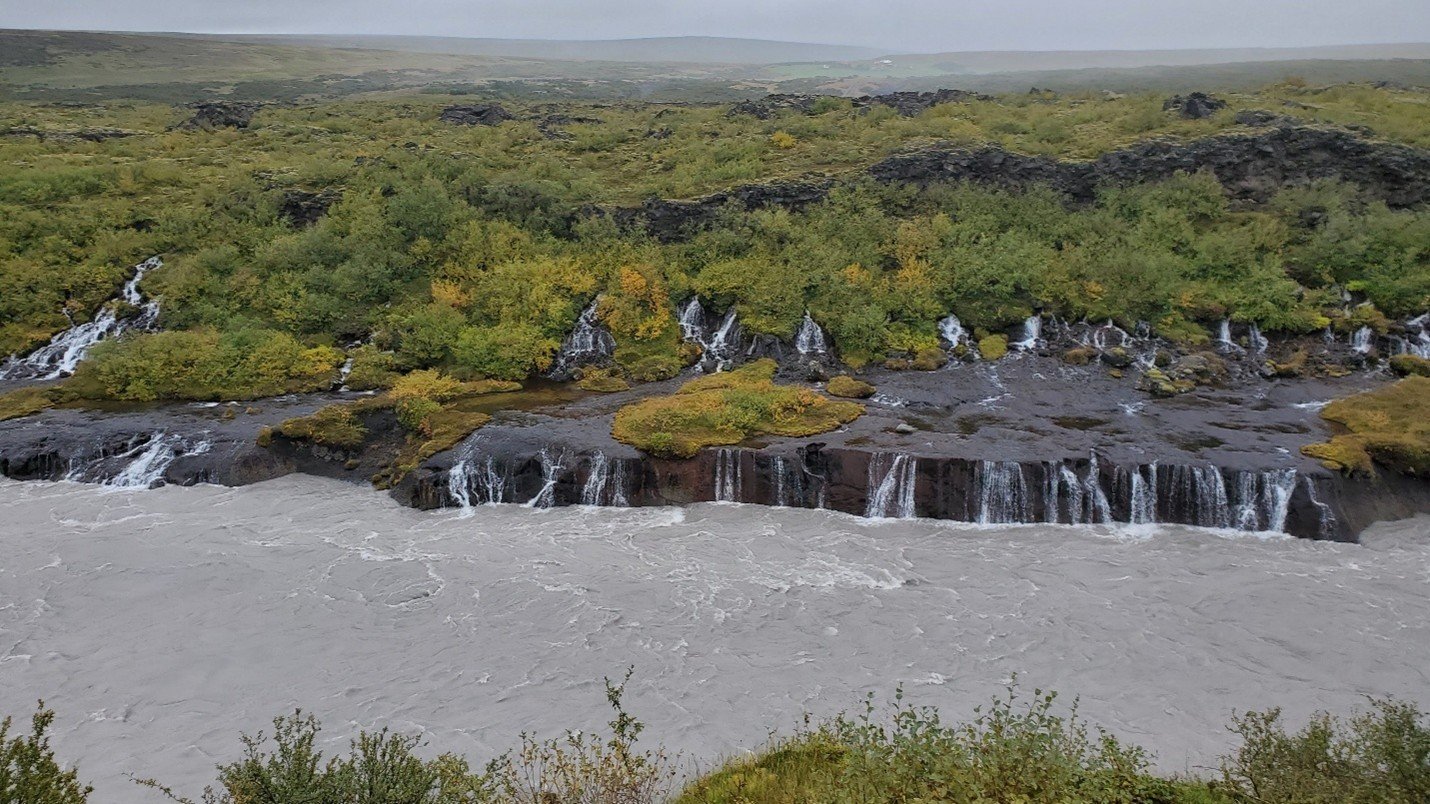
The waterfalls are unique and vaguely look like something from a tropical environment, but it was very cold.
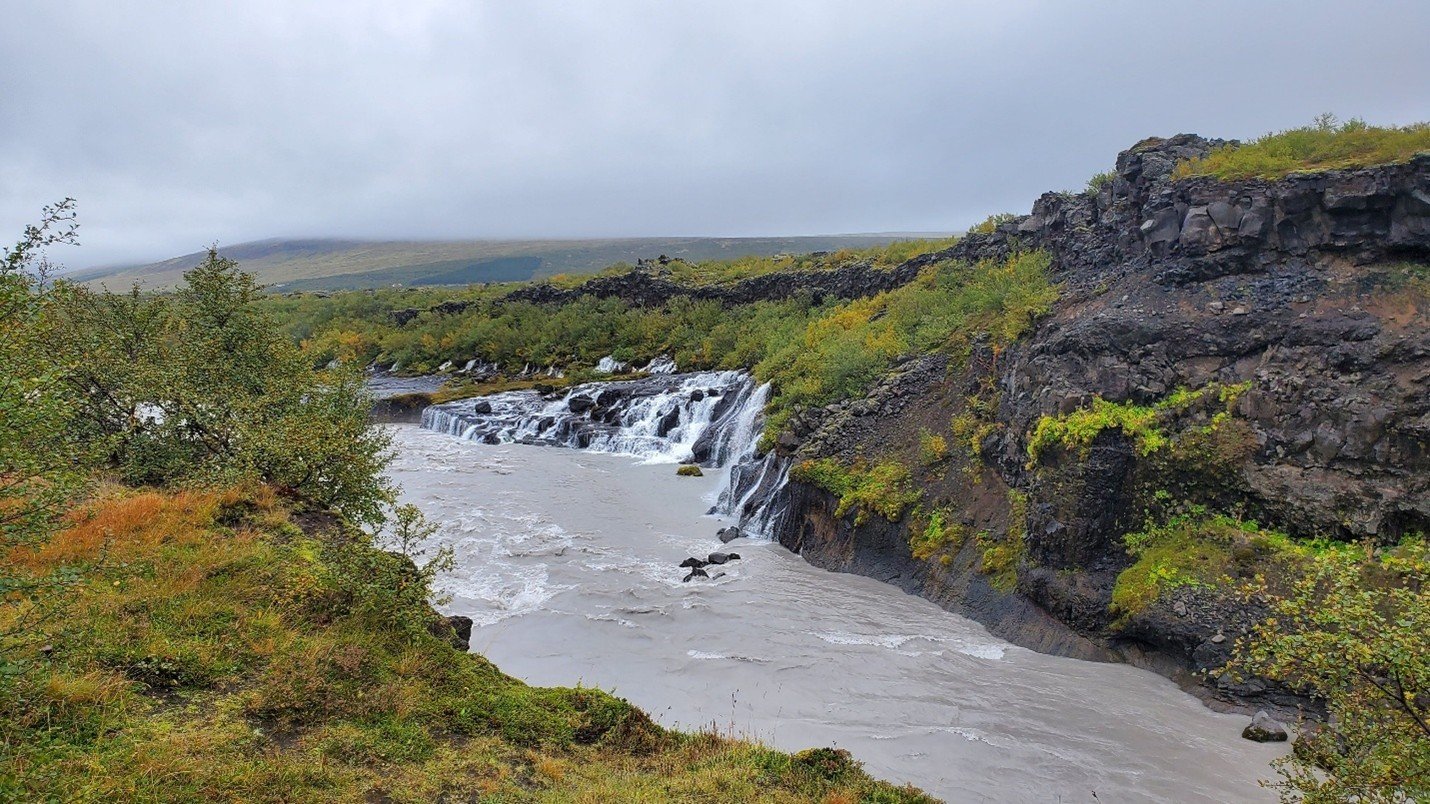
The road in was a little rough. Our first introduction to some rough gravel Icelandic roads.
We had a meal at the Hraunfossar Restaurant – Café then continued. Definitely keep track of where you can get food as there are few places in most of Iceland outside of the capital. We had a lot of food in our camper van but still ended up eating out when we had the chance. Our next destination was the dormant volcanic crater of Grábrók. We stopped for a little hike nearby to look at the unique alien landscape. Cerissa dropped her phone into a fairy pool (dang fairies) but luckily it still worked. 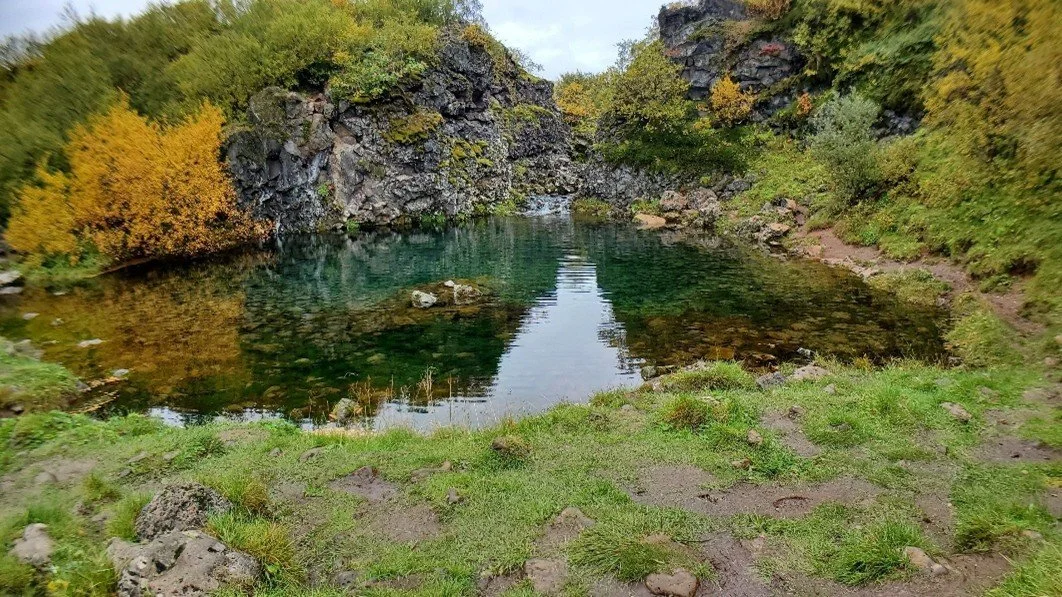
The little pool on the walk near Grábrók. I don’t know if this is officall named a fairy pool but it sure looks like a place where fairies (or elves) would hand out and snatch phones.
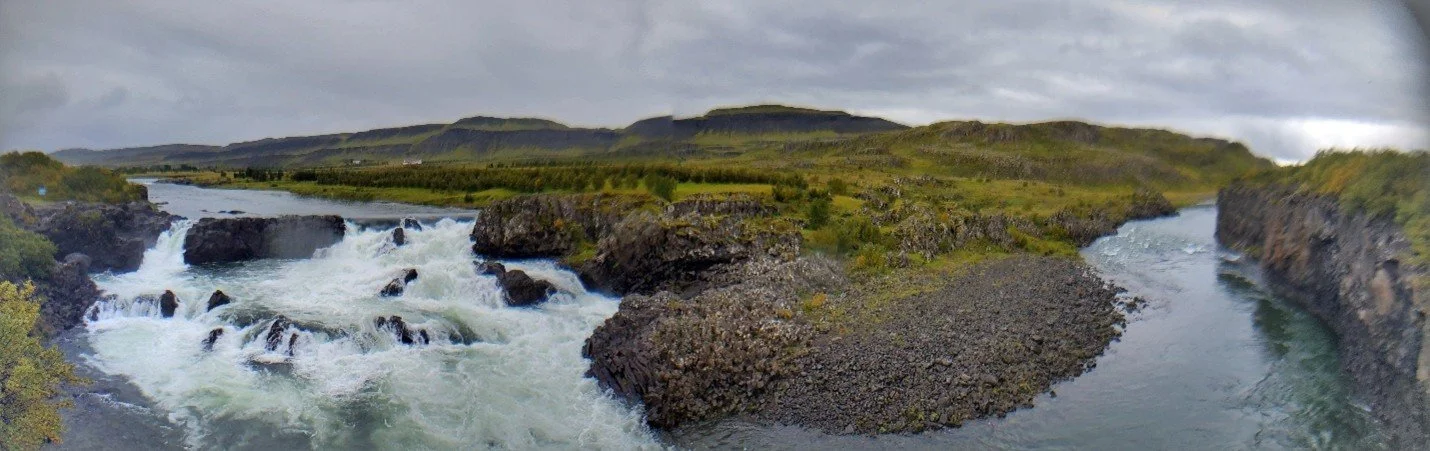
A panorama of a smaller waterfall on the hiking path. You can see the epic green and black rocky mountains in the background.
After escaping the fairies we parked at Grábrók, a dormant volcano. Climbing and being inside a dormant volcano was quite an experience. The bright green moss that grew on top of the volcanic rock gave the area a real other worldly alien feel. I can’t think of another place on Earth like it. It is also near a small town called Bifrost, after the Norse mythological rainbow bridge (presumably). It added to the magic of the area. The area has three volcanic craters, Grábrók, Rauðbrók and Smábrók. The volcanos last erupted 1,000 years ago, so some Norsemen were probably in Iceland at the time. You can get a better look of the other craters from Grábrók. Note: When we went in 2021 there were no bathrooms at the crater itself, however there was one at the Glanni Waterfall Car Park (the waterfall we saw near the fairy pool). This area charges a small fee to park but there are facilities there that need to be maintained. We continued on north. Many guidebooks say west Iceland is not as stunning as other areas but we were already blown away by the scenery. We stopped and stayed the night at a campground in Holar. We were literally the only people in the entire campground that we saw. Like most campgrounds it was just a field area with some trees and some bathroom and bathing facilities, but that was really all we needed. We cooked some ramen then went to sleep. It was already dark by the time we got there so we didn’t get to see Holar until the morning. 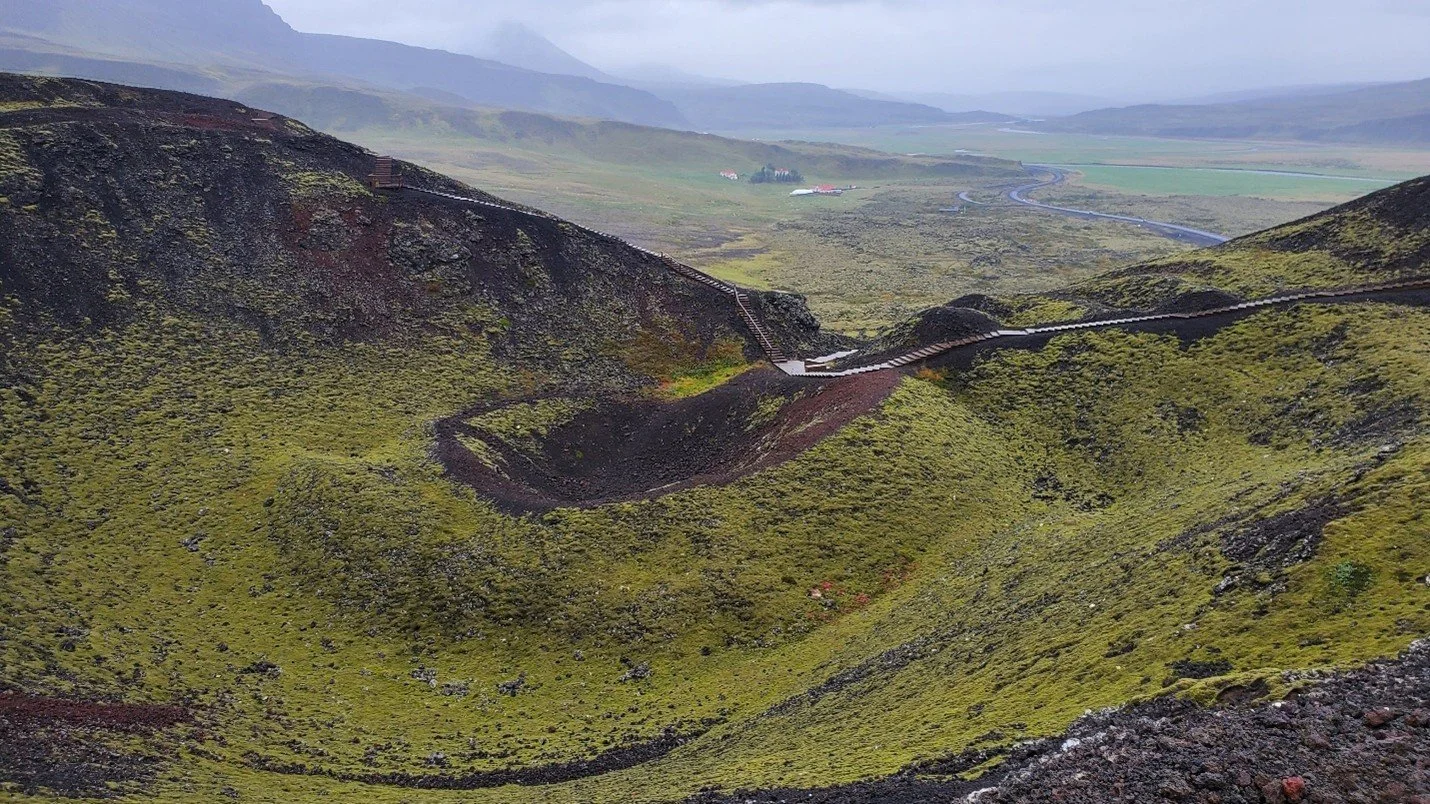
Inside Grábrók volcanic crater. Being in there reminded me of Journey to the Center of the Earth, where a group of travelers descend into the hollow earth through a volcano in Iceland. Of course, this one did not have a path to the hollow earth, maybe another one did…
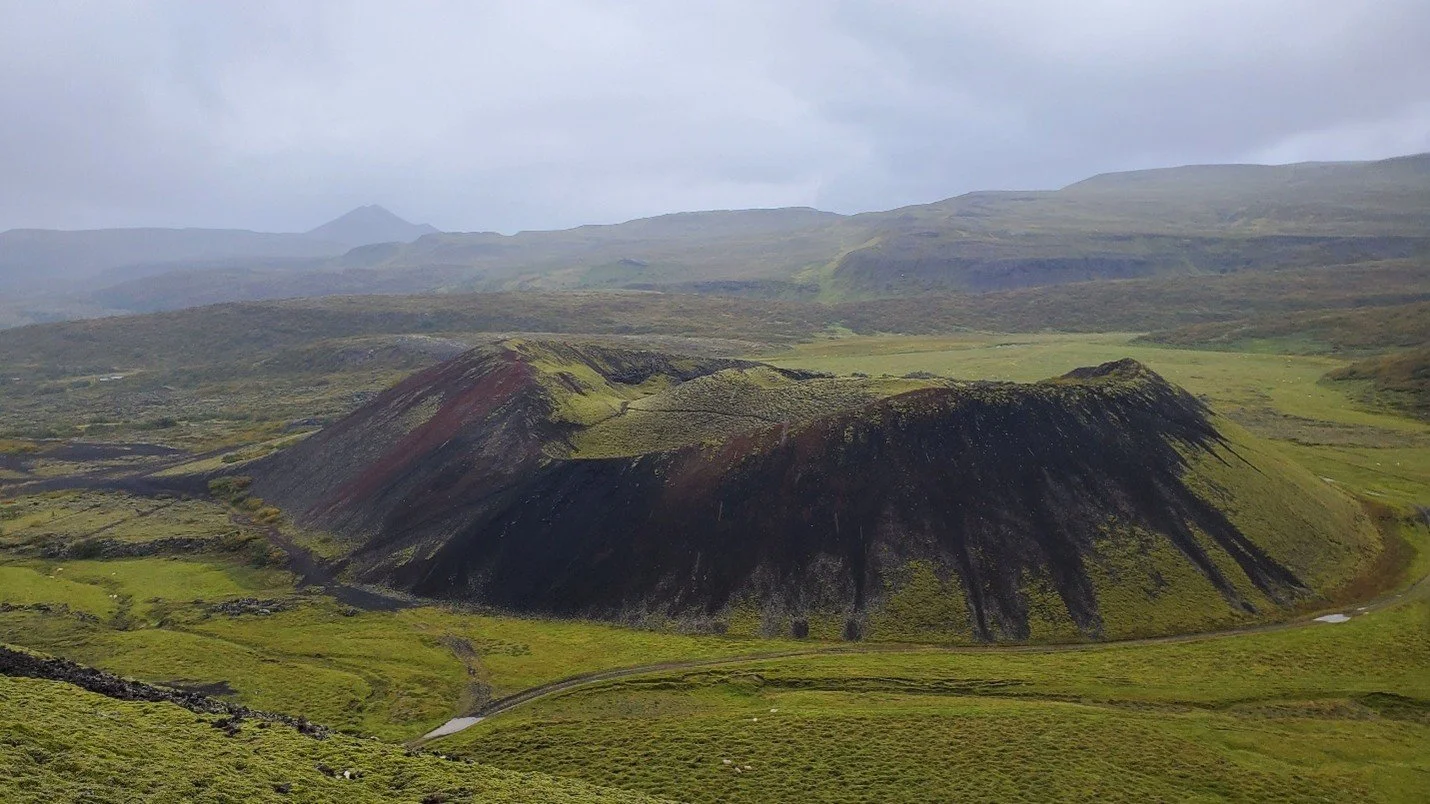
You can get a better look of the other craters from Grábrók. From this point of view you can really see the devastation the eruption caused in the area. One can imagine what the Viking thought when these massive mountains exploded with lava. Did they think the devil had come to earth? Did they believe the time of Ragnarök had come?
Day 3: Holar, Snowstorm, Windstorm and the Devil
Day 3 was a wild day! Our trip was in early September, so we weren’t expecting snow. Even the van rental people said we didn’t need the snow kit, so it wasn’t just us being clueless Americans. I guess it is possible they didn’t expect us to go up north as far as we did but, be prepared for the weather always throwing you a curve ball when in Iceland. Before the weather turned on us, we explored the stunning town of Holar. Holar’s claim to fame was that it was the Episcopal See of Northern Iceland. Basically, it was the center of the Christian Church in Northern Iceland. This basically also made it the largest settlement in the north. The most famous event was when the head Bishop Jón Arason refused to accept the spread of Protestantism in Iceland. This was in the 16th century, and Iceland was under the Danish King’s authority (many Scandinavian countries intermarried and conquered one another leading to Norway and Denmark being ruled by one King). Jon Arason did not like Protestantism and fortified Holar against the Danish King. Jon Arason made it clear he opposed the new religious reforms, and this was followed by a series of violent events including Jon being beheaded in November 1550. Jon’s followers did not like this and killed the Danish Bailiffs and basically any Danes they could find in Iceland. This led the King of Denmark and Norway, Christian III, to send warships to Iceland to regain control. This effectively ended Catholicism in Iceland, and Jon Arason is known as the last Catholic Bishop of Iceland. The Catholic church during the Middle Ages was one of the most powerful institutions in Iceland prior to the reformation. While there's nothing left of the fortress Jon Arason built at Holar, there are many newer buildings and a reproduction of a Medieval Bishop's office. Unfortunately, this was closed when we were there, but there was a collection of turf houses you could enter for free. 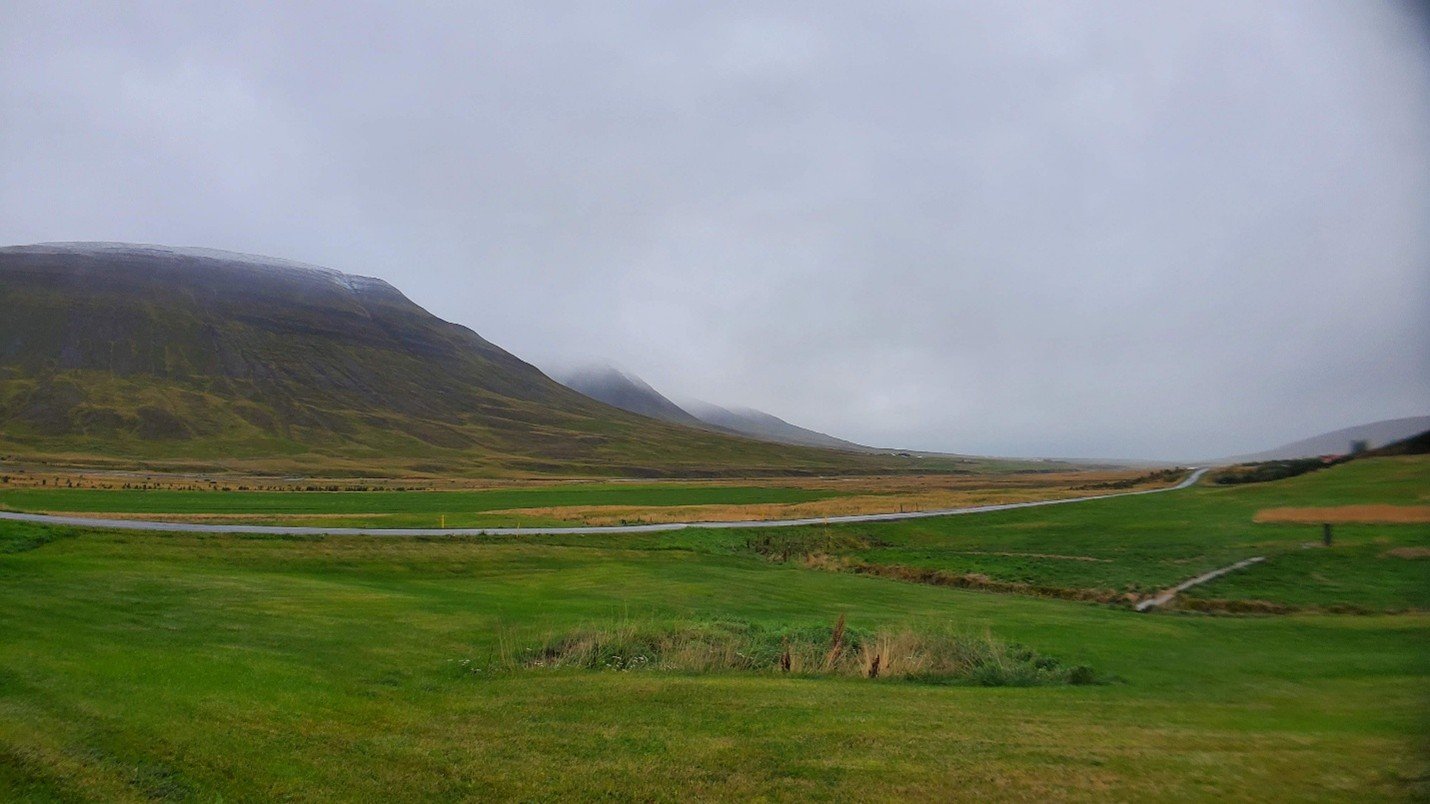
Valley of Holar. I don’t think we saw a single person in Holar other than a few other tourist as we were leaving. Even the campsite was empty and had a box to put money to pay. The misty has descended on the valley in this picture.
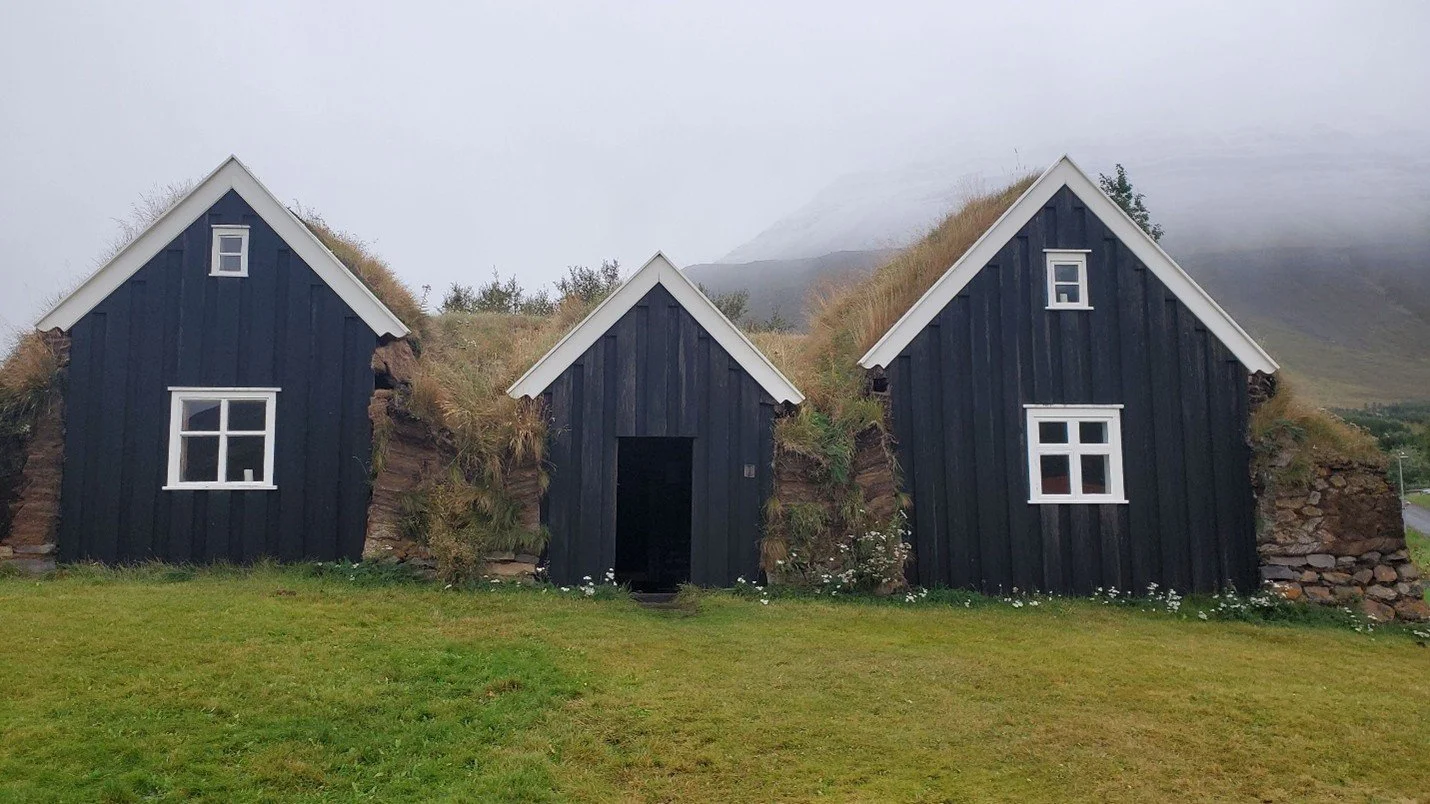
One of the turf houses you can visit for free. It was free but very dark inside.
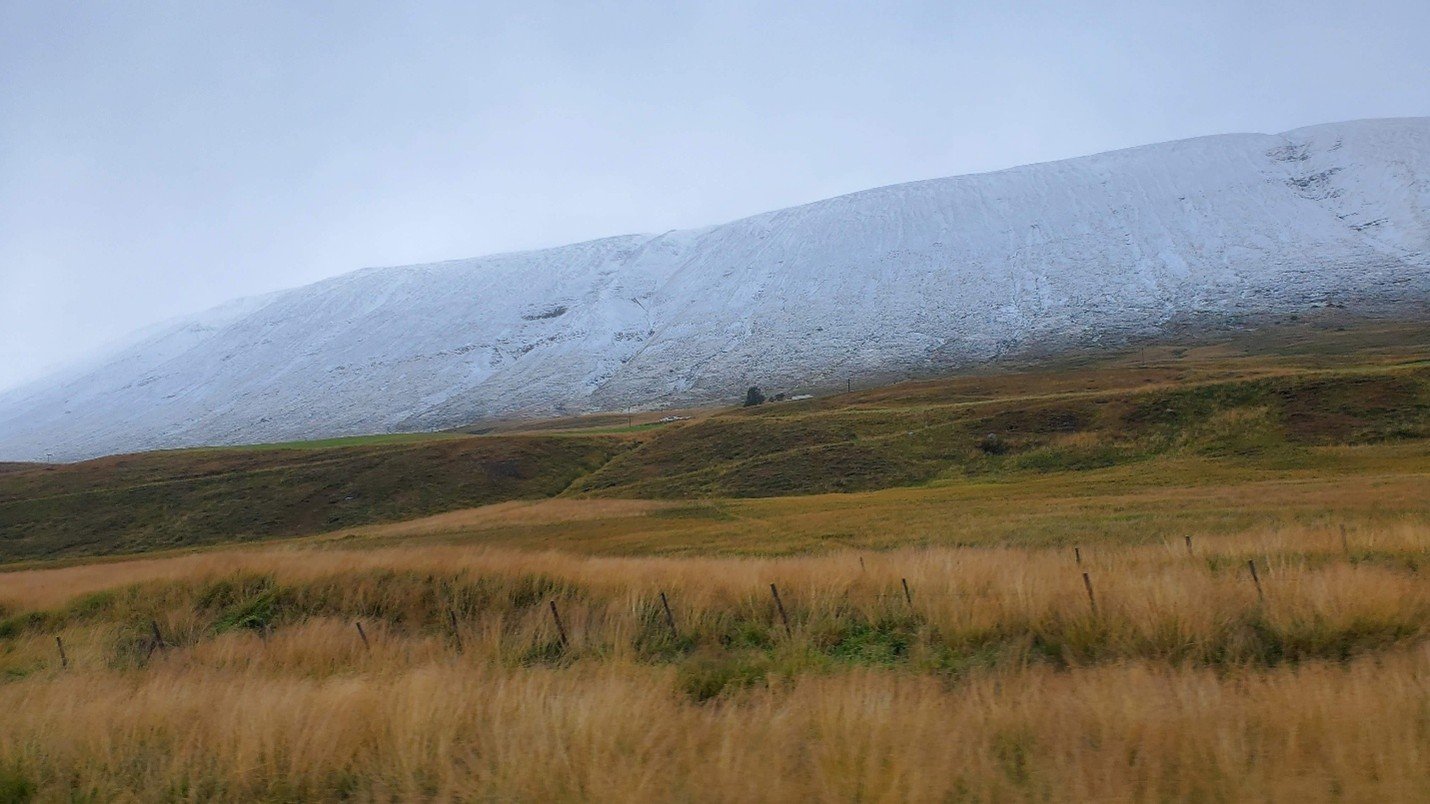
The start of our trip and the creeping snow.
When we left it had started to rain but as we traveled northeast the weather got worse and worse. It began to snow and was incredibly windy. So windy that I could feel the wind knocking our camper van off the roads. I have never dealt with wind that bad before or since. It was one of the scariest driving I have ever had. Once again I must stress take the weather into account. It might have been better to NOT go into the winter storm. The sound of the campervan being pushed by the wind still lingers in my mind.

Luckily as we went down the mountain the wind stopped but we now found ourselves in winter!

We stopped at a gas station somewhere in the north for breakfast/lunch. We had some of Iceland's famous hotdogs. The hotdogs were much better than American gas station hotdogs. They were probably better due to our lack of food. We had a lot of missed meals on this road trip.

Like a lot of waterfalls and epic landscapes in Iceland, Godafoss has history behind its name. As you might have guessed, -foss is the Icelandic name for waterfalls, so this one is Waterfall of the Gods. It got its name because legend has it when Iceland converted to Christianity in the year 1000 AD, a local Chieftain threw all his pagan idols over the waterfall, symbolizing the new religion. I couldn’t help wondering if some of those ancient idols are still at the bottom of the waterfall. The man must have had great faith to not fear the wrath of the pagan gods for destroying all their idols; seems a little risky to me.

As we went East winter slowly began to vanish and it was fall again! We found ourselves in Mývatn which to me looked like a great prairie with some mountains in the distance. 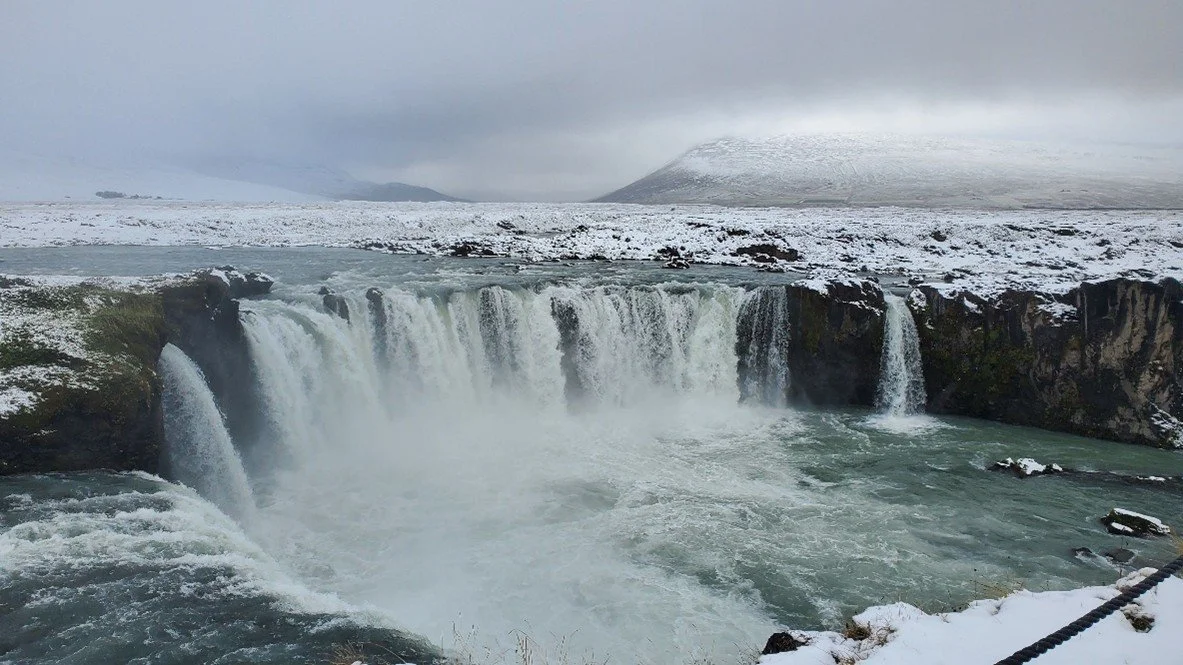
Looking back it was odd that suddenly our trip was winter. I love the mountains above the falls in this image. Iceland has so many stunning mountains.
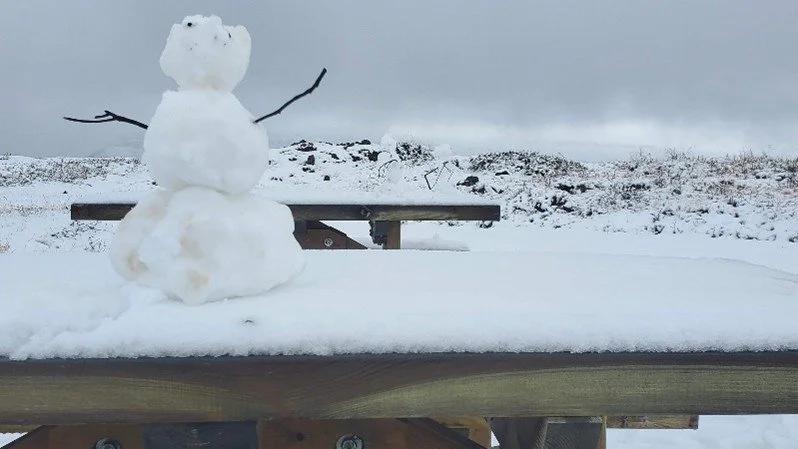
A lil snowman at a picnic table in the parking low.
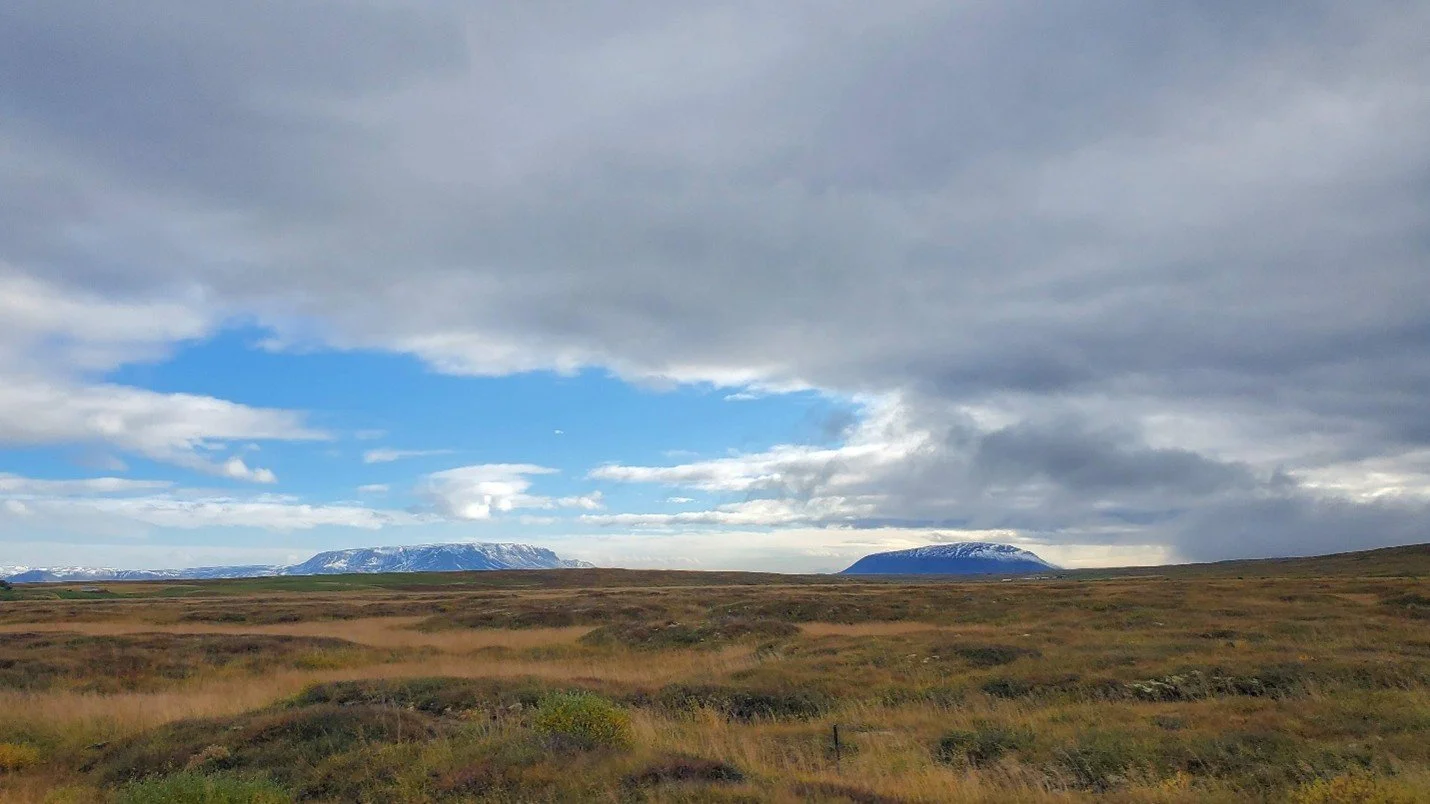
We kept driving and finally came out of the winter into a valley that looked very ‘old west’ or ‘great plains’ to me. Even though I’ve never been.
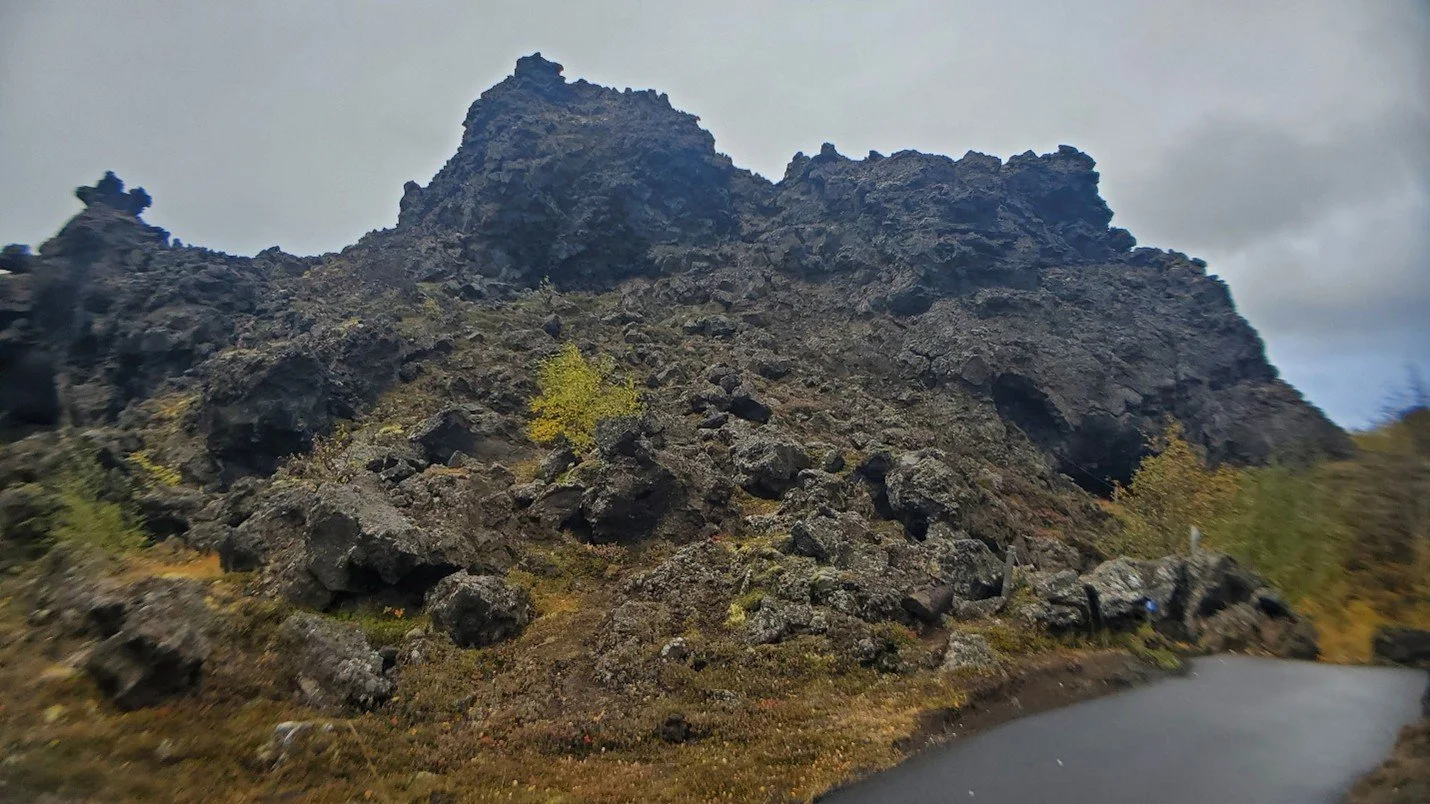
We stopped and took some pictures and ate some snacks, enjoying that we had seemingly escaped the winter weather. We also planned our next steps since it was still early in the day. One thing about the area is the little gnats bugs were very common. We were in the Krafla volcanic area where we visited the Lava field of Dimmuborgir. Mývatn is another region with collapsed volcanoes, and the lava fields are a unique area with very strange rock formations that were formed from lava pillars. Because they were originally lava, the shapes and sizes are unique and very large, often being called dark castles or fortresses. One thing I noticed that was different though was the colors. Unlike the Grabrok area, which was coated in green moss, this area was much more tawny in color, reminding me of the American west. Icelandic folklore states that Dimmuborgir is the spot where Satan had landed when cast from heaven and that the lava formations are the catacombs of hell. Other folklore connects the dark massive shapes with trolls. Walking around at the strange shapes you can easily see how people of the past held these views as the shapes are so alien to anything they would have seen in the rest of Europe. Some of them are also very artificial looking, hence the name dark fortresses. 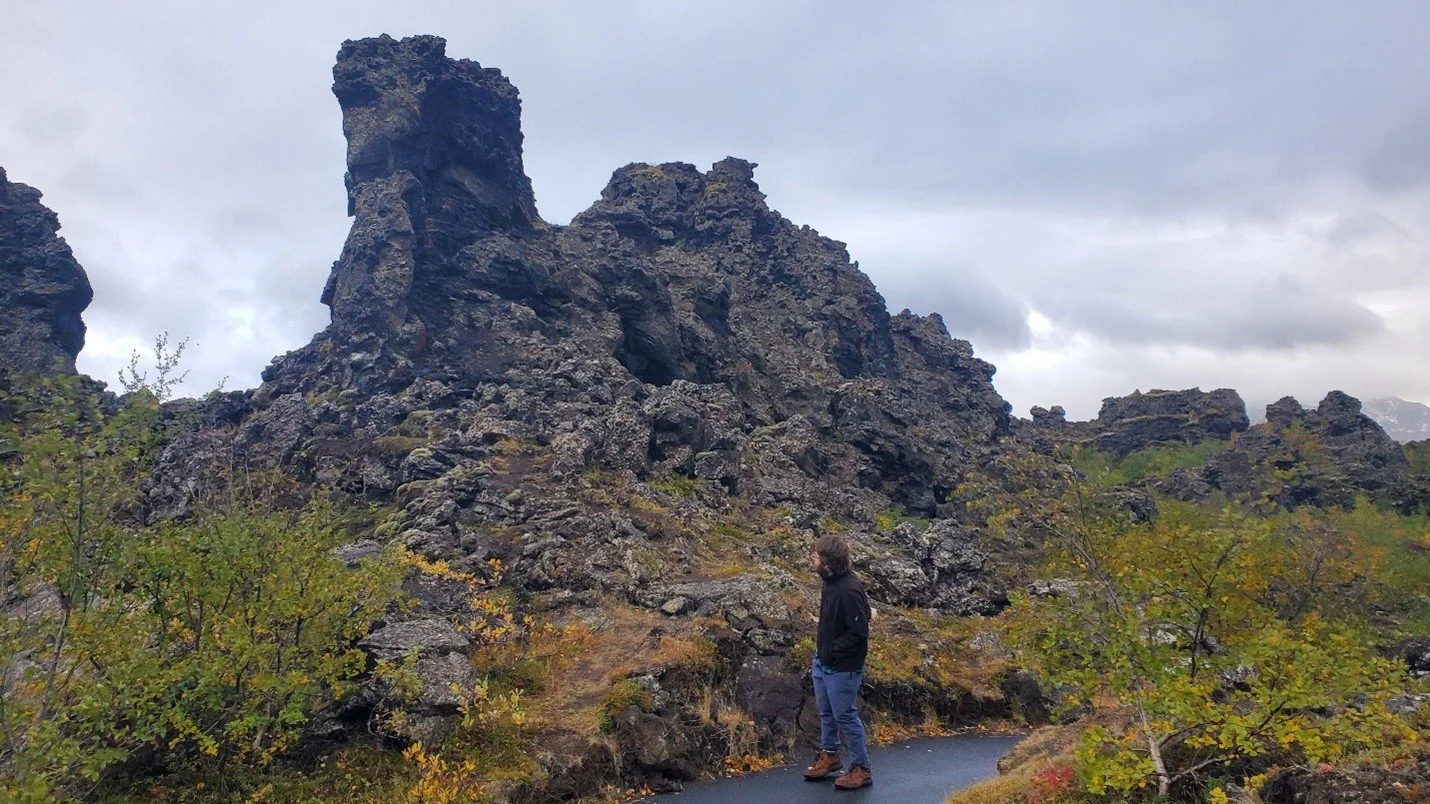
Me for scale next to one of the ‘dark castles’. I’m only about 5’5 so not the best scale to show how tall they are.
Another shot from the path that weaves around the formations. The formation to the left looks like a little troll waving at us, or he could just want a hug.
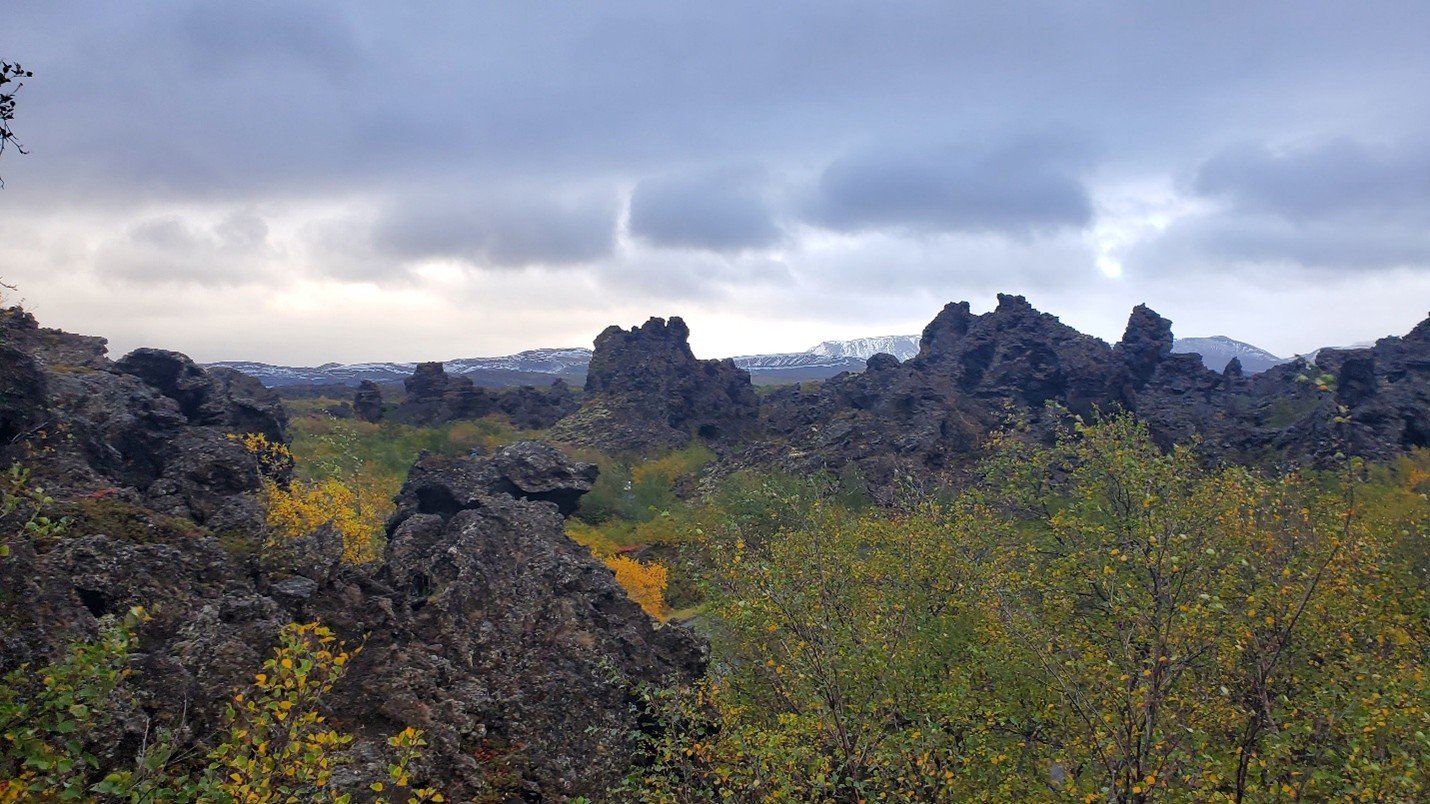
The ‘dark castles’ sticking up out of the landscape with more mountains peeking out. They very much look like castles in this picture.
Our stop at Dimmuborgir was cut a little short as the wind began to pick up again. Soon we found ourselves in a wind storm again. The wind was so severe the weather channel was advising people to take shelter. We parked the camper van at another parking lot and looked online for any kind of lodging since our heavy camper van was shaking. Luckily we found a place not too far. Several other campers seemed to also be there as the owner of the hotel was not immediately present. He came back though and told us the way to our room, which was down a long dirt road. We were fairly used to dirt roads at this time though.

The wind was so strong I honestly worried that our van might be on its side in the morning. We were glad to have a room though. There was a small two building complex in the middle of nowhere and we were the only ones in the entire area. It almost felt like we were colonists on an alien planet. The wind was blowing the rain, which turned to snow, sideways out of the window. We ate some sandwiches we bought at the gas station earlier and called it a night.
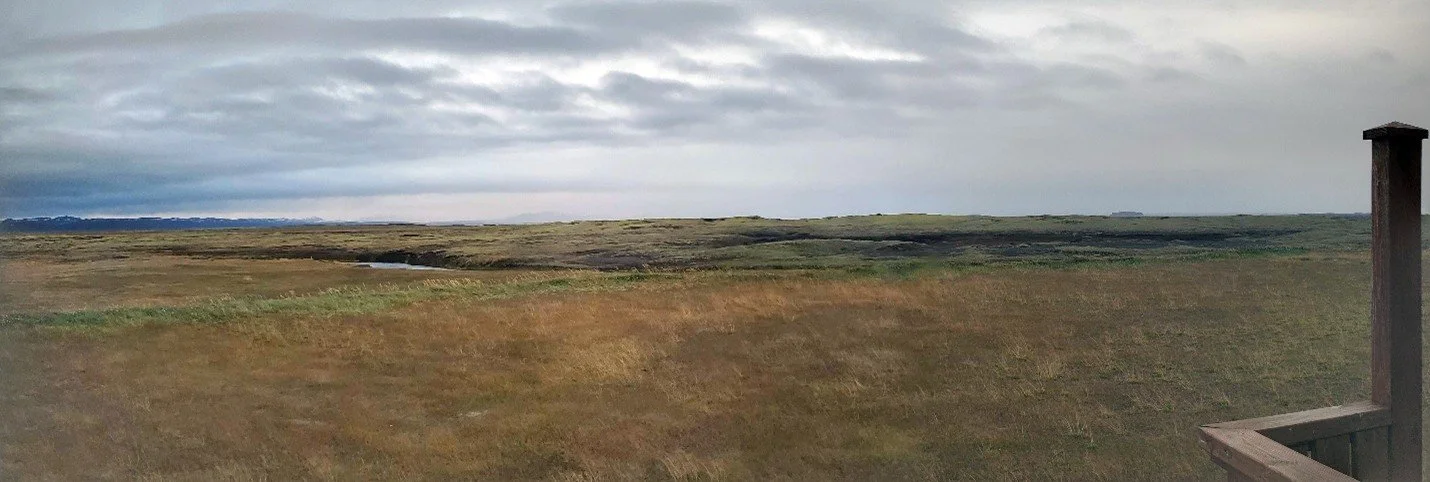
View from our hotel room.
Day 4: Monastery, Monster and Fjords
The land was covered with a thin layer of crunchy ice/snow in the morning. We were overjoyed to see that our campervan was still standing! We drove through the desolate landscape through a small pass of rocky hills. We stopped at an abandoned gas station to take pictures. 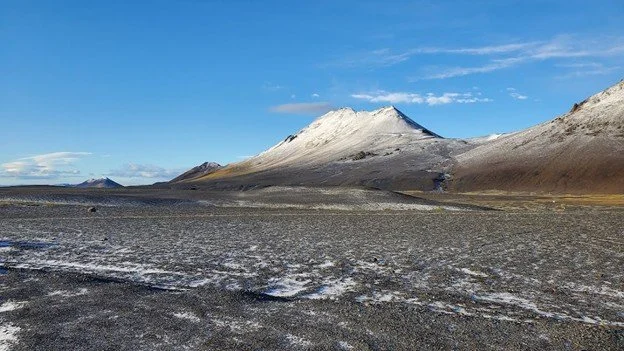
This picture shows the barren beauty that is Iceland. There is a wonderful solitude we felt that abandoned gas station was strangely moving. For the first time I realized I have human emotions.
Eventually we drove out of winter (again) and found ourselves in a big, beautiful valley. All I could think of to describe this was the Land before Time II song "Beautiful Valley" (which I misremembered since its actually called "Peaceful Valley").

We headed to a place called Stuðlagil Canyon marked on Google Earth. There was a convenient parking lot which led to some stairs were visitors could get a better view of the famous polygonal rock formations which are basaltic columns. This was down the road a bit from the Rjúkandi Waterfall. Not sure how to pronounce that. The whole area a pleasant mixture of tawny yellows and vibrant green. 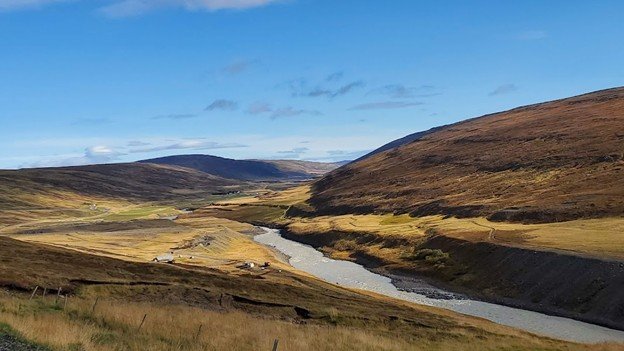
The beautiful valley
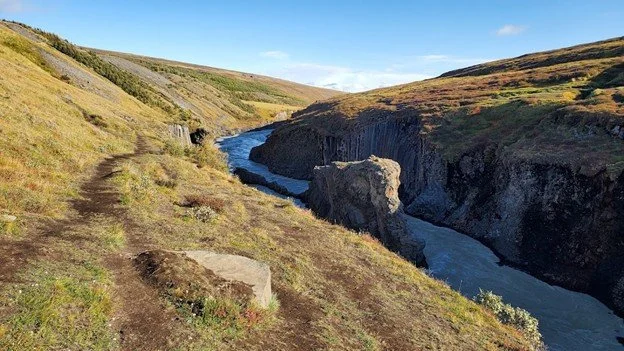
Stuðlagil Canyon
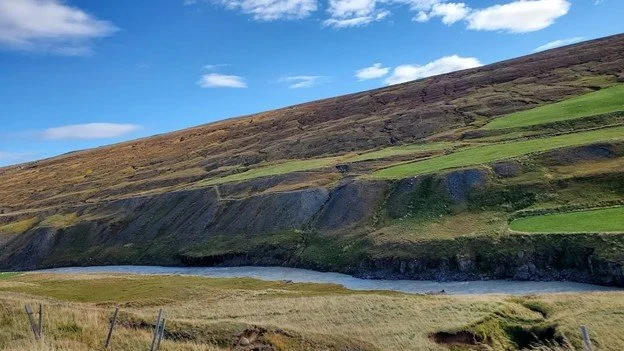
Interesting walls of the canyon with bits of green grass spots.
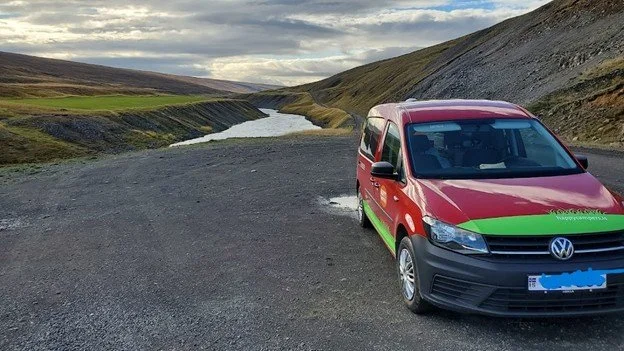
A car commercial shot.
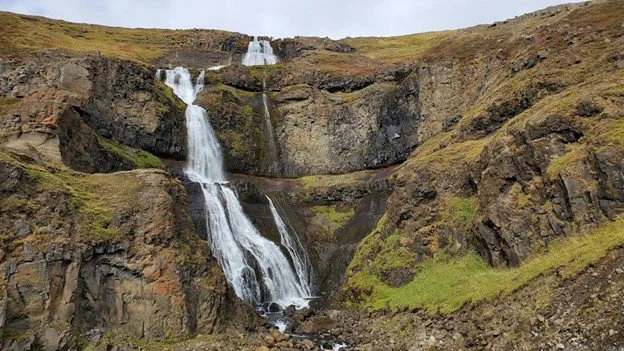
Rjúkandi Waterfall, a well-marked waterfall along the ring road. People mention waterfalls in Iceland but you don’t realize till your there just how many of them there are. It seemed like every mountain had several small waterfalls running through them.
Going east we next hit the lake Lagarfljot, the largest lake in eastern Iceland. The lake is most popular for its mythological sea monster, which had sightings going back to the Middle Ages. Lagarfljótsormurinn is the Icelandic name for the monster. A resident of the area took a video of what was supposedly the monster in 2012, and the video went viral. There’s a very informative song about the monster here,Icelandic Worm Monster (lyric video) - Parry Gripp
We played the Icelandic Worm Monster song on loop as we drove down the lake. We had to stop listening after 20 times so we could preserve our sanity.We drove basically the full length of the river until we came to Skriduklaustur cultural center, which was the home of a Icelandic author Gunnar Gunnarsson, but it's probably better known to tourists for its café. The café was buffet style, and we had not eaten at all that day. The food was phenomenal, a highlight being reindeer meatballs. The other reason we went there was to see the archaeological site of late Medieval monastery which was nearby. There was a lot of signage in the area, all in Icelandic and English, to explain the site. This main sign was above the site and had a nice reconstruction of what the monastery may have looked like.
It was founded in 1493 and the deed was officially signed in 1500. They dated much of the ruins from different volcanic ash that is matched to volcanic eruptions and the dates associated with them. 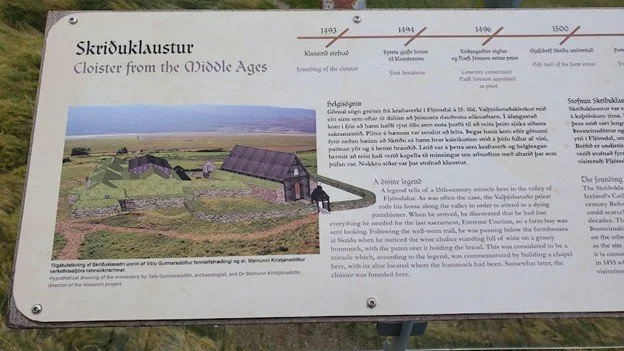
Sign showing what the monastery looked like back around 1500 AD. Since it was mostly turf and wood, like most Icelandic houses at the time, mostly only stone foundations survive.
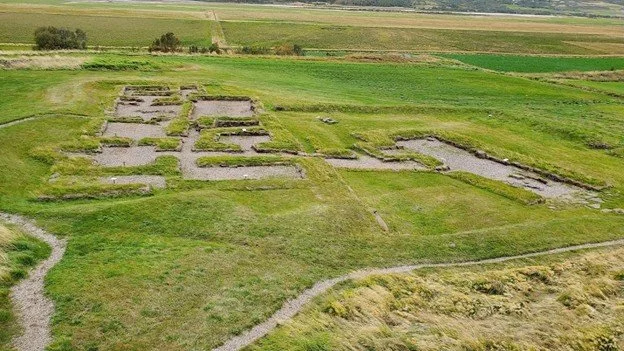
The footprint of the monastery created from the stone foundation ruins.
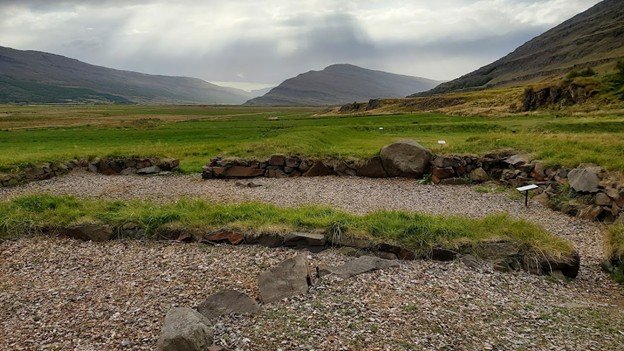
Closer look at the ruins and the mountains peeking out in the back.
Apparently, they found some crossbow bolts so these monks weren’t taking crap from anyone. This was the last Catholic monastery do be founded in Iceland. Having been charged up by reindeer meatballs and medieval monks, we drove back on the opposite side of the lake. There was a pullout overlooking the lake with some signage about the lake monster.
The myth of the serpent comes from the Icelandic Legends collected by Jon Arnason,
It all started with a woman who was living near the lake gave a golden ring to her daughter. The young girl asked her mother how she could get more golden rings, to which the mother replied that she should put it under a hearth worm. So, the young girl found a worm and put it in a box with the ring. Later she checked the ring and to her astonishment it had grown to the point where it was breaking the box it was in. The young girl, scared by this, threw the ring and worm into the lake.
The worm grew to tremendous size and would feast on men and cattle by the lake using poison from its mouth. The villagers hired Finnish people (as you do) to try and stop the lake monster. The men bound the large serpent with two large chains to the bottom of the lake. Every so often though, there are still sightings of the giant serpent. There is a nice sign near the pullout showing where the serpent had been sighted over the years. Unlike some other lake monsters (not naming names) the Lagarfljot lake monster has a long history of sightings dating back to the 14th century. Here is what the sign says about the 1589 sighting, The worm monster has shown only its hump above water, but according to witnesses the hump is so high that a fully equipped ship under full sail could pass under unharmed. This does not sound so far-fetched, considering that when the monster slams its hump down it causes such a boom and earthquake as to shake all the surroundings. A few farms have been destroyed and never rebuilt for rear of repeated disaster.
Description of Iceland by Bishop Oddur Einarsson.
I can’t help but wonder if this Bishop stayed in the Monastery ruins nearby and if the monks there had crossbows to protect them from the worm monster. It is interesting too that earthquakes were blamed on the monster. 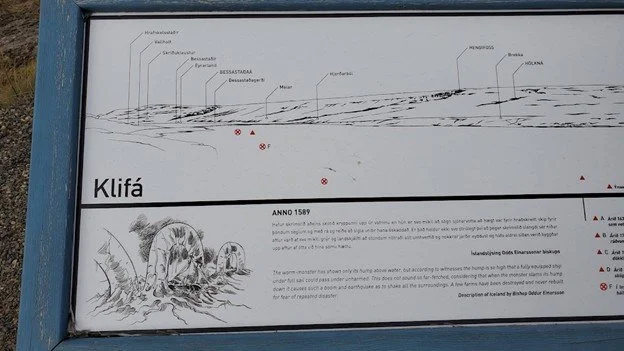
The aforementioned sign with an image of the large serpent hump and the ship sailing under it.
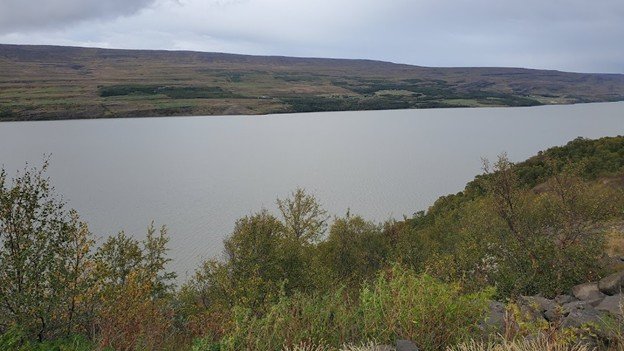
Didn’t see him ☹I guess if he has poisonous breath though that might be a good thing.
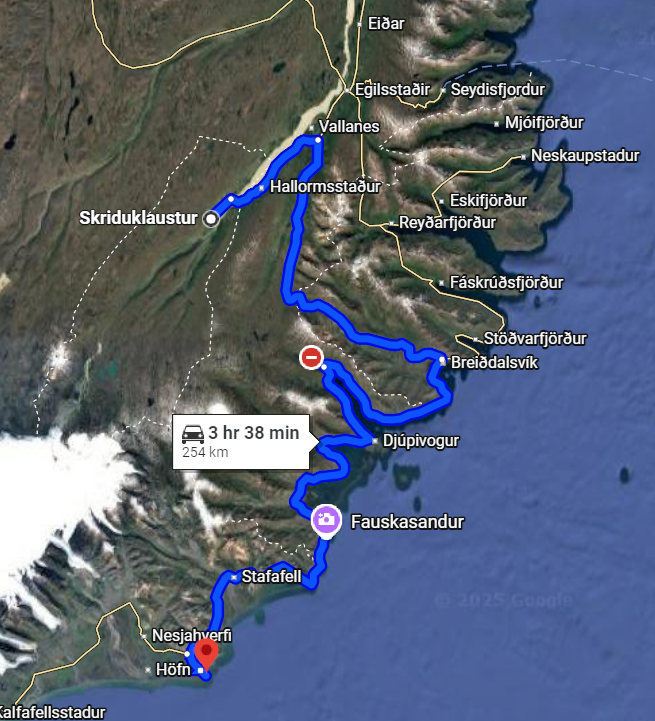
Map of our route in the southeastern coast of the Ring Road. As you can see, we were going right along the edge of the island along many fjords. This was one of the longer stretches of the trip without any stops but with it we would be out of the east and into the south, which is a more touristed area of the country.
We would have liked to spend more time in North and Eastern Iceland however the winter and the wind forced us to spend less time than we originally wanted to. This was also during the COVID times and we needed to be close to a city to get a COVID test a day before leaving the country, and Reykjavik was the only city anywhere near the airport, and one of the few in Iceland in general. We also missed the Icelandic Worm monster. 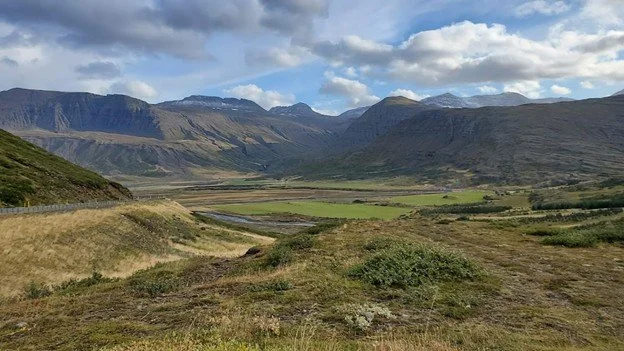
One of our many stops to take a picture of an epic landscape. Note that you can’t just pull over on the side of the road, but they have plenty of pullouts for pictures.
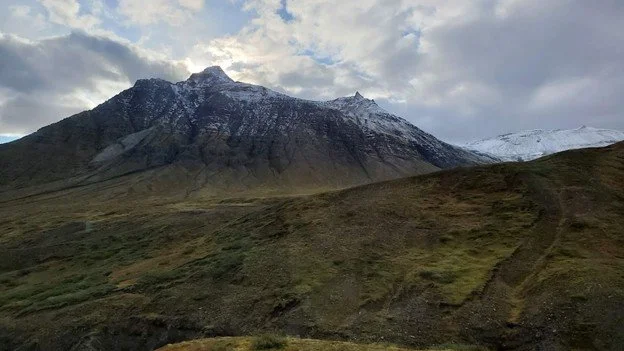
This mountain looks so foreboding to me, love it.
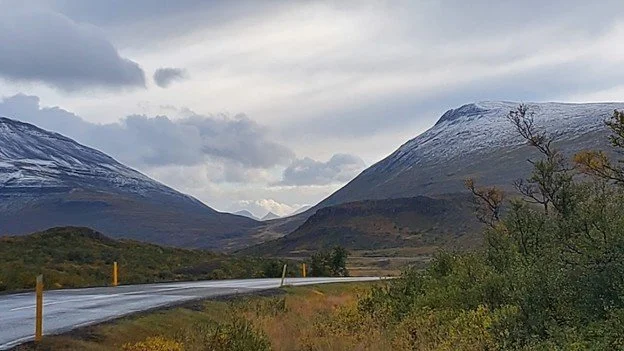
The start of our drive through the beautiful east fjords. A pyramidal mountain stands perfectly between the peaks. Was this from an ancient lost civilization?? You decide (probably not).
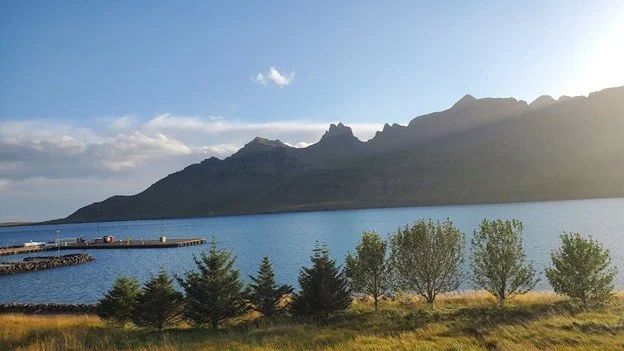
This one looks like a desktop screensaver to me. It’s a great shot of the fjords falling away into the ocean. The trees are standing there like they are also looking at the fjords.
I was a little worried that the drive would be scary being so close to the coast as I have had nightmares of driving into water. There was plenty of room between the road water though. We stayed at a campground not far from Höfn (pronounced Herp). The campground was basically a parking lot at a restaurant with some bathroom facilities. The best part about it was that it was near the famous Stokksnes headland, which actually is used for desktop backgrounds. We didn’t see it until the next day though as it was dark and we had been driving for hours.Day 5: Viking Village, Black Sand Beaches and a Sci-Fi Bathroom
Day 5 was also a lot of driving and we got hit with snow again, which somehow came down from the north to stalk us. The start of the day was very good with the Stokksnes headland and the black sand beach and the Vestrahorn mountain. There is unfortunately a fee to get in, but if you stay at the campground this is included. 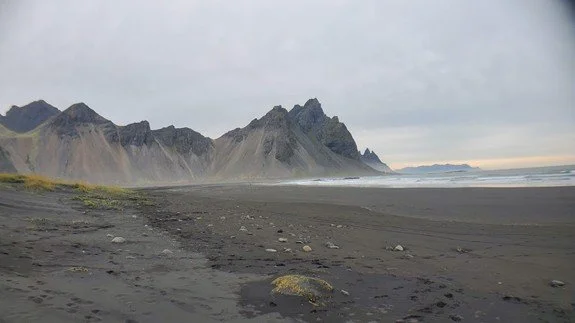
Vestrahorn. There are better pictures of this online but we were able to get a picture of the fjords behind it. It looks like huge claws to me. The Viking village is situated under it.
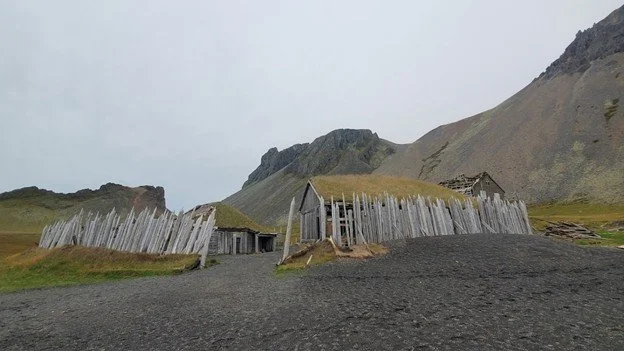
The stockade of the Viking village. It’s a movie set so there isn’t really inside much of the buildings.
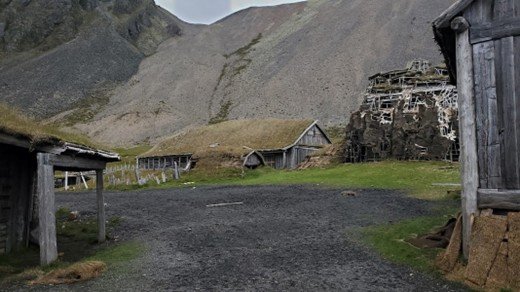
The village is not in great shape but I think they are repairing it.
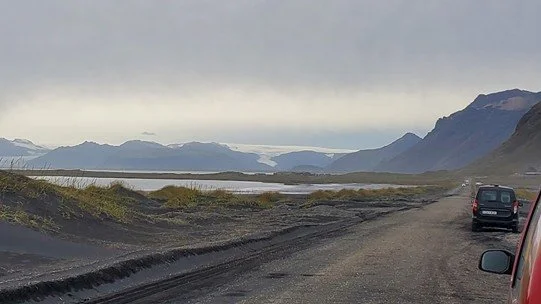
A view of the glacier from the Vestrahorn parking area.
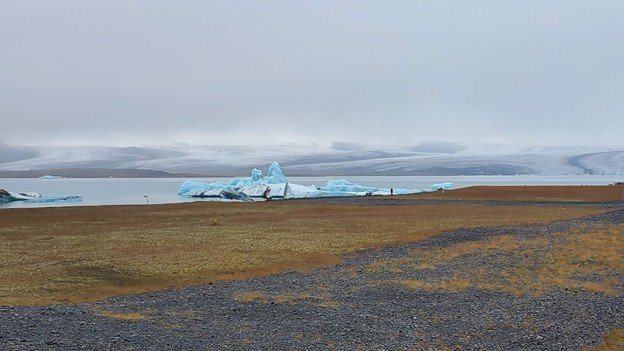
This was a picture from the other side of the beach which I think is actually a better view of the glaciers than the black sand beach.
It was another long travel day and one of the stops are the Diamond Beach where you could see large ice chunks of a glacier washed up. We didn’t stay very long because this seemed to be one of the only very busy places we went to. Our old friend father winter showed up again but in the mist (both literal and figurative) we found what was possibly the coolest roadside bathroom. It had futurist doors that opened once you paid. Then it had stairs to the side leading up to viewing platform. 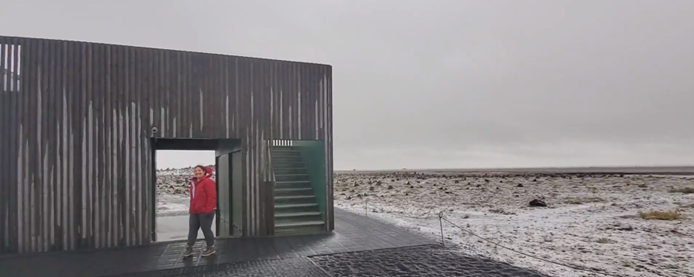
I wrote a short story a long time ago about a restroom in the middle of nowhere and this reminded me of that. Aso it had a very sci-fi look to it. Just a cubish like bathroom in the middle of nowhere.
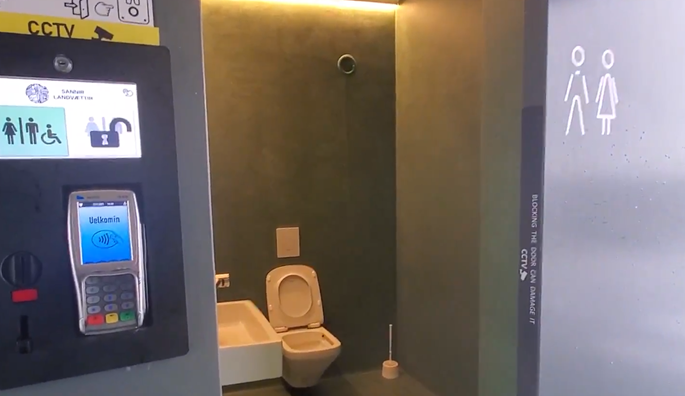
Sometimes you just gotta marvel at a good sci-fi bathroom.
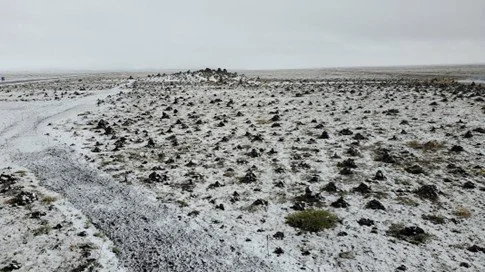
view of the cairns of the top of the bathroom.
Vik was our next destination, which is a very popular tourist destination and while there were more people there than some other places, it didn’t feel crowded like the diamond beach. There was plenty of room to spread out and see the large sea stacks the beach is known for. Icelandic folklore says the sea stacks are trolls who were caught out in the sun and turned to stone. I guess they were trying to help bring a stranded ship in and got caught in the morning light and turned to stone. The poor trolls were trying to do their best to help. They are called the sea stacks of Reynisdrangar. You got the big troll and the skinny troll. The big troll has spiky hair. Most trolls are not so helpful and more feared in Icelandic folklore.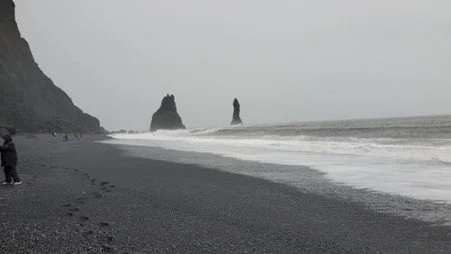
Some scale from some people on the beach showing just how large the trolls are. We felt so small.
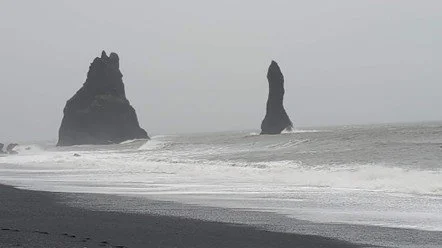
Closer up view of the troll sea stacks. You can sorta see the nose of the larger one.
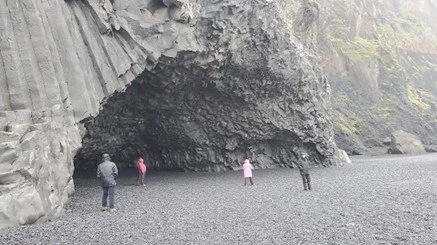
A cave on the beach near the trolls.
The rip tide is very dangerous here to stay away from the waves. The crashing waves and trolls adds to the mystique of the place. I think this beach was also used in the film Noah (2014). Someone said it might have been in Game of Thrones but I don’t remember seeing it. Most stories have trolls living in caves but as you can see this one was way too small for the giant troll boys out there. Making our way out there was more crazy Iceland wind. I remember us leaning into the wind and having it hold us up. The rest of the day we spend going to a fairly good-sized tourist store in Vik. The rain and fog kept us from doing much else. We got a bite to eat and stayed at a little campsite in Vik and got an early rest. The area around Vik was beautiful but unfortunately much of the fog blocked it from view, we will have to go back again. Day 6: Waterfalls with a Side of Waterfalls
The mist began to part a little bit in the morning so there was more to see. The first stop was Dyrhólaey, a peninsula near Vik that was visible from the black sand beach from yesterday. 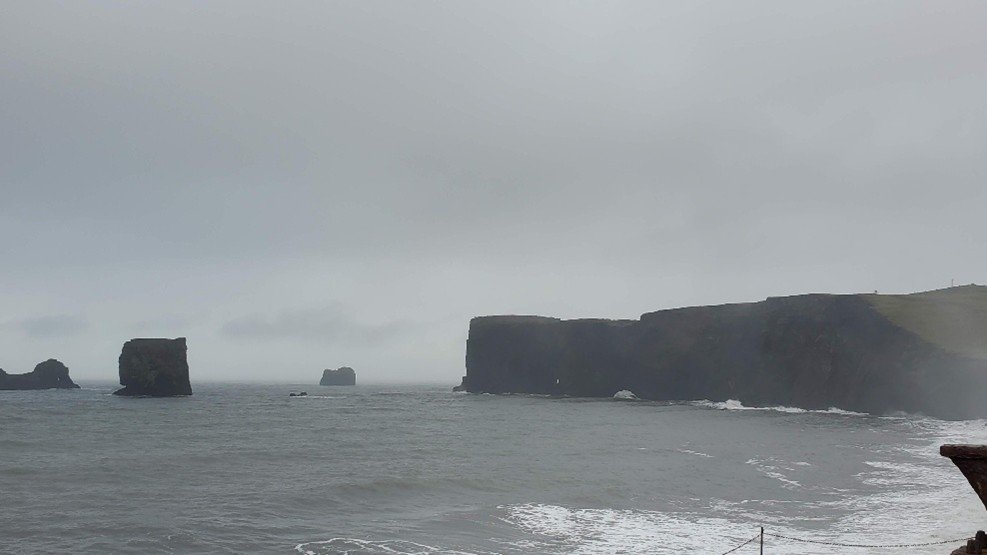
Here is a shot of it from the black sand beach near the sea stacks.
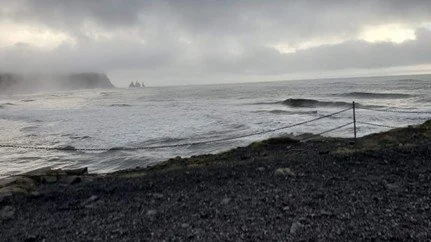
One thing that was cool about the peninsula was that you could get a different view of the sea stack trolls. It looks like there are more trolls than just two from this view.
This was also the place where I proposed to Cerissa! After several hours of negotiations, she said yes! The trolls were shouting out congratulations.Next was traveling up the South Coast. The south coast of Iceland is the most famous place that people visit. It’s close to Reykjavik, can be done in a day tour and people used to do a long layover in Iceland and do it. It’s also a very rich and beautifully green country with iconic places associated with Iceland. Waterfalls especially are very plentiful in this part of Iceland; although there are waterfalls everywhere in Iceland, the ones in the South are more famous.When doing the Ring Road you can either go clockwise or counter clockwise. We did clockwise to save the South coast for later.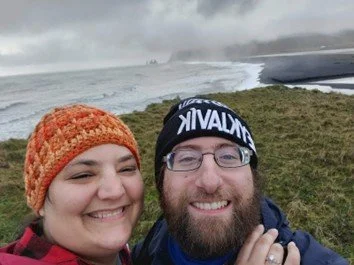
Cerissa and me after the proposal. The trolls in the background, cheering for us.
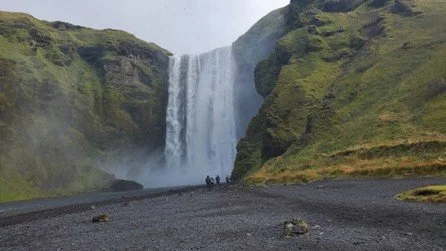
Skógafoss, one of the most popular waterfalls in the south of Iceland.
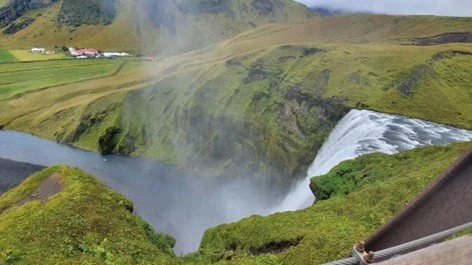
From the top of the waterfall. There was a long walkway with stairs off to the side
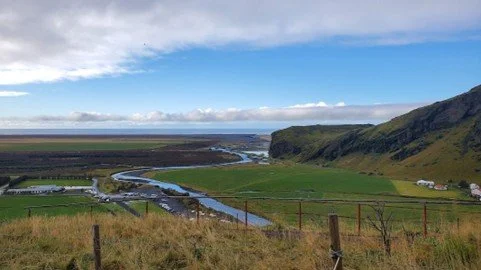
A clear day looking out at the river where the waterfall falls into
Skogafoss' parking lot was fairly busy but once you get there it thins out a bit. There was plenty of parking and we didn't feel it was too packed with tourists (like us).

The next stop was not a waterfall but a cave, Rútshellir. This is one of the most famous cave houses in South Iceland. Part of it I believe was carved out as a home. The early inhabitants of Iceland used caves for houses since they were ready-made stone dwellings. The date of this specific cave dwelling is not really known. You enter through the turf house built in front of it. Though it looks old, the house is fairly new.
You would go into the turf and stone house then up into the cave itself. There was a lot of mud, so it was a bit of a challenge getting in there, jumping from dry rock to rock. Once in though it was less mud and a small hole you could crawl into reaching another room deeper in the cave.
No one really knows when this cave was first inhabited, some legends about the cave include that it was inhabited by outlaws or trolls (of course) or an evil Chieftain. It was first mentioned by Icelandic scholars in 1714, so it is at least that old. The turf house built in front was a recent building that replaced an early 20th century turf house.
Apparently, Nazis studied the cave thinking it was a Norse temple, though I don’t think anyone else thought this. So as usual, the Nazis were wrong.
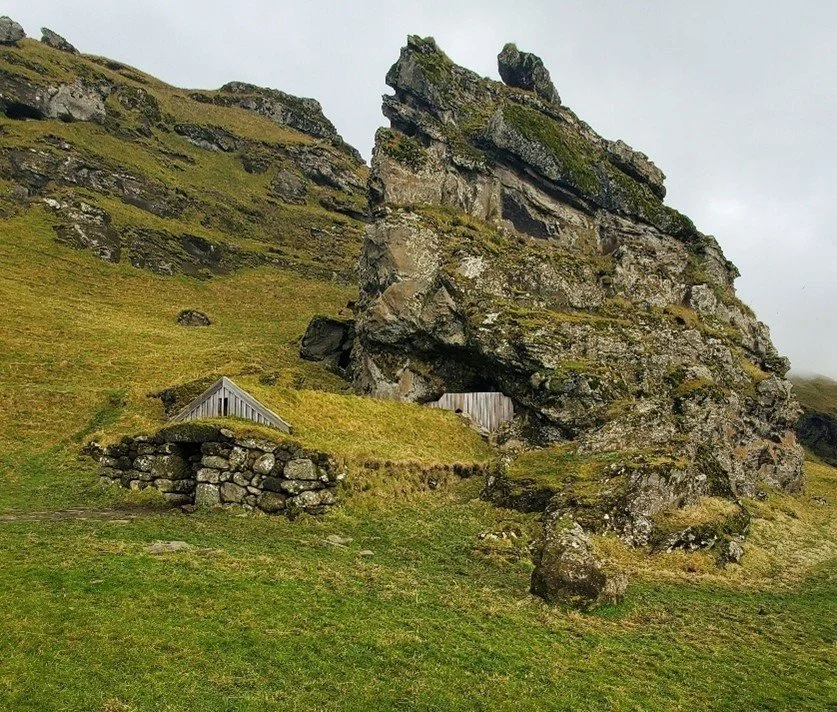
shot of the cave and the house built in front of it that serves as the entrance.
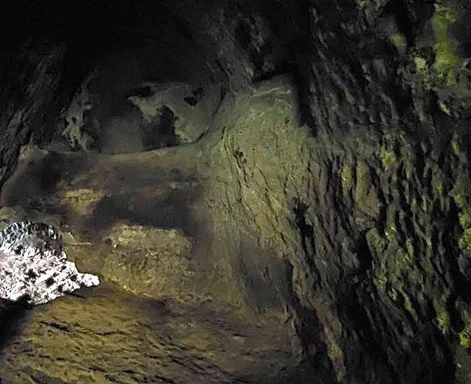
Inside cave.
At last, it was time for the big daddy, Seljalandsfoss. This is one of the most popular waterfalls in Iceland, mostly because of its location and that you can walk behind it. Cerissa had seen it previously but walking down from Seljalandsfoss there are actually a lot of other waterfalls, including one in a little cave that most people don’t seem to know is there.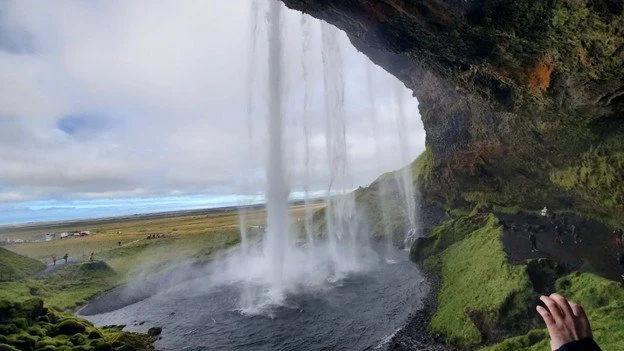
Behind Seljalandsfoss, with my fingers making an appearance.
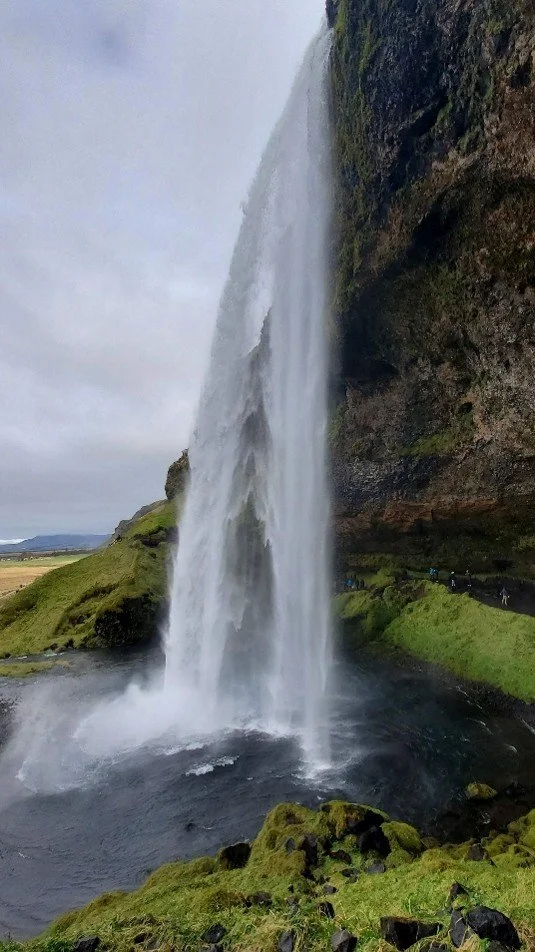
Seljalandsfoss from the front
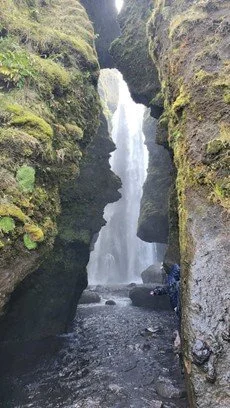
Farther down the valley, a waterfall in a cave
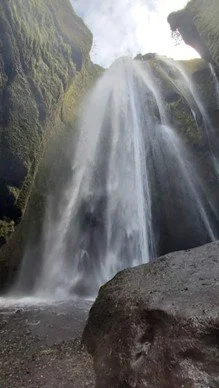
Inside the cave
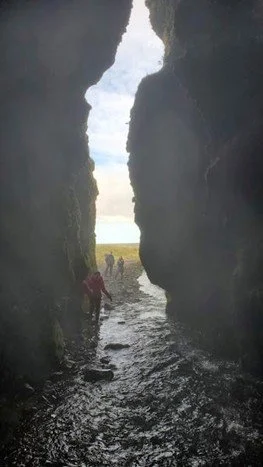
Looking out
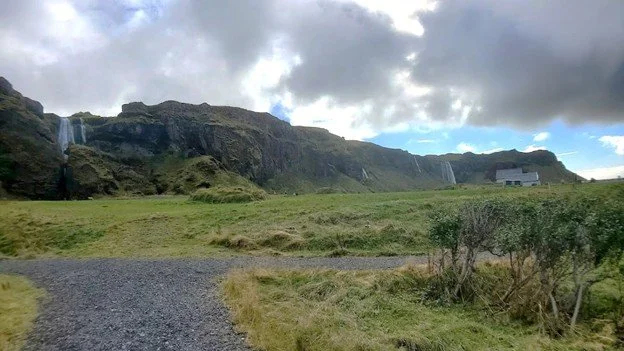
A view of Seljalandsfoss to the right and the waterfall within the cave to the left. Not the best quality photo but it shows the long plateau where Seljalandsfoss sits. You can see several waterfalls along it. If you keep walking left of the waterfall (which is the right most one here) you can see several other waterfalls, including the one to the left here which has the entrance enclosed with cave like rock arms.
There were several other sites we were planning on seeing; however, most we did not get to see much of. One place was Skalholt, which was the Episcopal See of southern Iceland in the Middle Ages, so a very historic place to see. Unfortunately, the museum was not open. I think we were too late in the season. They found a stone sarcophagus from the Middle Ages but we didn’t get to see it.We ended day 6 with a classic Icelandic activity, bathing in a hot spring. There are several of these all over Iceland since the volcanic waters heat up pools of water. I wrote earlier how Snorri, who in the Middle Ages had his own pool, but today there are many of these hot springs that are used for bathing. The Blue Lagoon is probably the most famous one, but it's also very expensive. We went to the Secret Lagoon in Flúðir. The warm water felt so good, we did not want to leave. Iceland basically has natural hot tubs.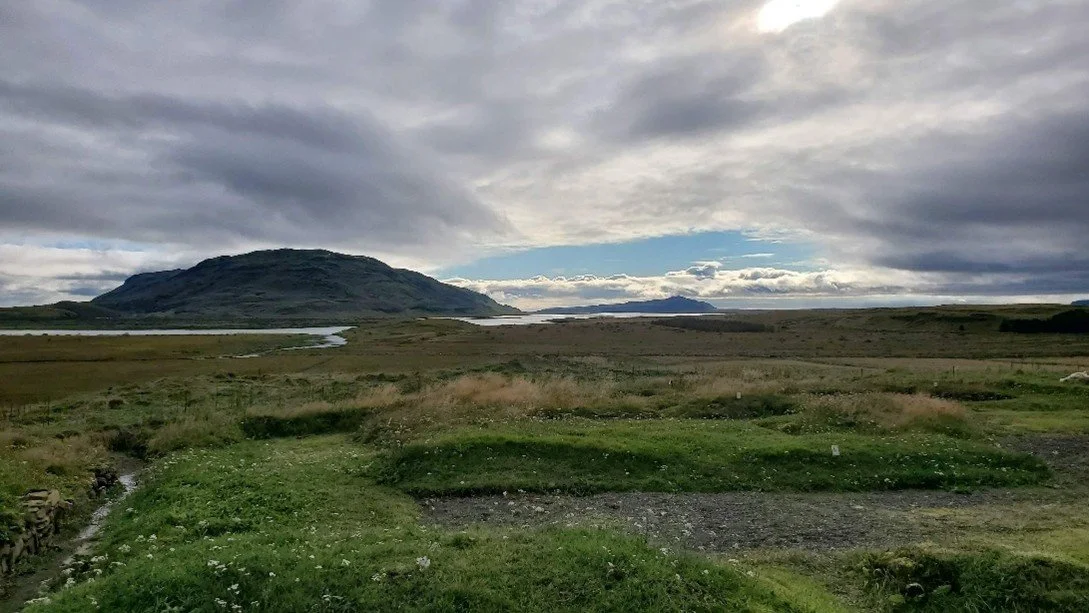
A shot of some excavated ruins from the 18th century at Skalholt
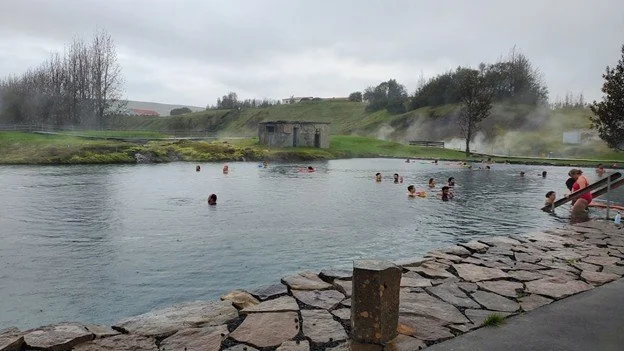
Secret Lagoon in Flúðir, We were surrounded by natural hot springs that would scald your skin off. Luckily, they separate the scald your skin off area away from the nice warm water area.
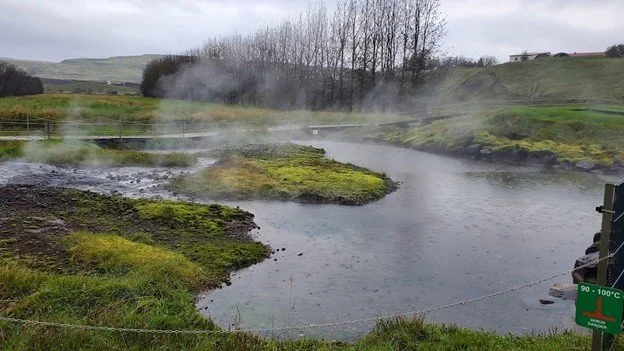
The natural hot springs. It rained a bit on us but the water was so warm and soothing that we didn’t mind. As you can see this water is 90- 100 Celsius, so that 200 degrees Fahrenheit.
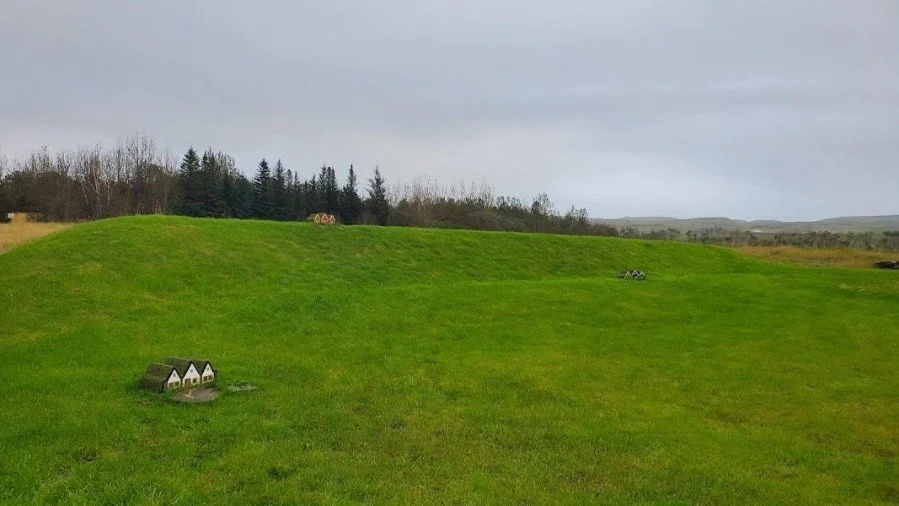
A nice little Elf house near the hotsprings.
We were coming towards the end of the roadtrip but we had one last big sight to see before we left. Something that everyone who comes to Iceland should see and probably do if they actually spend any time here. It is Thingvellir National Park. That was saved for day 7. We arrived at a campsite nearby Thingvellir and camped there for the night so we could easily go into Thingvellir early next morning. The landscape already was looking very epic again as we approached.Day 7: Parliaments and Plates
We woke up day 7 and realized one of our campervan tires was very low. The very helpful staff at the Thingvellir campsite put air in our tire and pointed out that we had run over a nail. Luckily we weren’t going to be traveling in any super isolated places as we had to get our COVID test in Reykjavik for our return flight that day, (this was 2021 after all). The plan was to keep putting air in the tire.We were about done with campervan sleeping at this point, so I booked us a room at the Viking hotel since we were going to be in Reykjavik anyways. The last day we had booked a tiny house not far from the airport.But all that was in the future, it was time to see Thingvellir.Thingvellir is an important site both geologically and historically for Iceland. It is the place where the North American and Eurasian continental meet and you literally walk between the two plates when you visit. It is the only place in the world where the Mid-Atlantic Ridge is above sea level.Historically the place is significant as the meeting place of the Althing. The Althing was the ruling assembly of Iceland and for over a thousand year's Chieftains of Iceland came to discuss laws, proclaim new laws, solve disputes and give out punishment. It wasn’t just Chieftains though, farmers, trades, craftsman and storytellers would come. Since Iceland in the Middle Ages was made up of rural isolated farms, this was probably the most socializing and closest thing to a town (even if it only existed briefly) that Iceland had for hundreds of years.
The Law Rock (Lögberg) at the center of the gathering is where the presiding official, the Law Speaker, took his seat. The Law Speaker held the office for three years and was elected by the Law Council. The first Althing was held in 930 CE. This makes Iceland one of the oldest Parliamentary democracies in the world.There were other similar local assemblies (or Things) in Iceland but this was the main one hence it was called the 'all thing'.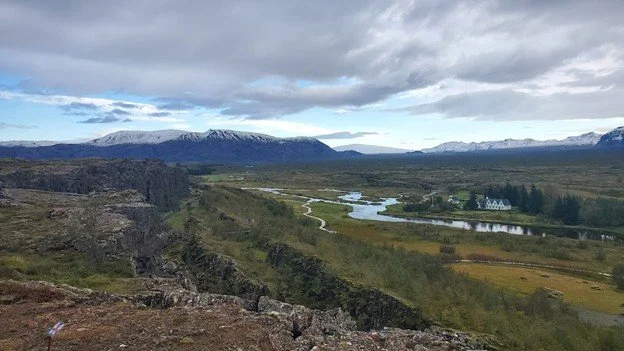
The two plates and the path between them on the left. To the right is a river and the houses there are the summer houses for the Prime Minister of Iceland, they also hold official functions there.
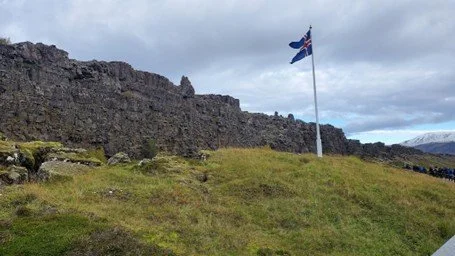
The flag showing the Law Rock.
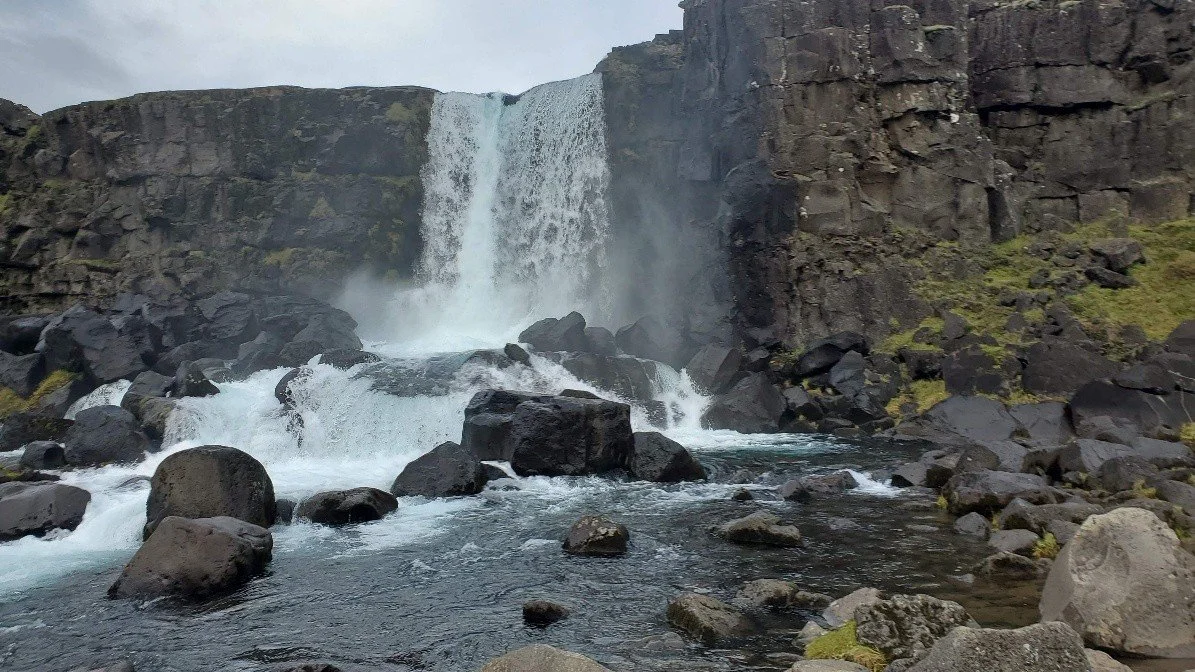
One of the many waterfalls in Thingvillir. Not are super tall but they are still beautiful. This one is actually a man made one that was built in the 9th century to provide water for the assemblies.
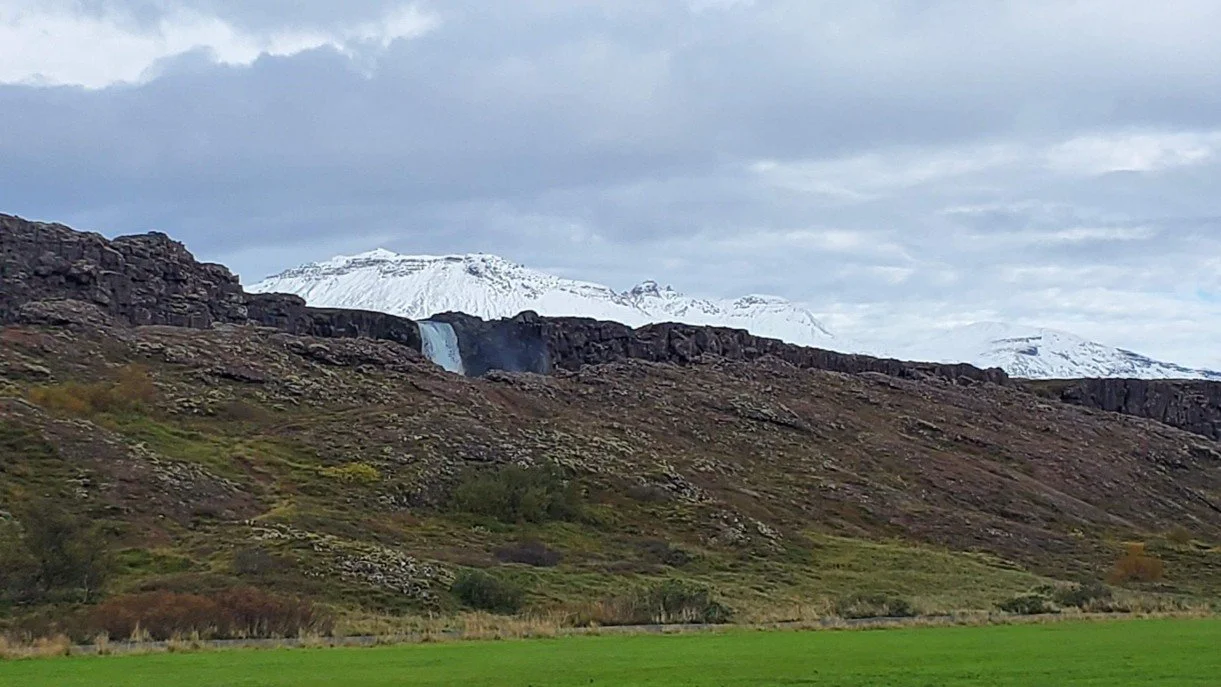
Not sure if we got this waterfall or not, probably is.
We hiked around Thingvellir for a few hours. There are panels and interesting things to read about the place and its long history, both natural and cultural. One interesting panel was about Witch trials that occurred in the area. Another one was about duels (with swords and armor, not guns) that would take place. There are a lot of trails and maps available at the visitor center near parking. There is no fee to enter the park but there is a fee to park at the parking lot which was about 1,000 ISK (about $7). On our way back to Reykjavik we stopped at Kerid Crater which is another volcanic crater. There are a lot of gnats there though! We liked it but it wasn’t nearly as impressive as Grábrók. If you really want to see volcanic craters I recommend Grábrók over Kerid but if your just in the South of Iceland its worth stopping in.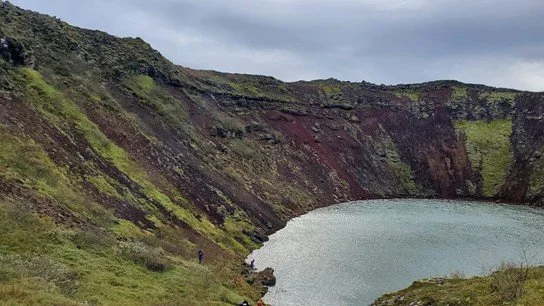
Kerid Crater. Watch out for nats!
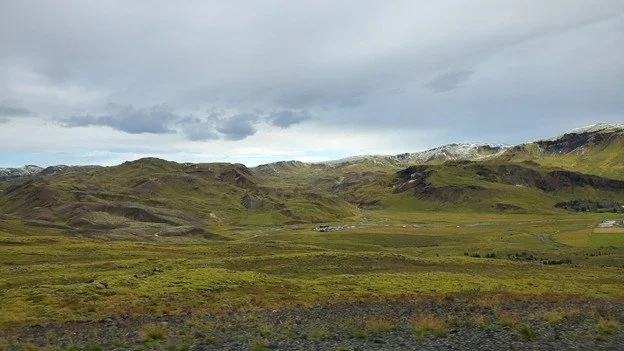
Some random cool landscape near Kerid. You’ll find places like this all over Iceland.
I love themed hotels and the Viking Hotel was a good one. We had to get our COVID test the next day so decided to stay within Reykjavik; we were also getting closer to the end of our trip with only one whole day left. It was a fun area to stay because literally right across the street was also the Viking Café, which was made to look like a Norse stave church. I believe they are operated by the same owners as they both have the Viking theme and we were able to reserve a time for the Viking Restaurant at the Hotel when we checked in. We had a nap and I read some of my history of Iceland book that I bought all the way back in Reykholt. On the background the movie Twister was playing and then Contact, which I didn’t pay any attention to. Later on when I was actually paying attention, I watched Contact and realized it was a good movie. The movies and channels were very American here. I think it's a place a lot of people stopping by the airport stay. 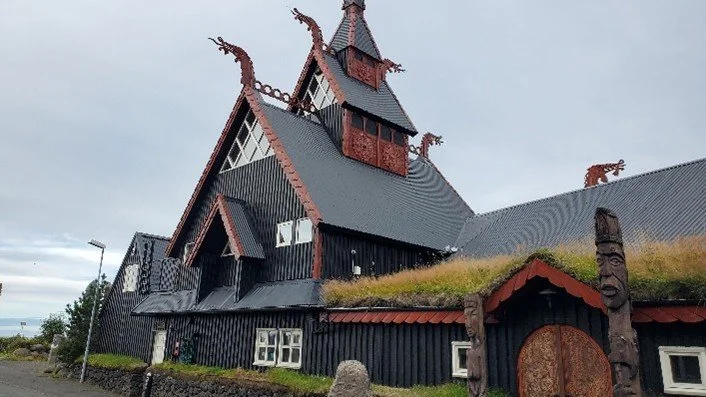
Viking resturant
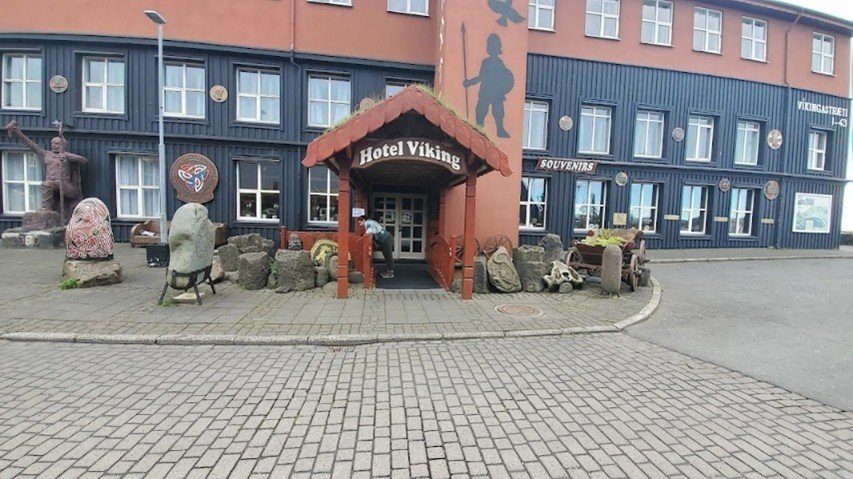
Viking Hotel
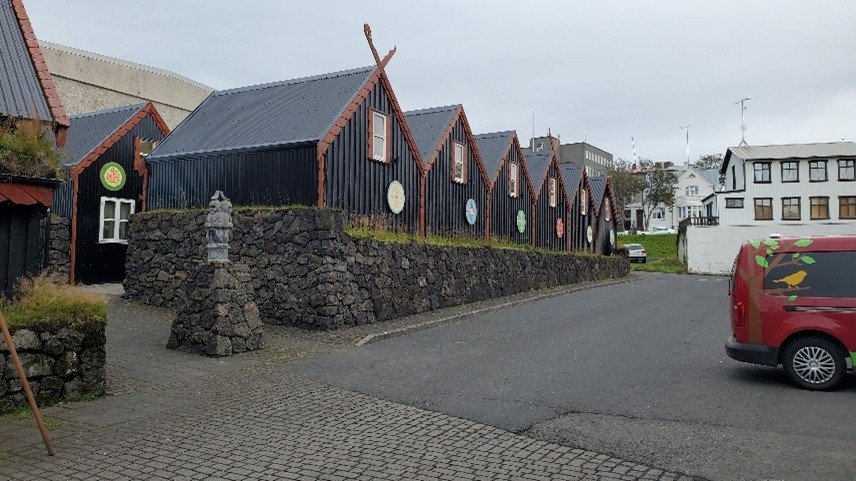
More expensive hotel rooms, little house
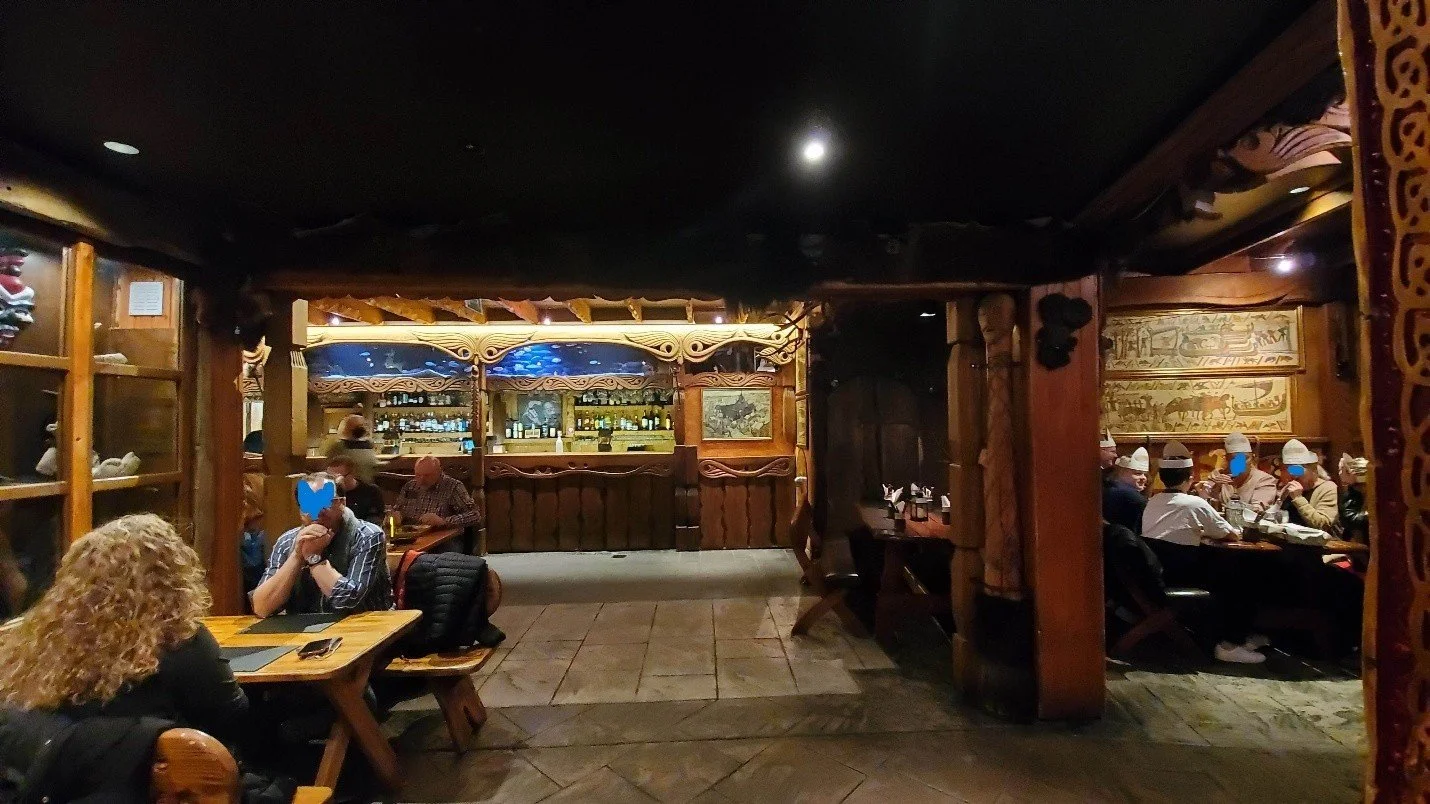
Inside of the restaurant. Very fancy wood paneling.
Day 8: Folk Museum and Elf Garden
It was time to get our brains poked for a COVID test. After which we were near the Árbær Open Air Museum so we stopped on in. This was all around the outskirts of Reykjavik.I love a good folk museum; like most of them in Europe and America this one has a collection of older houses from around the country brought in one place. It’s a good place to see traditional Icelandic architecture. Most of the buildings are from the late 19th and early 20th century.
We jumped onto a tour that comes with the admission price (tickets are 2,550 ISK or about $20 USD) and were taken around the different houses. The Church building was our favorite as it also had a nice little gate with the cross. The tour guide told us that this gate kept evil spirits out. So, if you’re being bothered by evil spirits you can sleep in the church.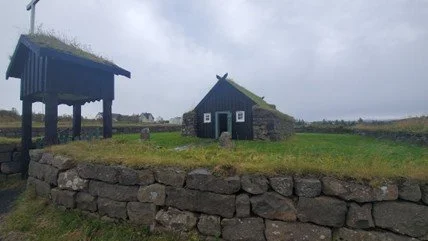
The church gate that keeps evil spirts at bay.
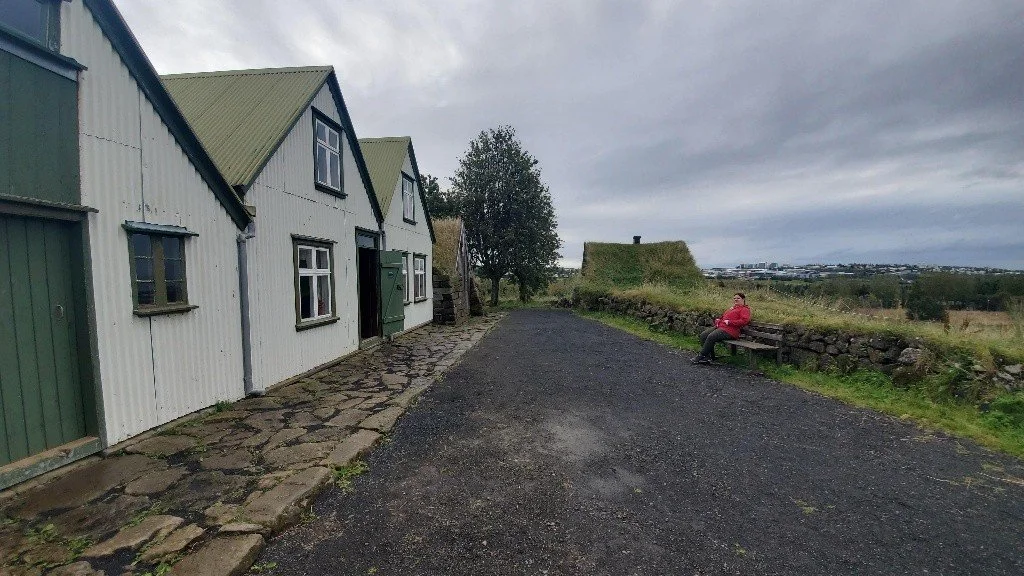
A reconstructed street.
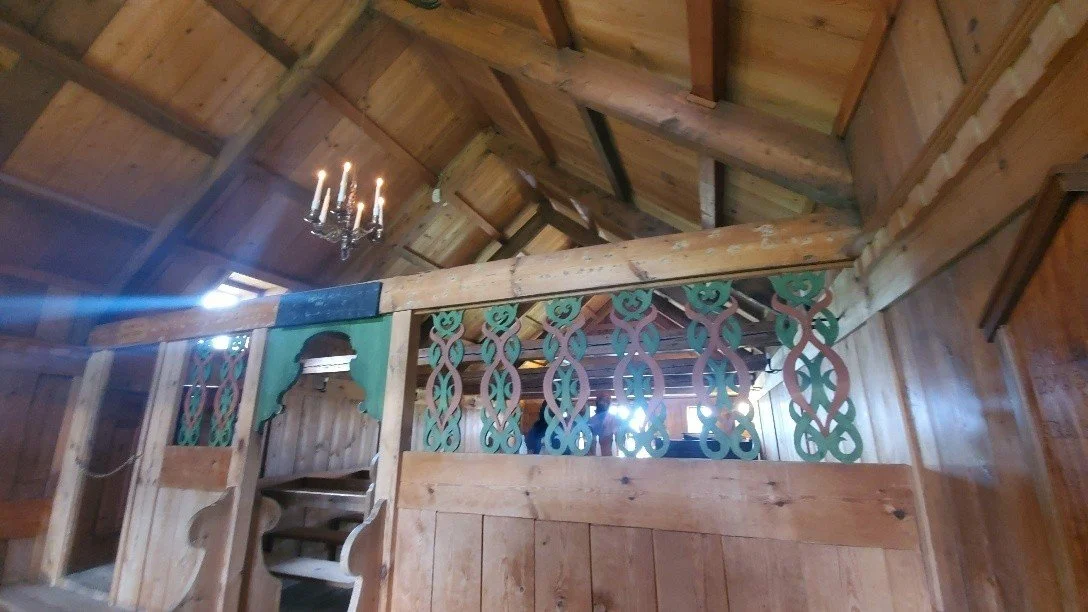
Inside of the church with Norse carvings. The church dated to the 1840s.
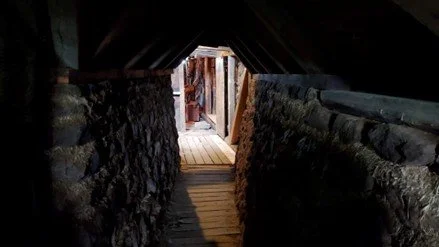
Inside one of the farm turf houses tunnels.
When we were there, they were doing excavations near houses and finding older medieval layers of farmsteads but there wasn’t much of that to see. I would love to see more of what they find.I wish we had stopped by earlier, when we first came to Iceland, as it was good to get a sense of the culture and the people of Iceland. I recommend stopping here as you leaving Reykjavik. Doing this and the Settlement Exhibit would get you a very good introduction to Iceland. The last location for the day was Hellisgerði, or the Elf park. It was a nice small park in the outskirts of Reykjavik with moss lava rocks. There are some nice pools of water and fountains. It seemed like a mini-Iceland, which I guess is why it's called an Elf park. Did not see any elves unfortunately. There were an elf house and some cool formations in the park. It’s fun but if you’re pressed for time, you can probably skip it. The place is rather new having been built in the 1920s. I didn't see anything about Elves actually being spotted there or related to it in folklore. The final hotel was called Harbour View in Grindavik which was on the way to the Keflavík International Airport and the Happy Camper Office where we would be returning the camper.Harbor View has, as the name suggests, a view of the harbor as well as tiny houses that you can rent. We rented one and loved it. It was a good place to wind down before our last night.
We went into town to get some pizza and took it back to eat. We both agreed it was the best pizza any of us have ever had. After much triangulation and research years later, we believe the restaurant was 'Papas' Restaurant' in downtown Grindavik.We ate our pizza and I passed out watching Star Trek the Next Generation. A good last night in Iceland. 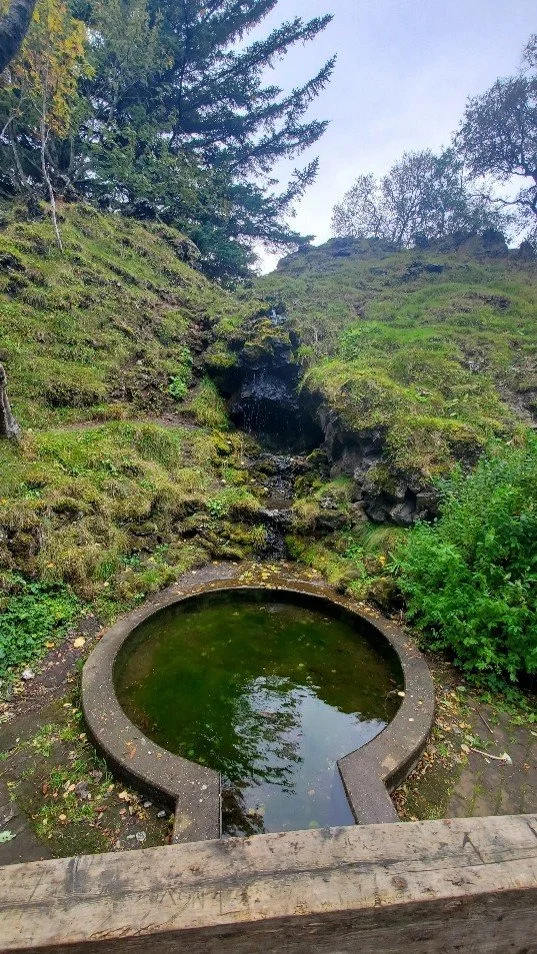
A small pool at Elf park
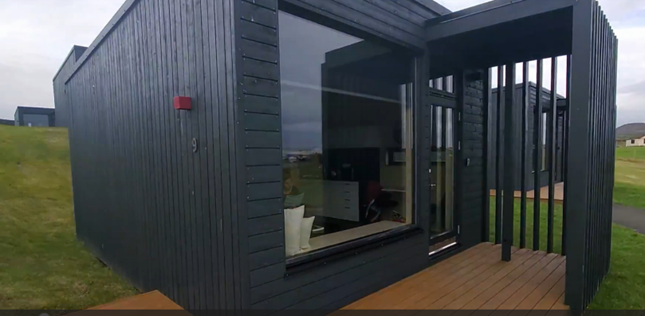
The comfortable tiny house. Honestly the architecture reminds me of the cool scifi bathroom which is a good thing.
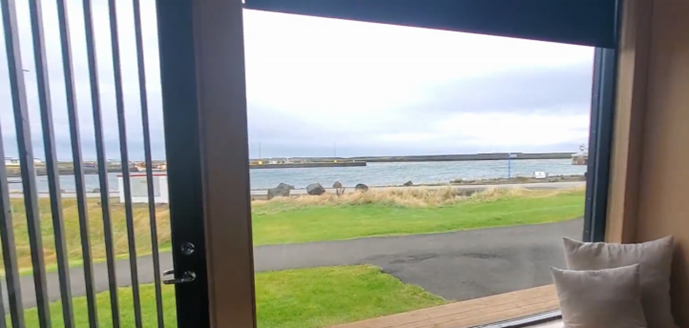
Not the best view in the world but super cozy and coinvent. Your key is in a keypad so checking in was easy.
Day 9: Giants, Winds and Viking ships
Our last day in Iceland we crammed a lot in, our flight wasn’t until later in the day, so we were basically looking around the Reykjanes peninsula where the airport is. Luckily, we were able to find a few really fun things to do that we completely missed coming in.The first is the giantess cave, which is kind of just a fun little art exhibit not far from the airport. There’s this unassuming little doorway near a harbor and then inside is a statue of a huge lady giant Giganta, who is a character from a children’s story.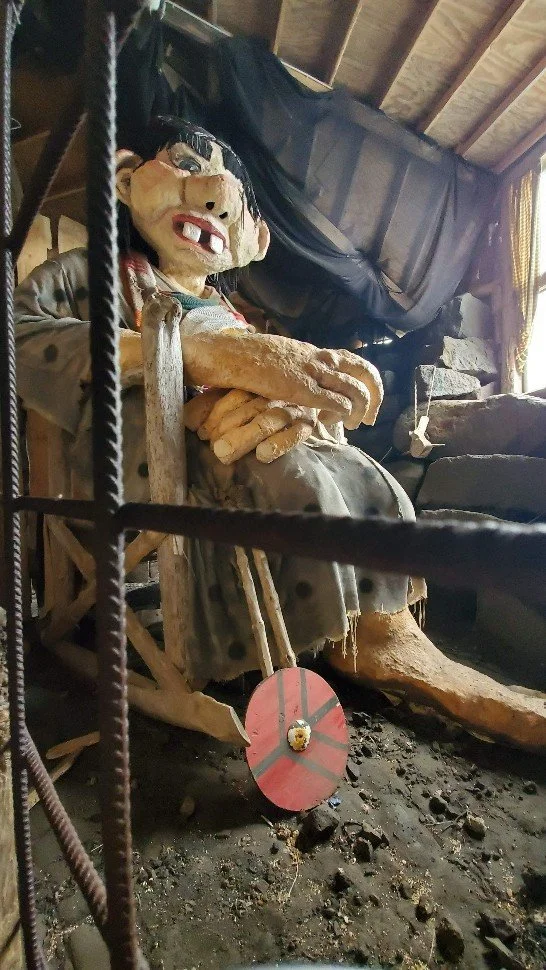
The giantess herself. They played some sleeping noises, though her eyes look open…
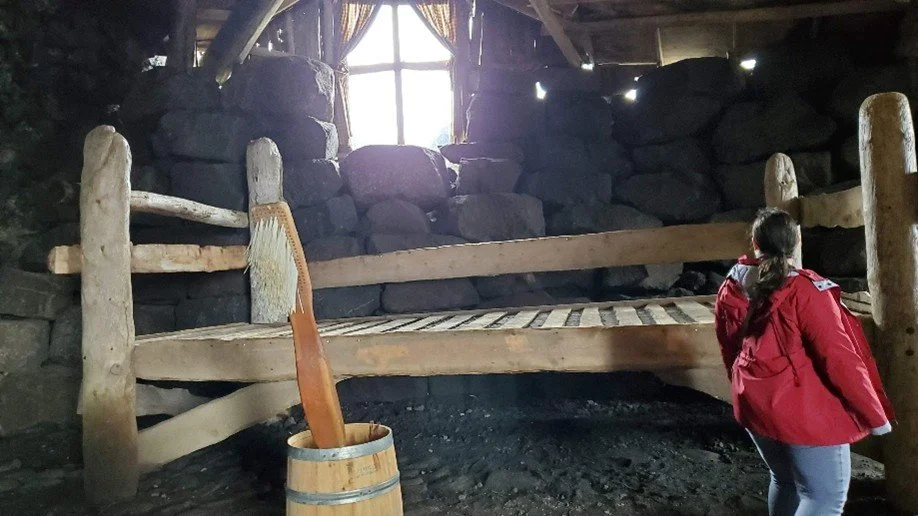
Her Big Bed
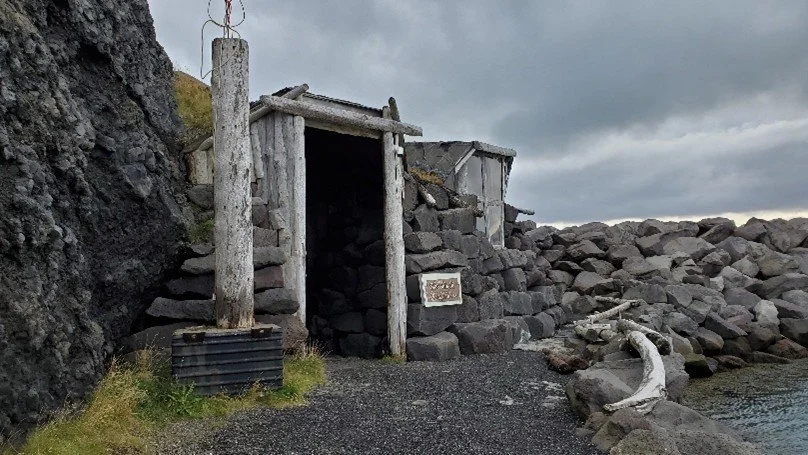
The unassuming cave entrance.
It was kinda fun but more for children and there wasn’t much to actually do.

Our next site was Viking World which was a pretty good-sized museum dedicated to Vikings, their history and role in founding Iceland. The admission fee is 2,500–3,000 ISK ($21 USD).
Iceland was founded by the Norse (mostly from Norway) who were the same people as the Vikings which is why Vikings heritage is so cherished in Iceland. Also the Icelandic language is the closest to what Norwegian Vikings probably would have spoken. The biggest part of the museum is the 9th century Viking Longship replica. I also enjoyed the section on Norse mythology section and maps of Iceland showing important cultural places as well as folklore sights. Again I sorta wish we had stopped here first. A better way of doing your first day would probably be staying around Reykjavik and seeing museums like this one, the folk museum and the Settlement Exhibit if you want a good dose of history before you do the Ring Road. You can also rest more if you don't immediately set out as we did. We were just so excited to be on the road. I felt like I was rushed a bit at the Viking Museum a bit since we had to go back to the airport and would have enjoyed it more at the beginning of the journey, especially since it had maps of folklore sites, that we could have later explored. 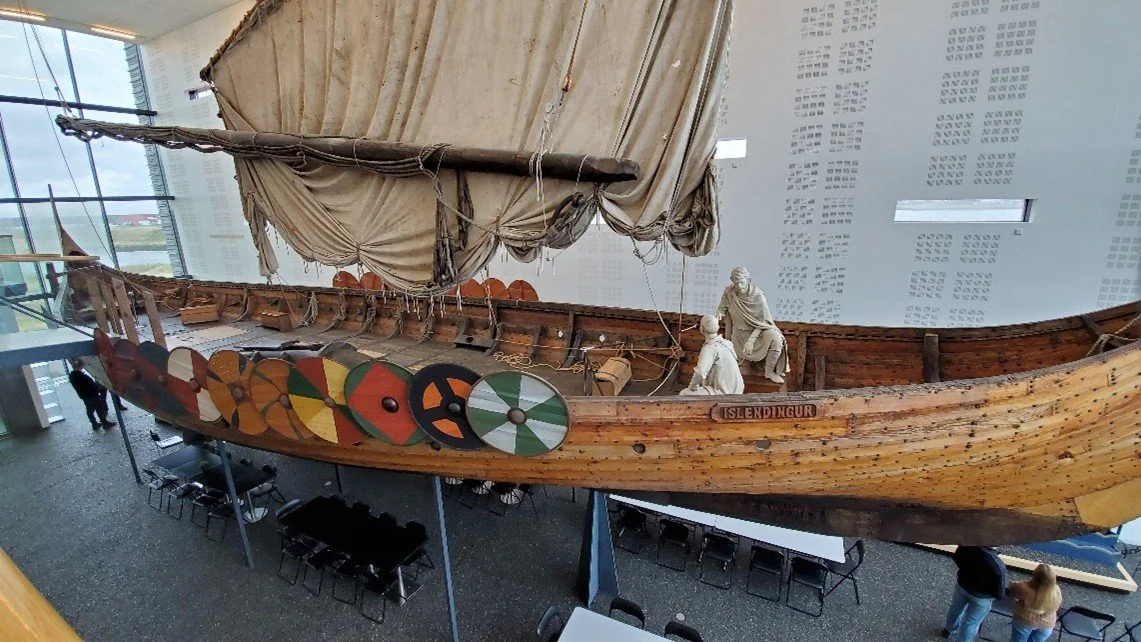
The replica ship that you can go on.
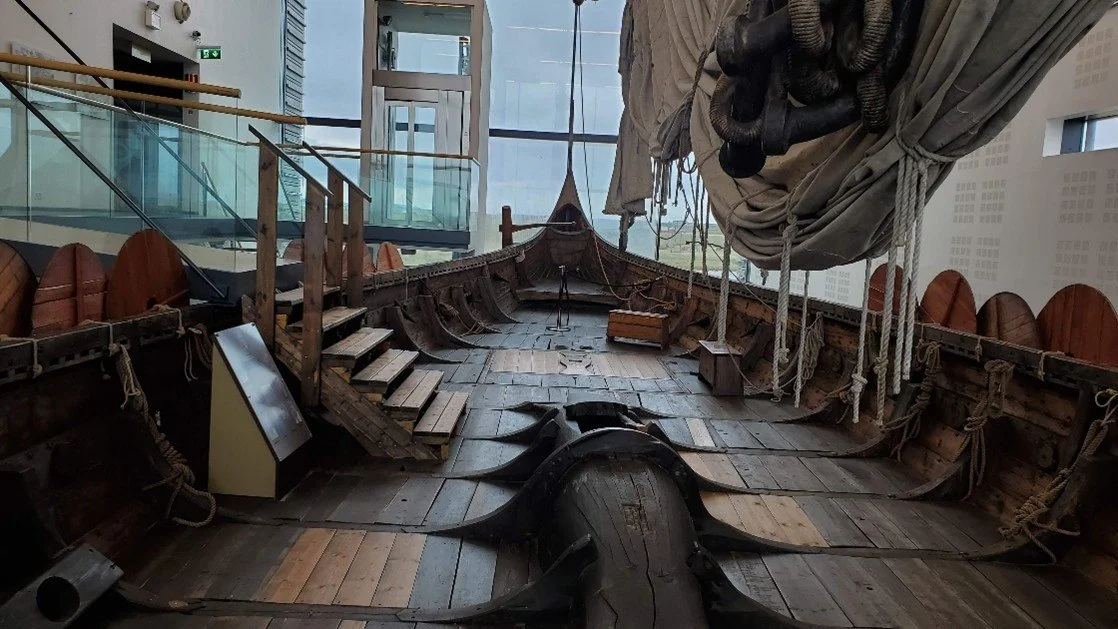
On deck.
It’s one of the better cultural museums, focusing on the entire Viking world, which I guess is why it is called Viking World now that I think about it.We returned our Campervan, paid the tolls we went through, and they brought us to the airport. Luckily our COVID tests were negative (although if they were positive staying in Iceland wouldn’t have been so bad) so we were off back to the states.Legends and Lore
One thing I specifically liked about Iceland was how easy it is to see local folklore. You can see enormous sea stacks that look like giant trolls, or the Devil’s dark hulking castles. The nature of Iceland is so different than most other places on earth, that it’s not difficult to see elements of the supernatural within the landscape itself.Norse Mythology:
As mentioned, the Prose Edda, written by Snorri in Reykholt Iceland, is the only surviving source for Norse pre-Christian mythology. Below are some basics of Norse Mythology,Yggdrasil: The world tree. In Norse mythology all of the nine realms in the Norse universe exist in the world tree Yggdrasil, which exists in the cosmos. At the top of the tree were the mighty eagles and the bottom the serpent who gnaws at the roots.The most important of the realms that exist within the Norse tree are:Asgard- Where Odin, Thor and the rest of the gods and goddesses live. It is in the sky and humans cannot reach it. The gods use the Bifrost bridge (which looks like a rainbow) to enter Midgard where humans live. Valhalla is here and where people who died in battle went.Midgard- Also called Middle Earth, where we live! And where Iceland is. The gods built a huge wall around Midgard to protect us from giants who live in Jotunheimer, which is the giant realm located next to Midgard. The giant serpent Jormungandr also surrounds the world and bites its own tail. So, we got a wall and a serpent keeping us safe from the giant realm, thank goodness.Vanaheim- Is home to the Vanir who were who are powerful entities who could tell the future and use magic, no one knows exactly where it is the world tree.Alfheim- World of the Elves where two types of Elves, the Light Elves and the Dark Elves were from. Only the beautiful Light Elves are allowed to still live there.Svartalfheim- Where the poor Dark Elves were forced to live. Dwarves also live in this realm. It is not clear if Dark Elves and Dwarves were separate beings, some scholars say they are others say they aren’t. Snorri wasn’t really clear on this, he was too busy bathing is my guess.Helheim- As the name suggests this was a dark realm where the dead go. Some say it was more of just a continuation of life where people who didn’t die and battle went, others suggest it was closer to our modern interpretation of hell. Like the Elves and Dwarves, it wasn’t clear.Many elements of Norse mythology have become part of fiction and fantasy. Middle Earth was used by Tolkien in the Lord of the Rings. Marvel’s Thor uses a lot of Norse mythology. Dwarves, Elves, and Dark Elves are all used by Dungeons and Dragons and other fantasy properties.Many places in Iceland still have mythological names and connections, like the town of Bifrost and the area of Thorsmork. A lot of Icelandic folklore seems to borrow from old pagan beliefs. Elves (or Huldufólk), giants (ogres/trolls) and huge serpents (also dragons) are all common in old Icelandic legends and folklore. The names of all these mythical creatures do not always coincide with our current words for these creatures.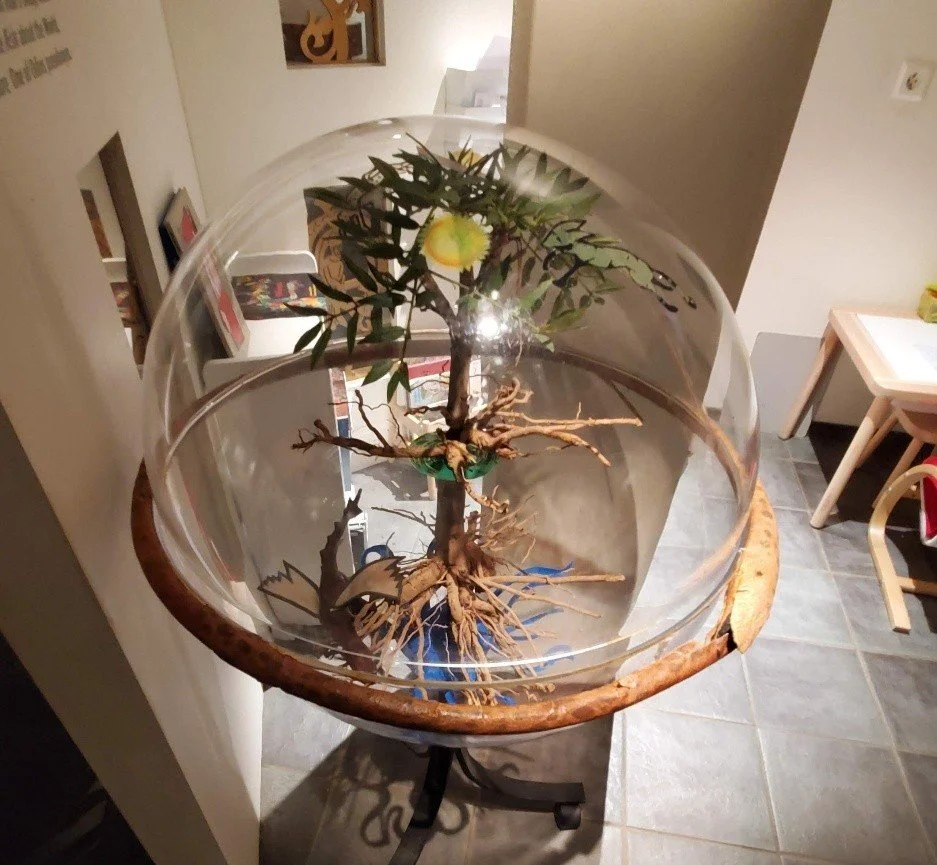
A neat little model of the Yggdrasil in the Reykholt museum. You can even see the world serpent around it.
Elves (Huldufólk)
A lot has been made about Elves in Iceland, especially since a study some years ago showed that a large portion of people in Iceland still believed in Elves and that some roadways were moved in order to avoid rocks where Elves were said to live.Some old Norse Sagas written in the Middle Ages suggest that Elves were treated like nature spirits and that dark Elves (confusingly called trolls) were bad nature spirits. The idea of a hidden race of people who live in nature who were supernatural was always part of the Elves. They often lived in a hidden world and could even take humans to their world (maybe Alfheim). Unlike similar stories of Irish changelings though, oftentimes people were brought back and were no worse for ware for having lived with the Elves. There are stories about people losing time though, coming back years later.Even though Iceland today has small cute little ‘elf houses’ Elves of Norse mythology weren’t small. They were often human sized and wore fine clothes. Their link to another realm was always prevalent though.Elves could be very nice and helpful but also mean and vengeful. They can live in boulders, hills and knolls and often people are told to stay off the elves' lands otherwise you can incur their wrath.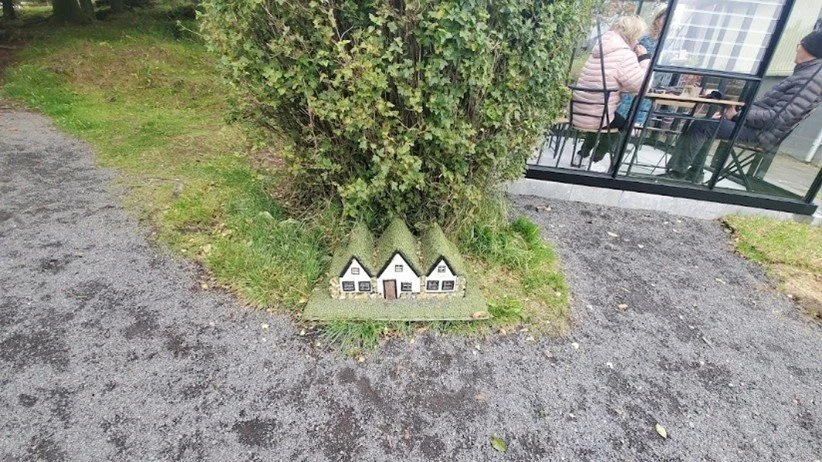
An Elf house in the Elf garden.
So how did Elves become small? A book on Faeries I read indicates strongly that Faeries from the British Isles are very probably a fusion of Norse/Germanic lore and British folklore. This makes a lot of sense when you read how much the two have in common, and that faeries also were originally not small. Like elves, faeries also live in another world, can take people there, live in hills and places in nature, have supernatural powers, and can be good or bad. It’s likely that in later times as faeries became small, diminutive creatures that Elves followed the same trajectory in Iceland. I think another theory could be that Elves are confused with dwarves at times, especially the dark Elves who lived in the same realm. It seems likely that someone mixed the two up at some point and Elves became diminutive that way. No one really knows for sure though. Trolls/Ogres:
The word troll in the Icelandic sagas is used for several things, sometimes it had to do with how big someone was (implying that trolls were large) but other times it had to do with evil nature spirits. The Icelandic word Trill, is used for several different supernatural things, including giants and demonic malice, but is also applied to ghosts, goblins and even sorcerers, which explains the word troll being used in several different instances. So generally, Trolls were not good guys. There are always exceptions though. In the Middle Ages, runic inscriptions were used to ward off trolls and ogres and elves.Jon Arnason, who collected Icelandic folklore in the 19th century explains how there are different types of Trolls, some who were not bothered by sunlight and others who would turn to stone from the daylight, these he called Night Trolls. We see this often in both Iceland and in Norway. There are legends associated with large rock formations that look humanoid in shape that these were trolls that did not make it back to their dark caves in time and were turned to stone by the morning light. Another troll legend is that they hate the sound of church bells and there are even stories of them attacking churches (scary stuff). However, it is stated that the church bell will ward off a troll if it is pursuing you, so they will be angry about the bells but also leave you alone. The idea of the trolls living underground and hating church bells sounds very much like later Christian additions to the folklore. Dimmuborgir, the dark castles in Northern Iceland, were originally home to trolls before Christian legends associated them with the Devil. So, you see a lot of melding of Christianity with older folklore and pagan beliefs. Witchcraft and Pagan beliefs:
While Iceland became a Christian country around 1000 AD, many of the pre-Christian beliefs lived on as legends and folklore or even merged with Christian beliefs as with the Trolls and the Church bells. Like in Most of Europe in the 16th and 17th centuries, Iceland also had witch trials. The interesting thing about their witch trials are that one, there is a clear connection with older beliefs associated with those accused and two, most accused were men. The main reason men were accused more is probably because magic was more associated with men in Iceland; men also traveled more. In most of the cases, men are caught using older spells and customs like runes and spellbooks. Iceland was one of the few places where grimoires were part of witch trials. A case in 1656 involved a father and son confessing to using magic spells to try and kill someone, but denied being in league with the Devil. So, it’s clear that the old customs of using spells and runes continued all the way into the early modern period. The poor people who were accused were simply caught practicing their traditional folk magic. This was espeically more of an issue with authorities once Protestantism appeared and the line between good and evil was more rigid in the church. Conclusion: Instead of ending on a negative note about witches, I thought I would put the conclusion here. We loved Iceland! Even with the wind and the snow trying to kill us, it was a wonderful trip. We have plans to go back and explore more of the south of Iceland has well as the north. There’s also the westfjords and the troll peninsula etc. Plenty of places are left to visit. If your looking for a classic European trip with old Castles, Cathedrals and historic buildings (all of which I love) then Iceland is not really the trip for you, since there are none of these. The most they have are some archaeological sites like the Reykholt tunnel and the monastery in the east. But what they don’t have in older buildings they more than make up for in other sites. The landscape itself never disappoints and was stunningly beautiful from beginning to end. Iceland also has such a rich history of folklore that even without remains of buildings and places, you can still see so much of the folklore in the landscape. It’s the closest you can feel to being on another planet or in a vast fantasy world. This alone makes it worth seeing. A rod trip I think is the best way to do it. You don’t have to use a campervan but I recommend a car. Aside from the wind, driving was very easy, the roads are wide and empty and the entire country seems like it was designed for a dedicated road trip.
Sources / Suggested readings:
'Norse Mythology: An Enthralling Overview of Norse Myths, Gods, and Goddesses (Scandinavia)' by Enthralling History series.'Icelandic Legends Collected by John Arnason' by Jon Arnason.'A History of Iceland: A Captivating Guide to the History of the Land of Fire and Ice from the Viking Age to Present' by Captivating History. 'Witchcraft and Magic in the Nordic Middle Ages' by Stephen A. Mitchell. 'The Sagas of the Icelanders: Preface Jane Smiley', Penguin Delux Edition. 'History of Iceland from Settlement to the Present Day' by Jón R. Hjálmarsson.'Faery: A Guide to the Lore, Magic & World of the Good Folk' by John T. Kruse. Guide to Iceland | Tours & Reviews | Travel Tips & People Iceland Travel Guide | Plan & Book your Trip to Iceland